Categories
Blog

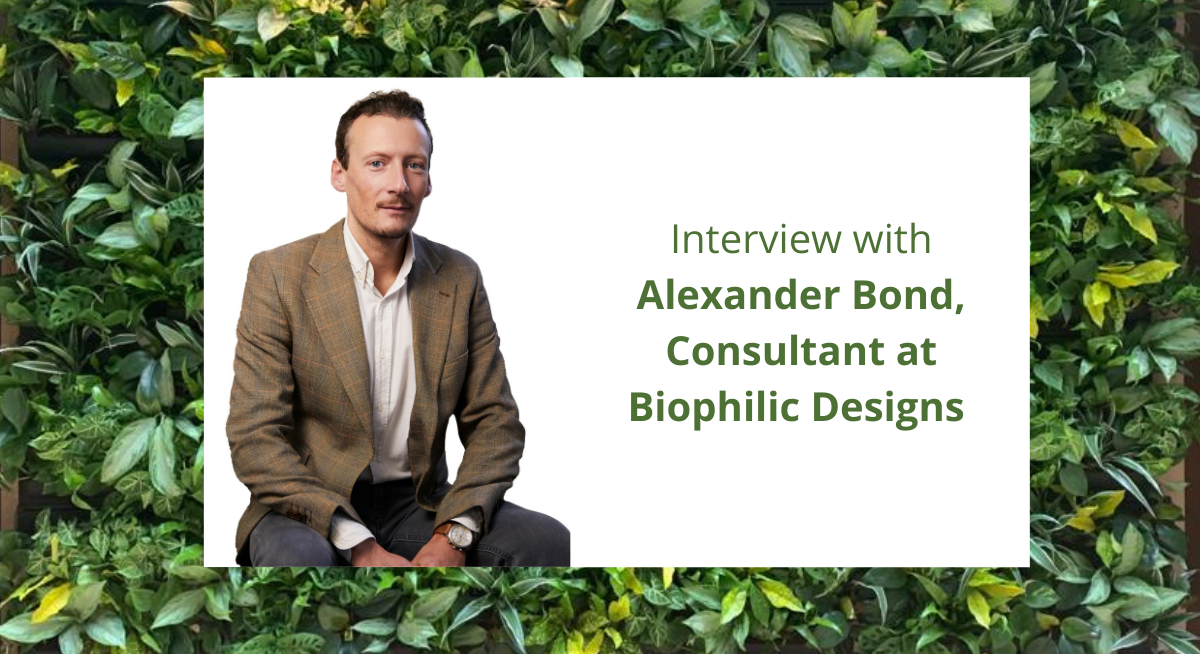
Interview with Alexander Bond, Consultant at Biophilic Designs

As part of our involvement in the ‘value of biophilic design’ research study, Benholm Group were delighted to speak with a fellow biophilic consultant, Alexander Bond about the importance of biophilic design in the built environment, and to ask his for some quick fixes that everyone can try in their own workspace.  

Can you tell us about your professional background and how your interest and passion for discovering the benefits of biophilic design began?

I have been running a specialist Biophilic Design company for the last four years whereby our focus is on innovative office schemes and as Biophilic Design consultants. My personal interest in the subject started way back in my childhood whereby I was encouraged to enjoy the great outdoors by my parents (thankfully no smartphones back then!). Fast forward 20 years and I found myself working in a corporate environment devoid of the most basic connections to nature, i.e., plants, natural lighting, natural materials etc. and it was at this stage that I felt compelled to focus my efforts on raising awareness on the benefits of keeping a connection to nature in the built environment and this was when Biophilic Designs sprung to life. 

Tell us why you believe it’s so important to include biophilic design in the built environment?     

Because modern human beings have only been living a ‘modern’ lifestyle for a fraction of time when you consider the great timeline of our evolution. If you consider that our hunter-gatherer ancestors were wandering the planet half a million years ago, it is obvious that we are much more predisposed to being outdoor creatures than stuck indoors in front of a screen. It is for this reason that it is incredibly, and intrinsically, important to maintain our connection to the natural environment because it’s quite literally in our DNA.  

We have not yet fully adapted to our modern lives so it’s important to design our modern spaces to be more human-centric. There is a wealth of science and data out there explaining why human-centric spaces are better for productivity and the general health and well-being of the people who use them. Though when we think about it, it’s quite obvious, which is why we generally enjoy walks in the park, holidays in nature etc. it’s a natural instinct so to speak.

There is a wealth of science and data out there explaining why human-centric spaces are better for productivity and the general health and well-being of the people who use them” – Alexander Bond

What do you believe is the future for biophilic design in the workplace?

Our working spaces will hopefully be much more inclined to use natural materials, with lighting systems that are complementary to our circadian rhythm and planting schemes to maintain that connection to nature. I also think that we will (and should) try and bridge the gap between the indoors and outdoors utilising roof space etc. in a further effort to allow humans to roam freely outside of the box. 

Tell us about the research study the ‘Value of Biophilic Design’. What is your involvement and what are your main objectives as a biophilic designer? 

My role is to act as an independent advisor on the layout with a focus on the use of natural materials in order to create the best possible biophilic environment. 

Can you recommend some quick fixes for a novice who wants to introduce some biophilic design elements into their own office or home-office space but doesn’t know where to start?   

The best thing about biophilic design is that the first step can be a simple one. This could mean a potted plant or a change of desk to a nice sustainably produced wooden one (getting rid of the unnatural melamine desks that we are all so used to). The first step might just as easily be going for a walk at lunchtime or making a point of being close to a window so we have a vista of the outdoor world. Biophilic design isn’t just one thing, it is a number of different ways in which we interact with the natural environment so it really depends on the space you have and then making small steps in order to create a space which retains an important connection to the outside world. 

Are you currently working on any exciting projects that you’d be willing to share?

We are working with two London based tech companies which are due to be complete in mid-June. I can’t wait to share it when it’s finished. 
Learn more about Biophilic Design: www.benholm.com/biophilic-design  

Categories
Blog

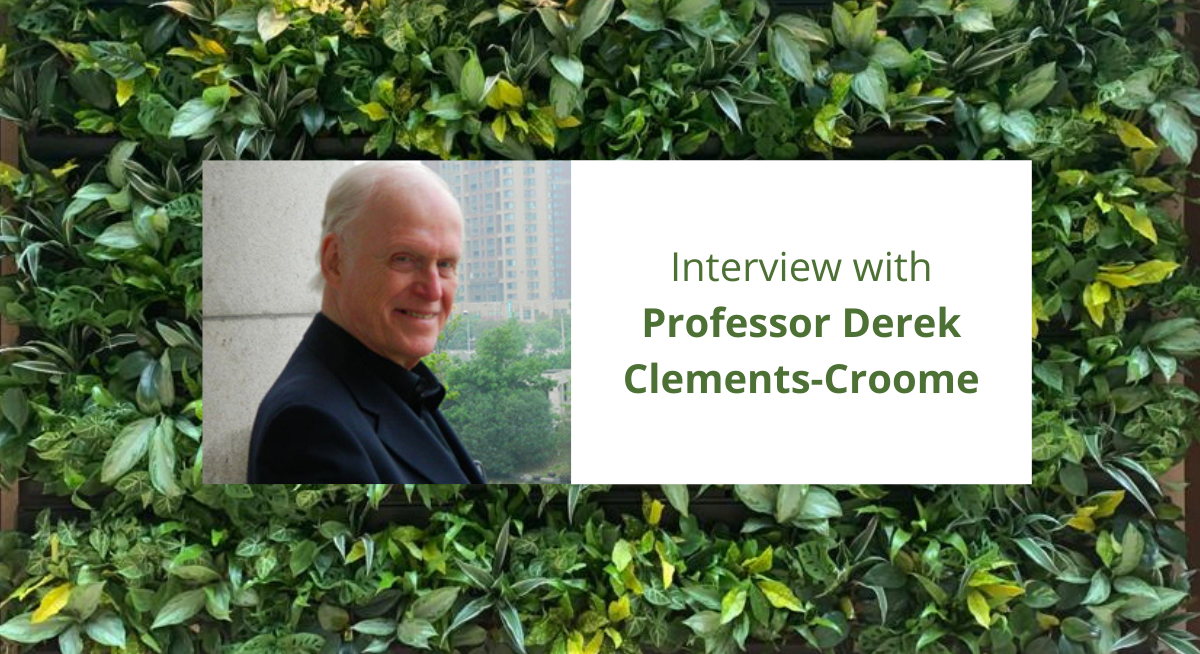
Interview with Professor Derek Clements-Croome BSc, MSc, PhD, CEng, CPhys, FICE, FCIBSE, FRSA, FASHRAE, FNSP, DSc (Hon) Emeritus Professor

As Benholm Group prepare to landscape a London office space as part of a new research study into the ‘value of biophilic design’, we speak to the lecturer, author and expert on multisensory design, Professor Derek Clements-Croome about the study and the wider benefits of plants as part of biophilic design.   

Can you tell us about your professional background and how your interest and passion for biophilic design began?   

Well, it’s been a long career to date. I began aged 16, working in the heating and ventilation industry, and after 11 years I went to work at a university, where I was quickly promoted to develop courses and research in architectural engineering. I then joined Loughborough University, and then Bath University working in teaching and research besides collaborating with Buro Happold which was quite influential on my development. Then in 1988, I moved to Reading University as a Professor of Architecture & Engineering, again, doing teaching and research but collaborating with industry.    

My key interest now is in user-centric multi-sensory environments which are good for health and well-being. Just talking about comfort is not good enough, we have to delve much deeper to understand how we perceive and respond to the environment over the day, including transient as well as steady-state conditions which can give the brain mini-breaks from intense single-focused activities. For example, I am now looking out of the window at the sunshine and trees having been glued to my computer screen. When the eye muscles are taut but focused on outside views those muscles relax and give my brain a mini or micro break. I am looking at much more dynamic design methods using a Flourish Model described in my 2020 book Designing Buildings for People.   

Tell us about your involvement in the upcoming research study the ‘Value of Biophilic Design’ led by PhD scholar and employed as Sustainability Lead at Parliament, Joyce Chan-Schoof. Why are you undertaking it and what are your main objectives?   

I work very closely with the industry and met Joyce, who is leading this research project, as part of her part-time doctorate at Loughborough University. Joyce was an advisor at UCL as was I, which is how we initially met. Independently of this, PLP Architecture had asked me to go along and talk to them about my work on designing multi-sensory environments, and that discussion resulted in a very positive collaboration between the three of us to develop a research study on the value of biophilic design in the workplace.    

We are just finalising the various arrangements of the office for the study, and alongside Benholm Group and Biophilic Consultant, Alexander Bond, we are going to take an office environment, which has got nothing biophilic in it and compare it with one which is very biophilic. We are going to do that by doing various measurements, using wearables, questionnaires and interviews to assess people’s reactions and how they differ between the two situations. The work will test my flourish model of multicentric design which Joyce is using in her thesis besides evaluating the power of biophilic design.   


“The study is about multisensory design, using the biophilic response, as a focus in this particular case. This study is really thinking outside the box – it’s stretching things a lot more – to really study how people react” – Professor Derek Clements-Croome

What are you hoping to learn from the research study to inform your future projects?

The work will test the strength of biophilia as a design variable by comparing a non-biophilic setting with one which is a highly biophilic setting where there is lots of landscaping. As I have said we will be doing interviews, questionnaires and physical measurements.    

It is a very client-driven study because it is a study to see how people are reacting at an individual level, not just at an average level. When we have that data, we can see how a multisensory model works and determine how effective it is, and do we need to modify it.    

So, the study is about multisensory design, using the biophilic response, as a focus. This study is really thinking outside the box – it is stretching things a lot more beyond comfort – to really study how people react to the environment around them.   

How important is it to include planting as part of biophilic design?

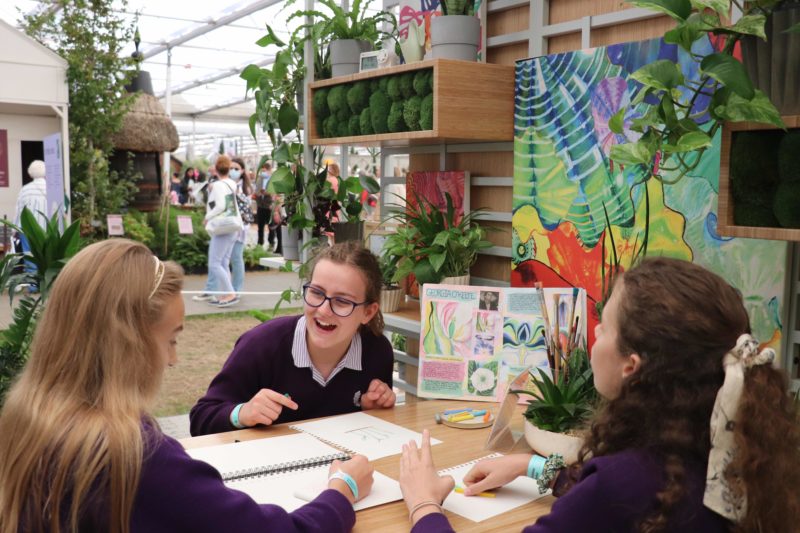
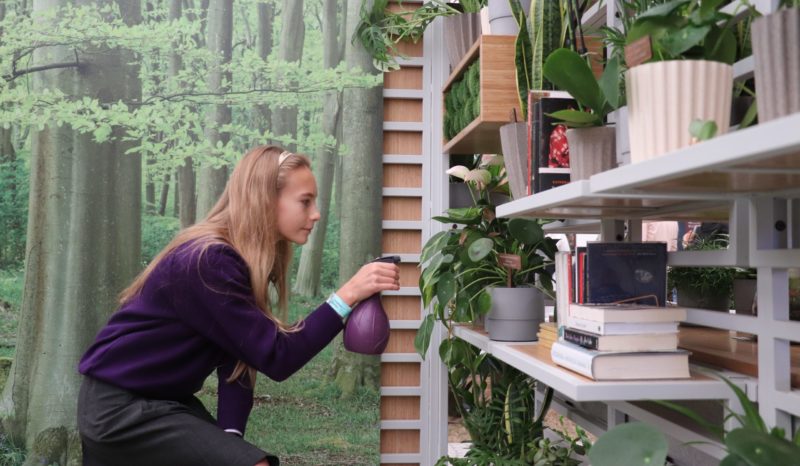
I think it is very important. By planting people might just think “I’ll get a potted plant to put on my desk”, but what we have really got to talk about is landscaping your office. Plant density is important for several reasons including the visual impression but also the physical impact plants can have if the density is sufficient. I did some work with Putney High School and an architect team on planting in classrooms and the impact of plants on student well-being, for which the team received a Gold Medal at the Chelsea Flower Show 2021. The students there were quite sure that the planting affected their learning in a positive way; they felt happier, and happier people are more highly motivated in general to work better. The plants contributed to this positive feeling.  

Photo Credits: Putney High School

Have you seen Biophilic Design become more prevalent in recent years and if yes, why do you think this is?

Well, first of all, people across society recognise the need to connect with nature a lot more than we have been. There is a lot of work about wellness across society – we see more healing; yoga and meditation approach are being advocated like forest bathing, for example. We have also seen how Covid has emphasised the importance of gardens and green space: the waiting lists for allotments have grown even more.    

Greenspace has been acknowledged as being important. The influence of green spaces on decreasing crime rates and loneliness (of which there is a lot in the UK). Green spaces basically encourage physical activity; you want to go out and have a walk in the trees or even just vies out onto greenspaces can be calming.   

There are physical benefits to green spaces. They bring fresher air, and absorb some CO2, as they can act as a carbon sink and this on a large scale can affect climate change. Then there is the heat island effect in cities; I was measuring brick surface temperatures in the hot season last year, at about 40 degrees Celsius. The adjacent leaf surfaces were 30-32 degrees Celsius, so they are much cooler. If you have a building facade with lots of greenery, it will be cooler, and that is going to affect the surface temperature of the building (which is going to be lower), and therefore the requirements for things like air conditioning are going to be less, thus saving energy.   

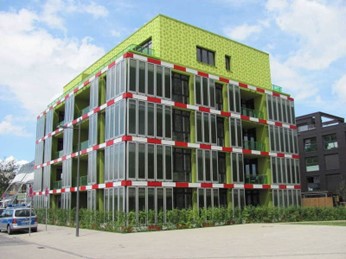
Then we can go a step further. The BIQ building in Hamburg has algae tanks on the facade. The algae grow and shade the building, then they are harvested for use as a biofuel and the algae grow again.  My biomimetic colleagues in Spain are experimenting with designing streets without electric lighting by using the chemo-luminescent properties of lemon trees.   

Greenery contributes in a very physical way to saving energy and therefore has an impact on climate change. The point is that we have been disconnected from nature for far too long, and not thinking about it deeply enough – people just think of pretty flowers and things that are nice to look at, but it is much more than that.   


“The more we learn about plants and their benefits to our climate, it’s amazing – David Attenborough stuff – it’s really quite amazing! I find it very inspiring” – Professor Derek Clements-Croome 

Photo Credit: GreenSpaces.com

How do you think that this study will impact workplace design in the future?

If a biophilic environment positively affects you, and you’re happier to do your work, then you’re going to be more productive. The individual is going to feel better; their company is going to do better because they are going to be more productive.    

Indirectly, nationally, you’re going to save costs on the health service, because people are going to be healthier. There is a lot of absenteeism in the workplace, sometimes due to stress, and when you work in green spaces, you tend to be calmer and tend to be less stressed. So, if you can save on the things that cause a lack of productivity, you’re then indirectly helping the health of the individual and saving on the NHS – prevention is better than cure. 

Discover more about Biophilic Design: www.benholm.com/biophilic-design 

Learn more about Professor Derek Clements-Croome: derekcroome.com   

Latest Publications: Clements-Croome, D. J. (2020). Designing buildings for people: Sustainable liveable architecture, The Crowood Press Ltd.    

Categories
News

Benholm to collaborate on research study ‘The Value of Biophilic Design’

We are delighted to announce that Benholm Group are collaborating on a pioneering 8-week research study to understand the value of biophilic design. 


Biophilic Design – the use of plants in providing cleaner air and connecting us with nature, coupled with natural light, certain colours, acoustics, and fragrances – has long been proven to have a positive effect on both mental and physical well-being.  

This concept has now been brought to the forefront of a new research study led by Sustainability Lead + PhD Researcher, Joyce Chan-Schoof to question if we can apply a social and economic value to biophilic design; Can biophilic design add value to the workplace – not only through improving air quality and aesthetics, but can it have a tangible impact on employee productivity, retention, absenteeism, satisfaction, engagements and up-skilling?  

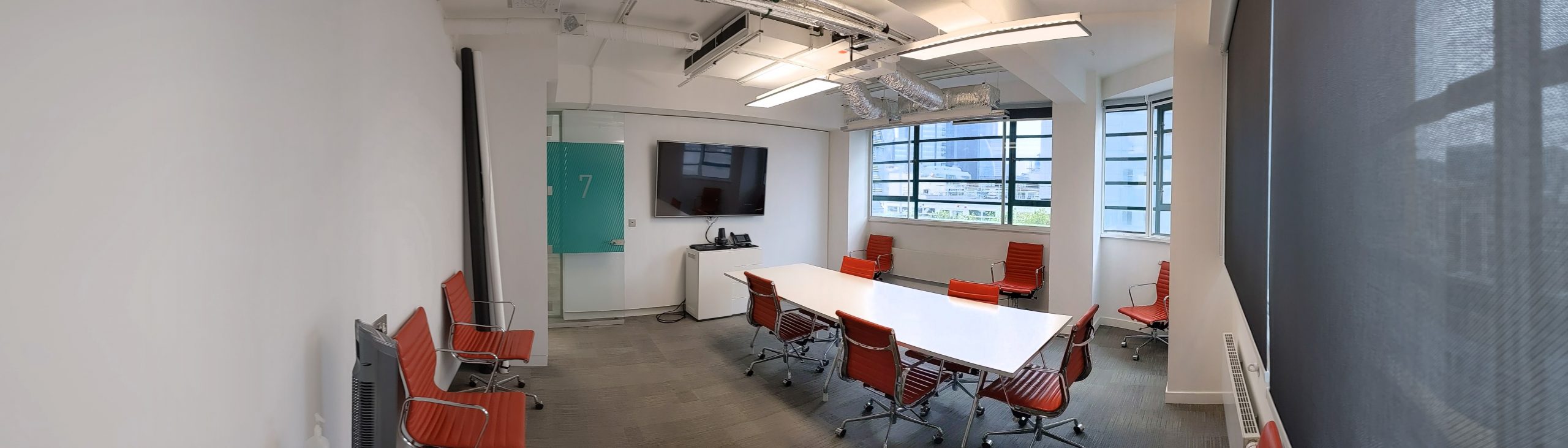
During an in-house pilot study, 6 participants will carry out their daily work at a designated workstation in a 30m2 office space at London based PLP Architecture. Over the course of 8-weeks the environment inside the office will be changed from an average office space into a multi-sensory experience by providing rich, natural stimuli to the participants such as lush, green, living planting provided by Benholm Group, as well as access to natural light and outside views, new natural décor, patterns and colours, plus sounds from nature – a scenario that will be an immersive, biophilic ‘wow’ space. 

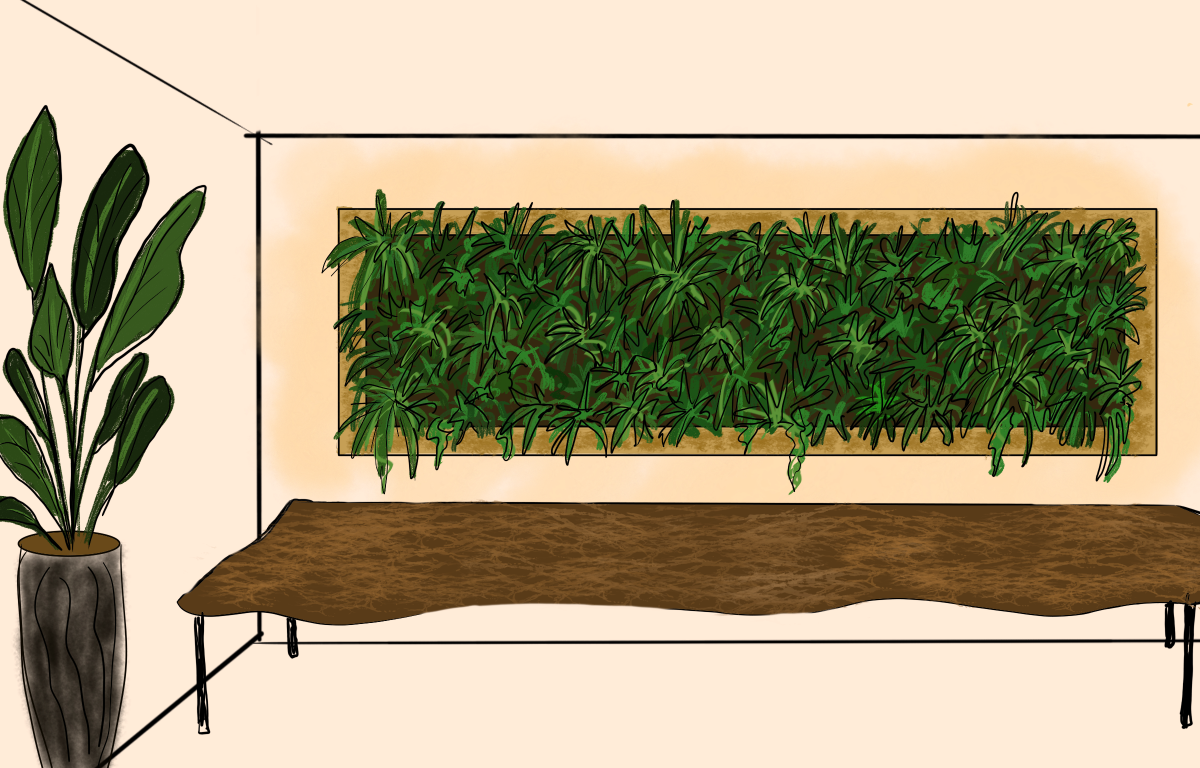
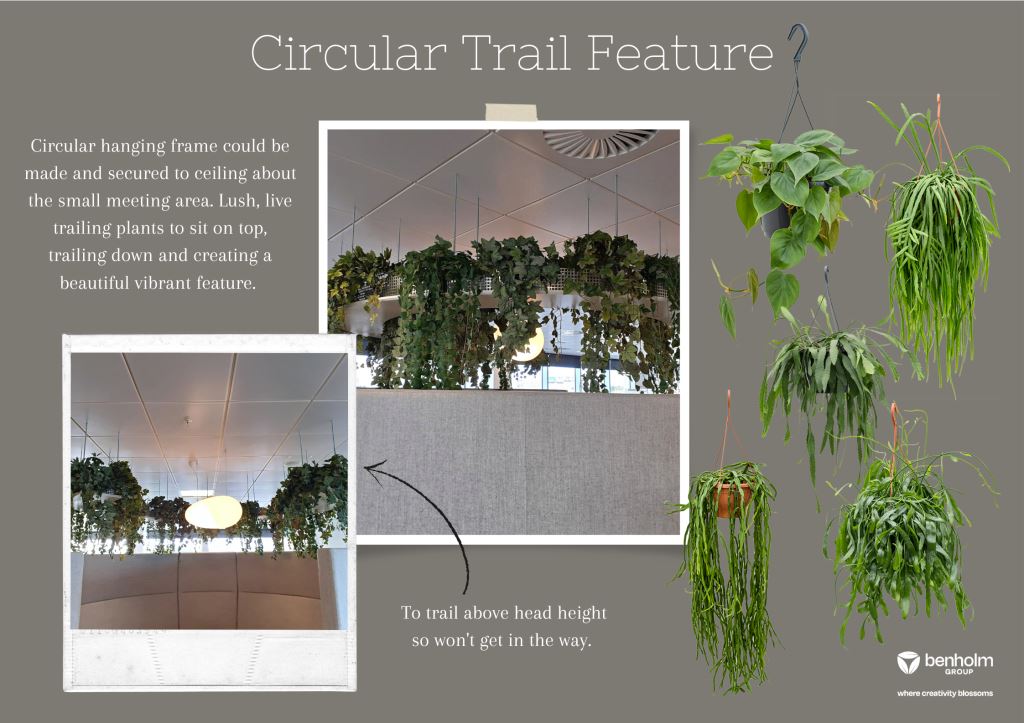
Benholm Group’s experienced design consultants will bring the office space to life with lush greenery, ensure that all plant species thrive in the climactic conditions of the room, and contribute to creating a healthy and relaxing environment for the participants. Benholm Group are providing a variety of living plants for the study including trailing plants, floor standing and desk-top planters and a living wall. Plus, Benholm Group’s specialist maintenance technicians will be maintaining all greenery throughout the study to ensure they remain vibrant and healthy.

Fellow collaborators are Sustainability Lead + PhD Researcher, Joyce Chan-Schoof, PLP Architecture and their in-house research and development team PLP Labs, Biophilic Design Consultant Alexander Bond, and lecturer, author and expert in multisensory design, Professor Derek Clements-Croome. Together we will measure indoor environmental quality objective data throughout the testing period, and participants will complete questionnaires after each scenario change.  

Adrian Byne, Sales & Marketing for Benholm Group comments: 

“At Benholm Group we have long understood the value that plants can bring to every space. To have the opportunity to collaborate on a research study which will prove the social, economic and environmental benefits of biophilia for the built environment is a fantastic opportunity, and we look forward to seeing the results in a few weeks’ time”. 

The research study is set to begin in May and will conclude in July 2022, after which time the findings will be launched during a special event and publication.  

Call Now