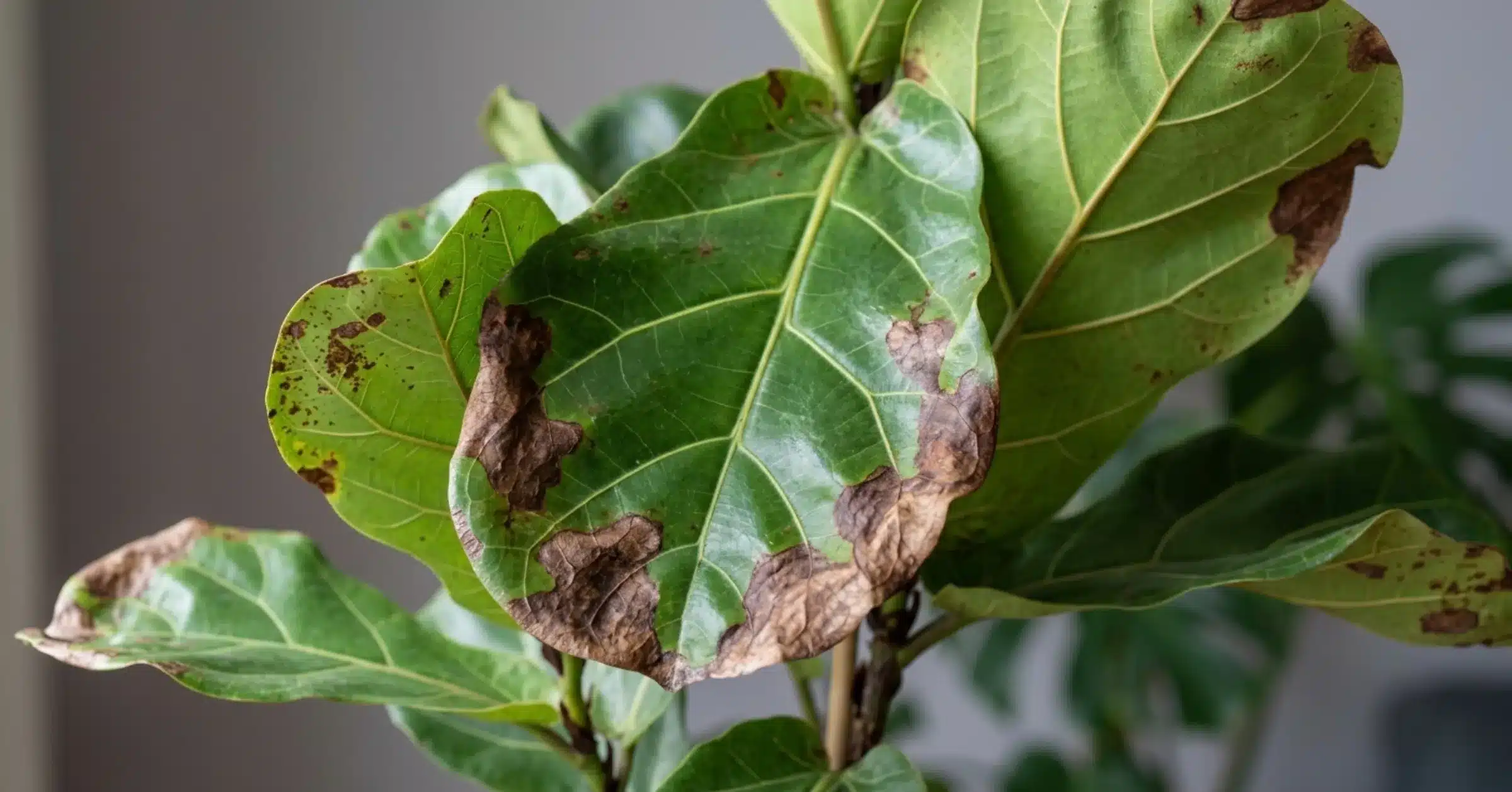
Your office plant displays looked vibrant on installation day. Six months later, the leaves are yellowing, growth looks leggy, and the whole scheme feels tired. If that sounds familiar, you’re dealing with one of the most common challenges in commercial office plant maintenance.
At Benholm Group, we’ve spent over 30 years helping facilities managers across the UK keep plant installations healthy. This guide covers the most frequent causes of decline in corporate offices and what you can monitor before displays need replacing.
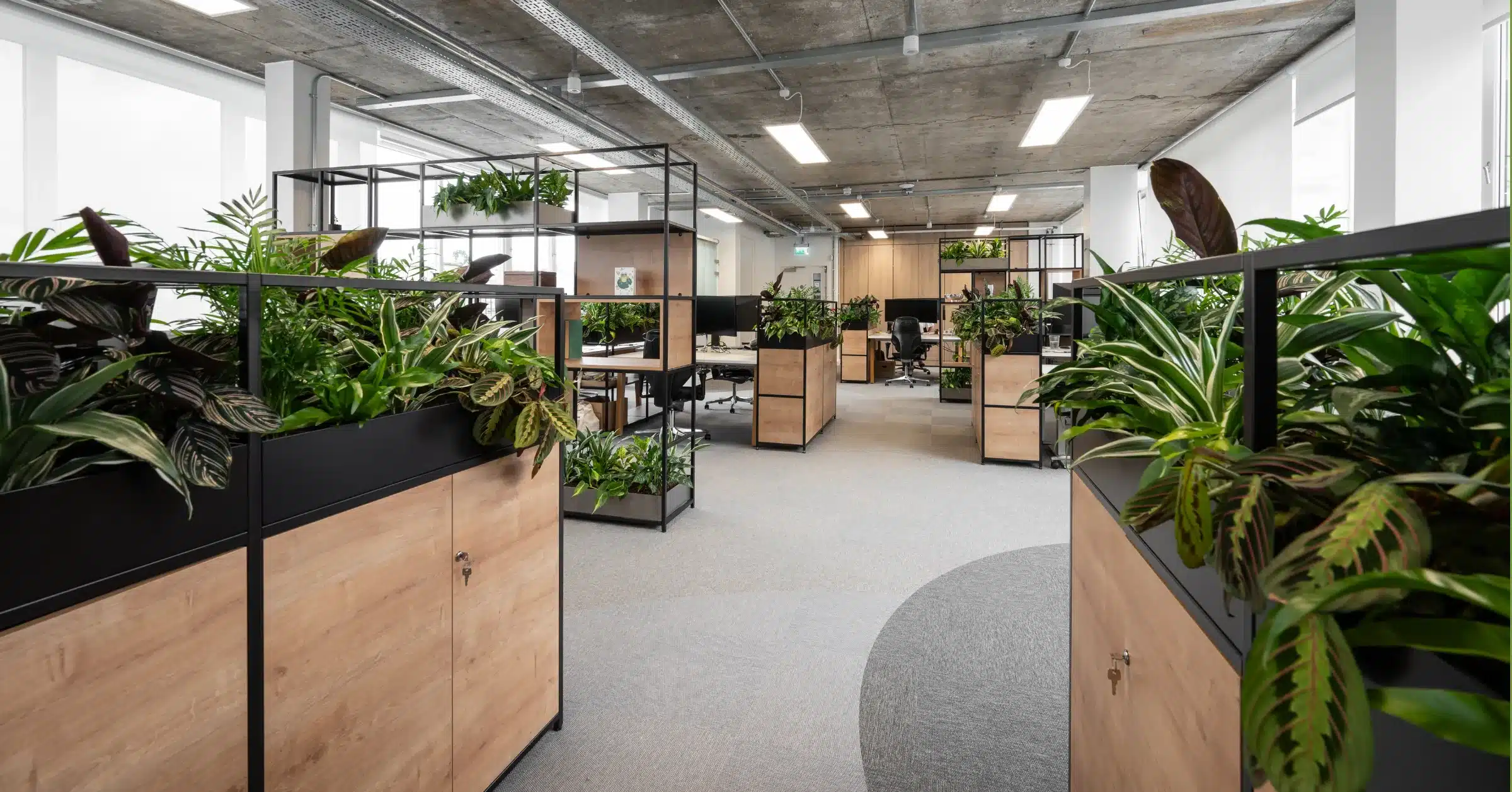
Air conditioning and heating systems create hostile conditions for living plants. Direct airflow from vents causes rapid moisture loss from foliage, leading to brown leaf tips, curling edges, and premature leaf drop that makes displays look patchy.
Weekend and overnight temperature resets compound this. When your building management system drops temperatures by several degrees outside working hours, plant root systems experience repeated thermal shock. A 2025 study in Scientific Reports confirmed that biophilic elements perform measurably better in stable environmental conditions. Map airflow patterns near your plant displays before any new installation.
Corporate offices often have deep floor plates where natural light barely reaches interior zones. Plants positioned in boardrooms, corridors, or enclosed collaboration spaces receive far less light than they need for photosynthesis, and the decline is gradual.
Symptoms include yellowing leaves, leggy growth as stems stretch toward available light, and eventual leaf drop. Species such as ZZ plants, Sansevieria, and Pothos tolerate low light well.
Overwatering is one of the most common reasons office plants fail in commercial settings. When staff water plants on a fixed calendar rather than checking soil moisture first, roots sit in saturated substrate and begin to rot from the base upward.
Signs include mushy stems, a slight odour from the planter, fungus gnats around the soil surface, and leaves that yellow from the bottom up. Planters without adequate drainage trap excess water beneath the root zone. Benholm Group uses a specialist watering reservoir technique that sustains plants between visits, removing the guesswork entirely.
Selecting plants based on catalogue appearance rather than office conditions is a recipe for decline. A tropical Ficus that thrives in a sunlit atrium will struggle in an interior meeting room with no natural light, low humidity, and aggressive air conditioning blowing directly on its canopy.
Species selection should always begin with an environmental assessment of your space. Key factors include available light, temperature range, humidity levels, proximity to exterior doors, and foot traffic volume. Choosing species matched to these conditions from the outset keeps your corporate displays looking consistently healthy and reduces replacement frequency.
Even with correct watering and adequate light, soil quality deteriorates in potted office plants over the months. The growing medium compacts, reducing airflow around roots and limiting the soil’s ability to hold the right balance of moisture and oxygen that plants depend on.
Nutrients deplete as the plant draws from a finite volume of substrate, leading to slower growth, smaller leaves, and pale foliage. Professional maintenance visits include soil condition checks, feeding, and substrate refreshment as standard. This proactive approach from Benholm Group keeps root health on track without your team needing to become experts.
Scale insects, spider mites, mealybugs, and fungus gnats thrive in the warm, still air of a corporate office. Once one plant becomes infested, pests spread rapidly across an entire floor because plants are typically grouped together and there’s no natural wind or rain to control populations.
Early signs include sticky residue on leaves, tiny webs between branches, or cotton-like clusters at leaf junctions. By the time you notice significant damage, the colony is established. Benholm Group’s technicians spot and treat pest problems during their four-weekly maintenance visits, preventing small issues from becoming costly replacements.
In many offices, plant care falls to a well-meaning team member who enjoys gardening at home. When that person changes roles, goes on holiday, or leaves the company entirely, nobody takes over. Plants are forgotten until they’re visibly declining and looking unprofessional.
DIY office plant care is inconsistent by nature. It slips down the priority list when workloads increase, creating cycles of attention and neglect that accelerate plant decline faster than any single environmental factor. A dedicated maintenance contract with Benholm Group removes this risk, with a named technician visiting regularly and replacing any plant that isn’t thriving.
Plants positioned near lifts, busy corridors, or reception desks take a physical beating daily. Leaves get brushed by passing shoulders, branches snap from contact, and soil compacts when people lean on planters or rest bags on them over time.
Physical stress weakens plants and creates entry points for disease and infection. Consider your plant placement carefully. Choose robust, broad-leafed species and larger planters for high-traffic zones, and reserve more delicate varieties for quieter areas where they’re less likely to be disturbed.
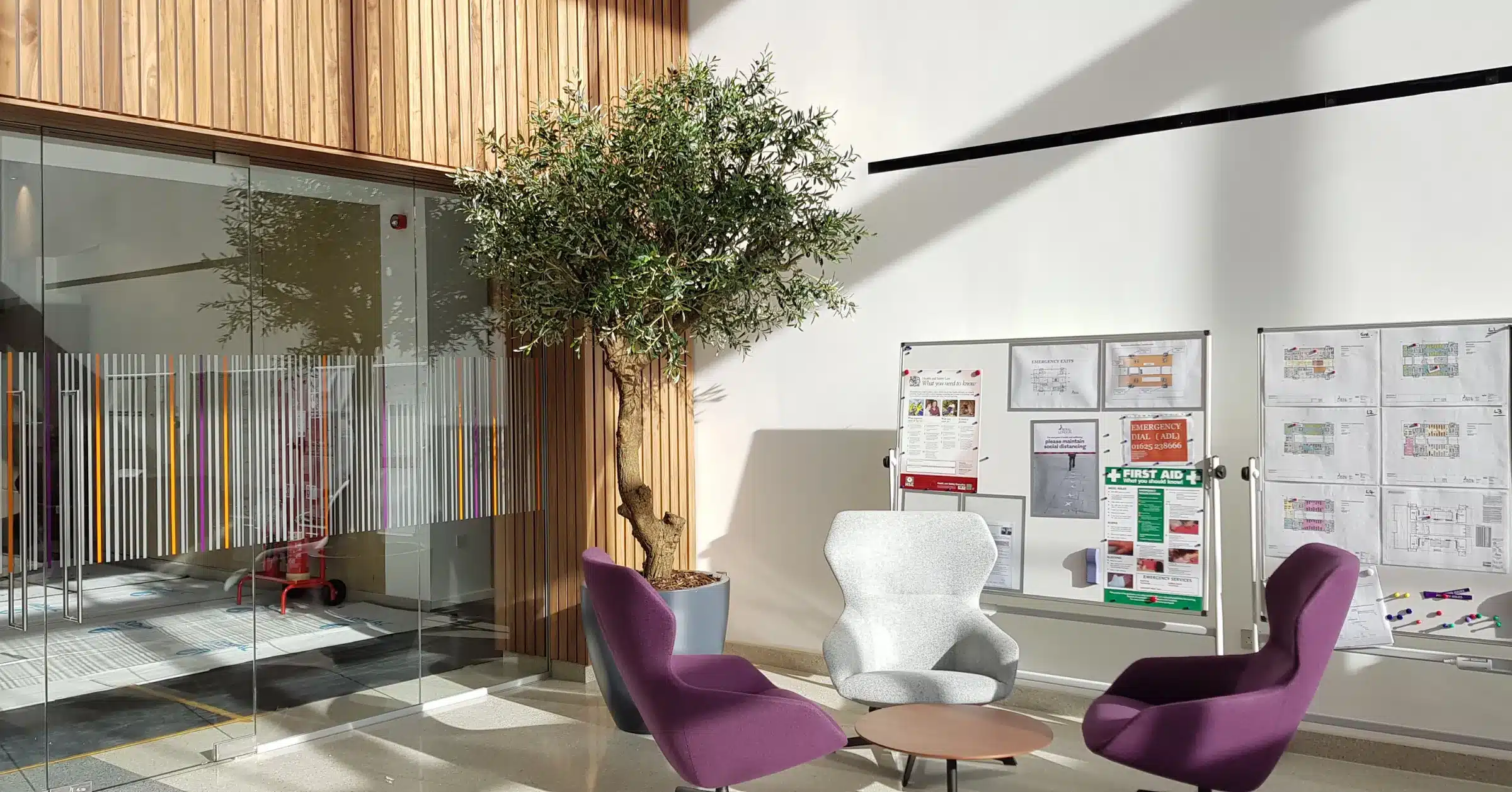
Prevention comes down to three things: choosing the right species, establishing professional maintenance, and monitoring conditions proactively. You don’t need to become a botanist. You need a trusted partner who understands how commercial buildings affect living plants.
Benholm Group provides a complete plant installation and maintenance service for corporate offices across the UK. We assess your space, recommend species matched to your conditions, and maintain your displays with regular four-weekly visits. If a plant isn’t thriving, we replace it at no additional cost.
If you’d like to discuss protecting your existing plant installation or planning a new scheme, we’d love to hear from you. Call us on 0808 175 4430 or email sales@benholm.com for a no-obligation consultation.
What is the most common cause of plant decline in offices?
Environmental stress from HVAC systems is the most frequent cause of office plant decline. Direct airflow strips moisture from foliage, while overnight and weekend temperature resets create thermal shock that weakens root systems progressively over time.
How often should office plants be professionally maintained?
Professional maintenance every four weeks keeps most office plant installations in healthy condition. Benholm Group technicians water, clean, prune, and inspect every plant during each visit, catching early signs of stress before they become visible problems.
Why do office plants die even with regular watering?
Watering alone doesn’t address the full range of stressors in a corporate environment. Poor lighting, HVAC airflow, compacted soil, and pest pressure all contribute to decline. Benholm Group’s maintenance approach considers every environmental factor for long-term plant health.
How does biophilic design help prevent plant decline?
Biophilic design considers plants as integral to the building’s interior scheme rather than a decorative afterthought. By planning lighting, airflow, and species selection together during the design phase, your plants are positioned to thrive from day one.