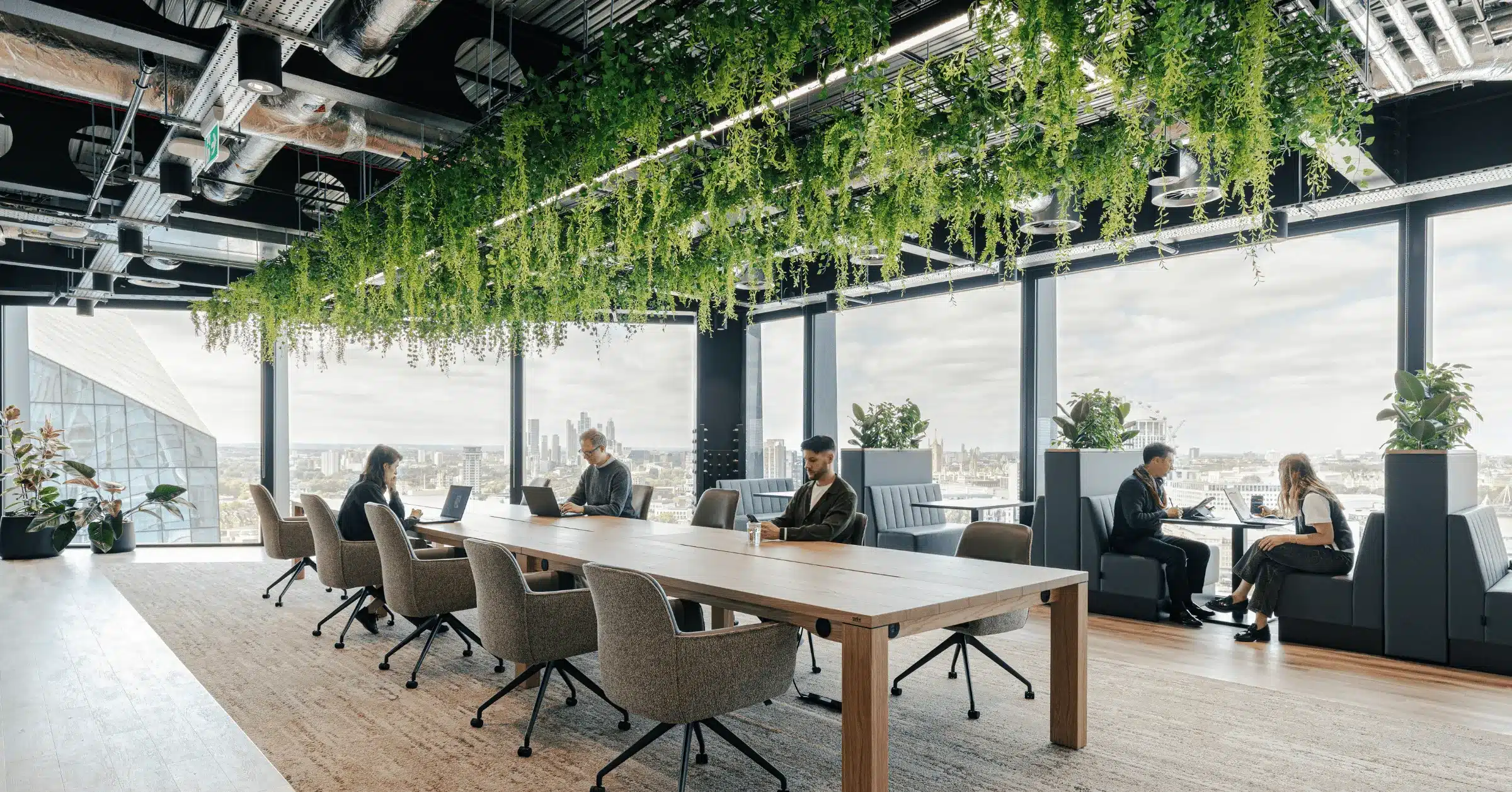
New research from Matrix Booking, reported in FMJ (July/August 2026), has named office chatter as the UK’s biggest productivity challenge. Anyone who has tried to finish a report next to an impromptu team huddle will recognise it.
What matters is the conclusion. The fix isn’t less collaboration. Collaboration is a big part of why people come into the office. The fix is giving people the right space at the right time: somewhere to talk, and somewhere to think.
Many workplaces still treat the office as one big room. Conversations, calls, focused work and social catch-ups all happen in the same open area. Noise spreads, concentration breaks, and people put on headphones to cope. Being in the same room stops being a benefit.
Better planning helps, with clear zones for focus, collaboration and downtime. But zones only work if people can tell what each one is for. That is where the design of the space itself matters.
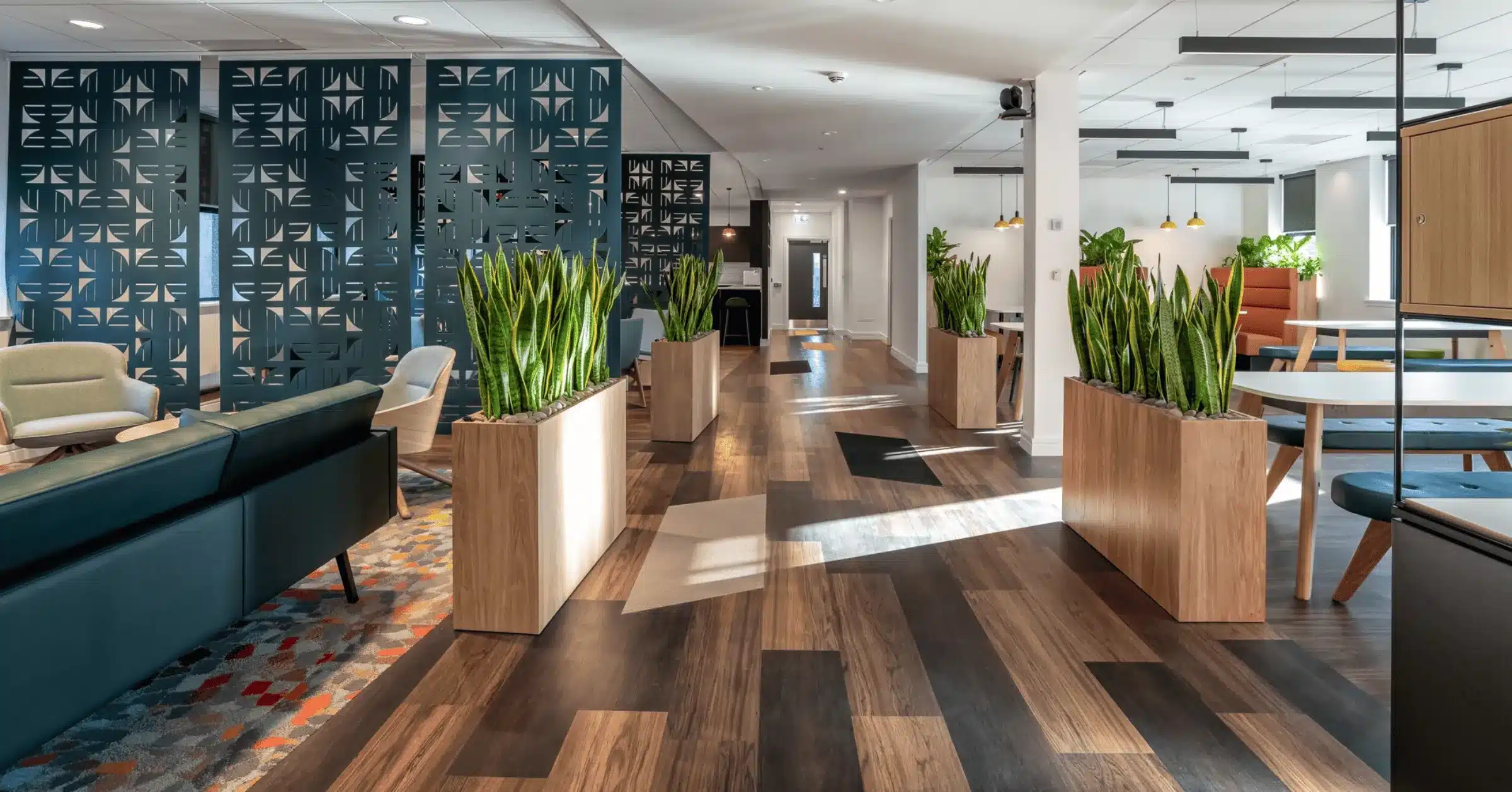
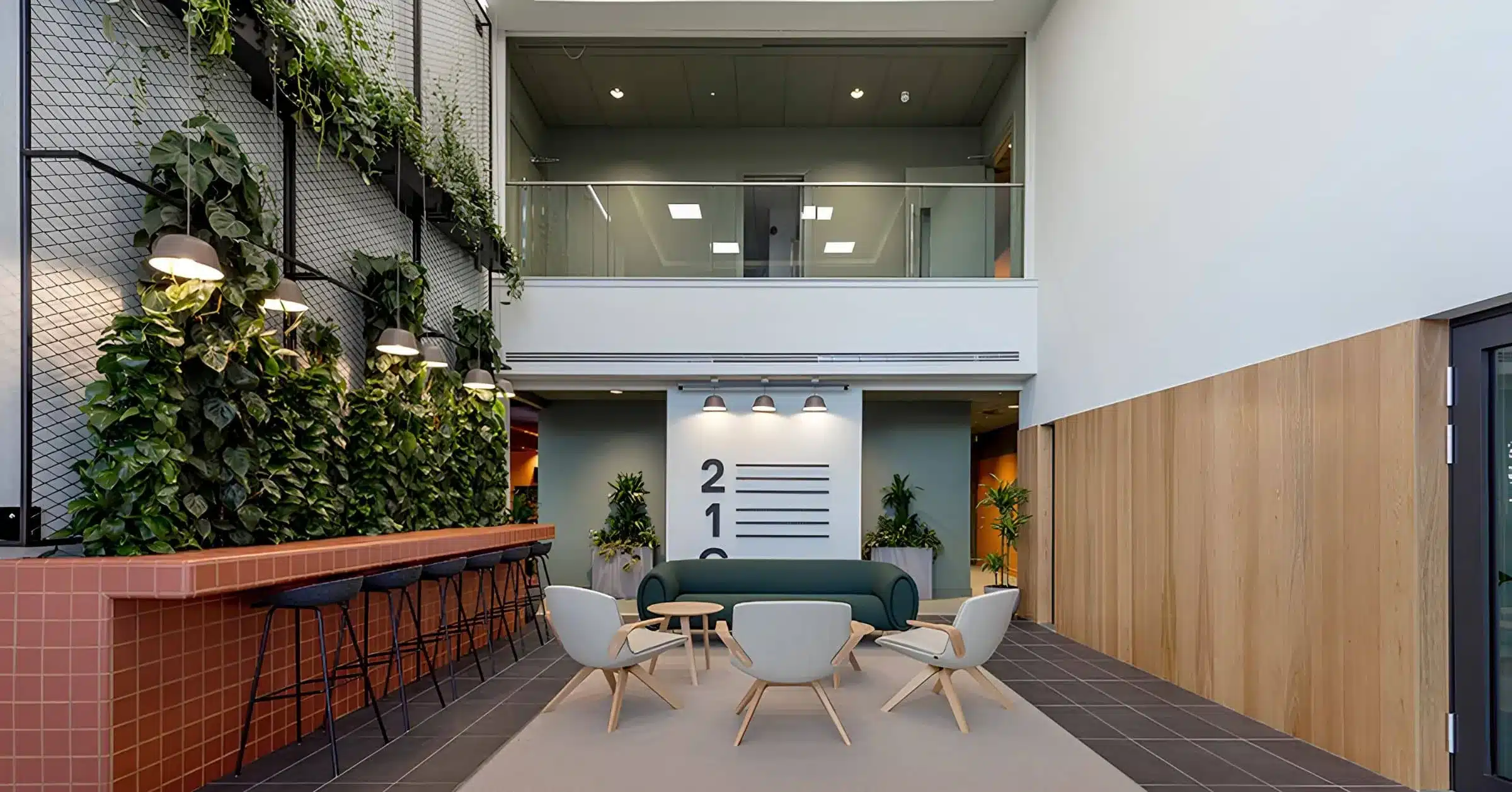
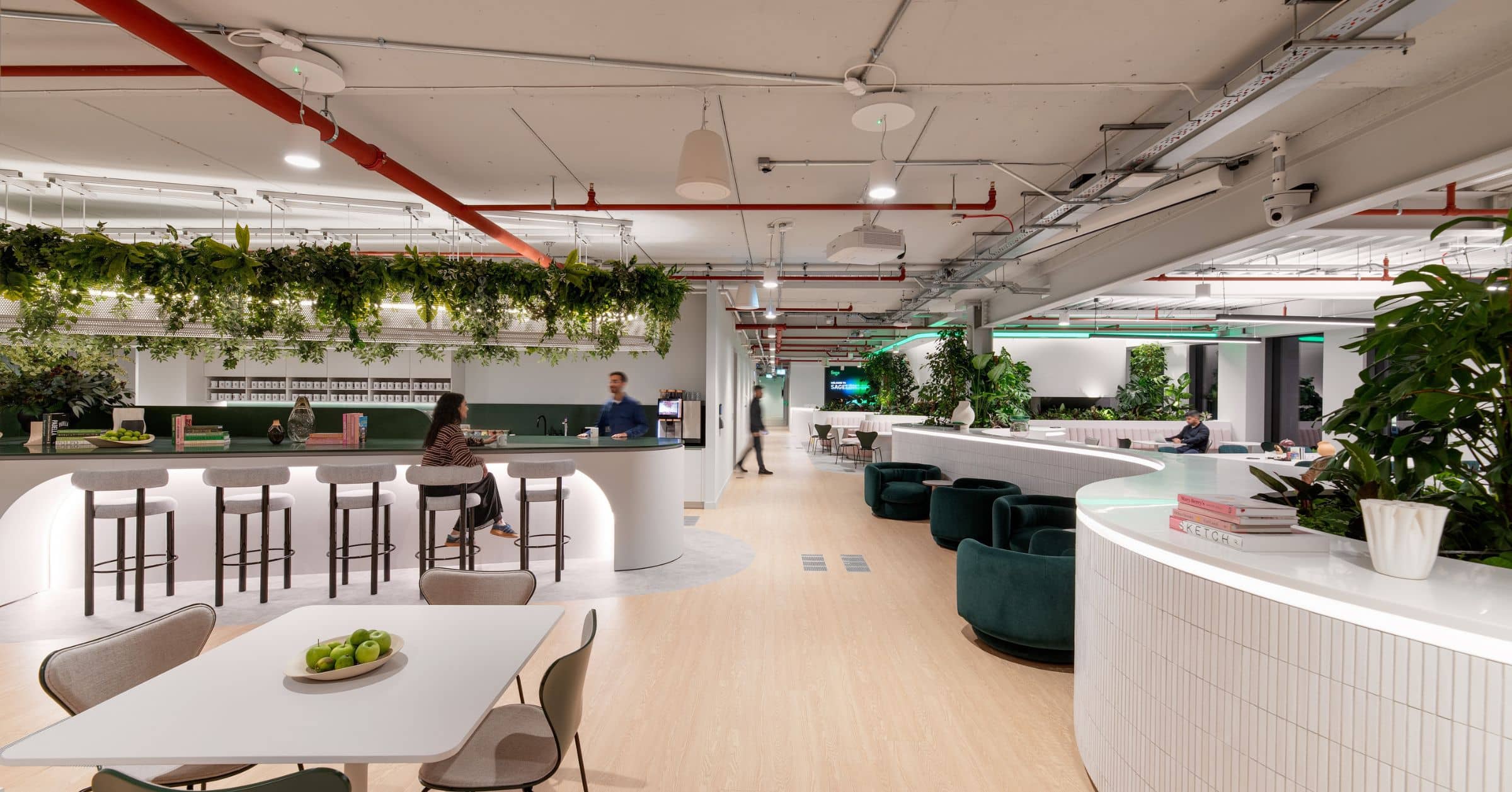
Biophilic design is built on the idea that people feel and perform better when their surroundings connect them with nature. Plants are one of the most practical ways to do this, and they can help solve the chatter problem in several ways:
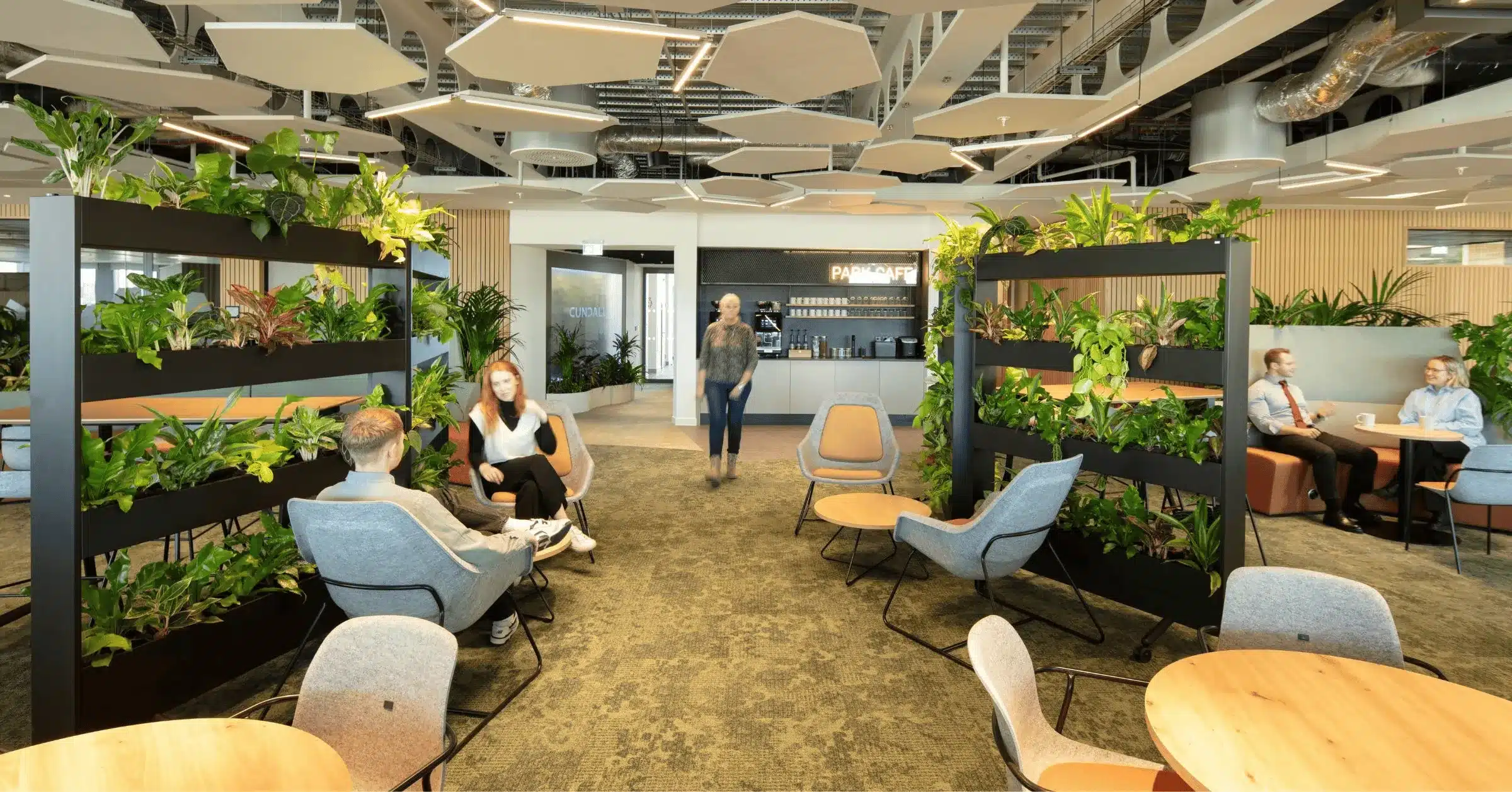
Plants define zones without building walls. Planters, plant screens and green dividers mark the edge of a collaboration area or a quiet corner. They separate spaces while keeping the room open and flexible, which suits hybrid teams whose needs change from day to day.
Greenery signals how a space should be used. A calm, planted area invites quieter behaviour in a way a “quiet zone” sign never does. People respond to atmosphere, so a space that feels restful tends to be treated that way.
Plants soften a space. Hard, bare surfaces make noise feel sharper. Foliage and natural textures make a space feel less harsh. To be clear, plants are not a substitute for proper acoustic treatment, but they work well alongside it and make a room feel calmer.
Nature helps people recover. Focus is tiring, and so is a noisy day. Views of greenery and natural elements are widely linked to lower stress and better mood, and research from the University of Exeter found that employees in offices with plants were more productive than those in bare, minimalist spaces. A planted break-out area gives people somewhere to reset before returning to their desks.
Office chatter isn’t going away, and it shouldn’t. Conversation is how teams solve problems and build relationships. The challenge is giving people the right space for the task in front of them. Thoughtful zoning combined with plants and biophilic design is one of the most effective and most human ways to do that.
At Benholm Group, we help workplaces create green spaces that support the way people actually work. If your office needs a better balance between buzz and focus, we’d love to talk.