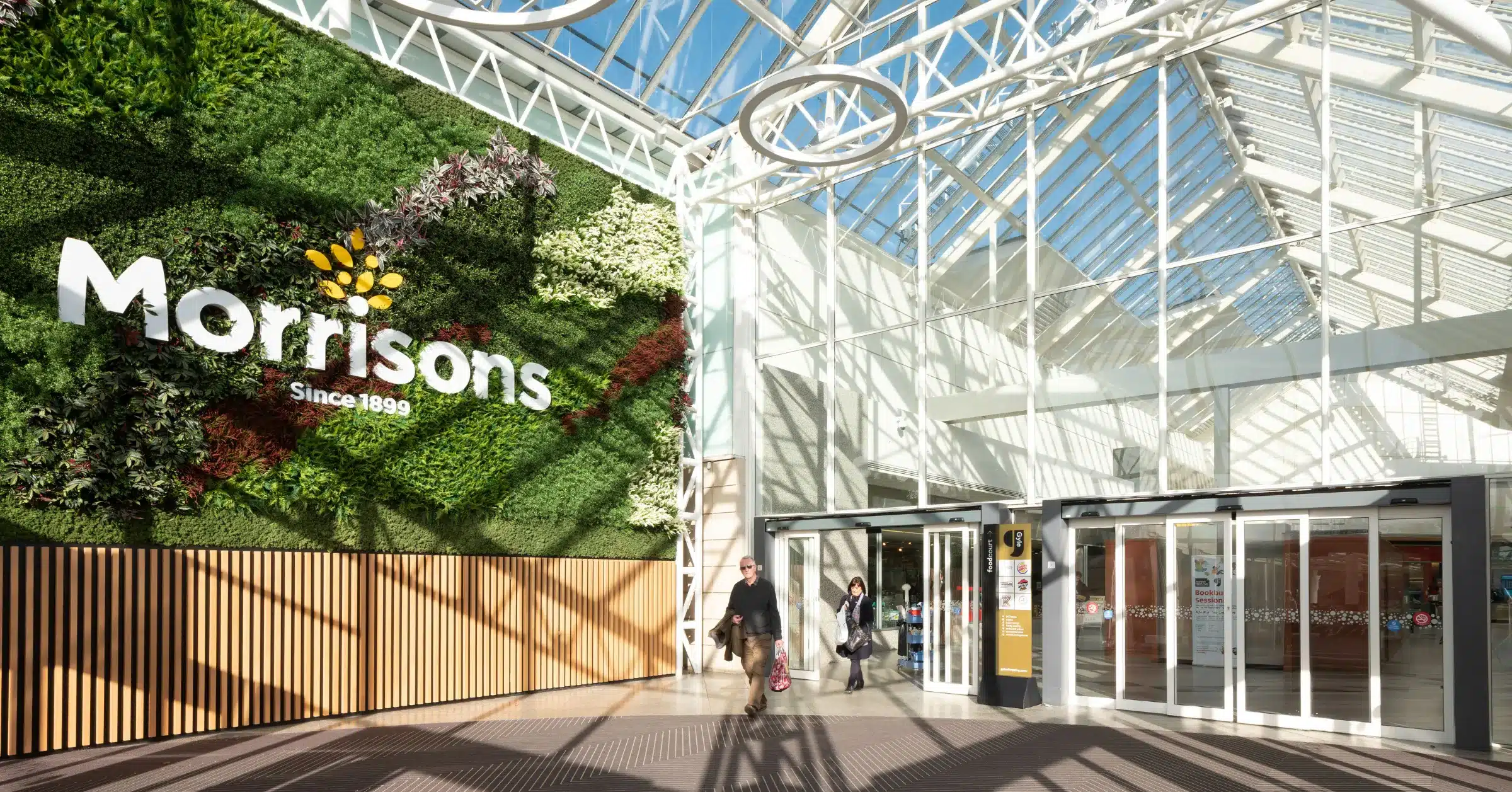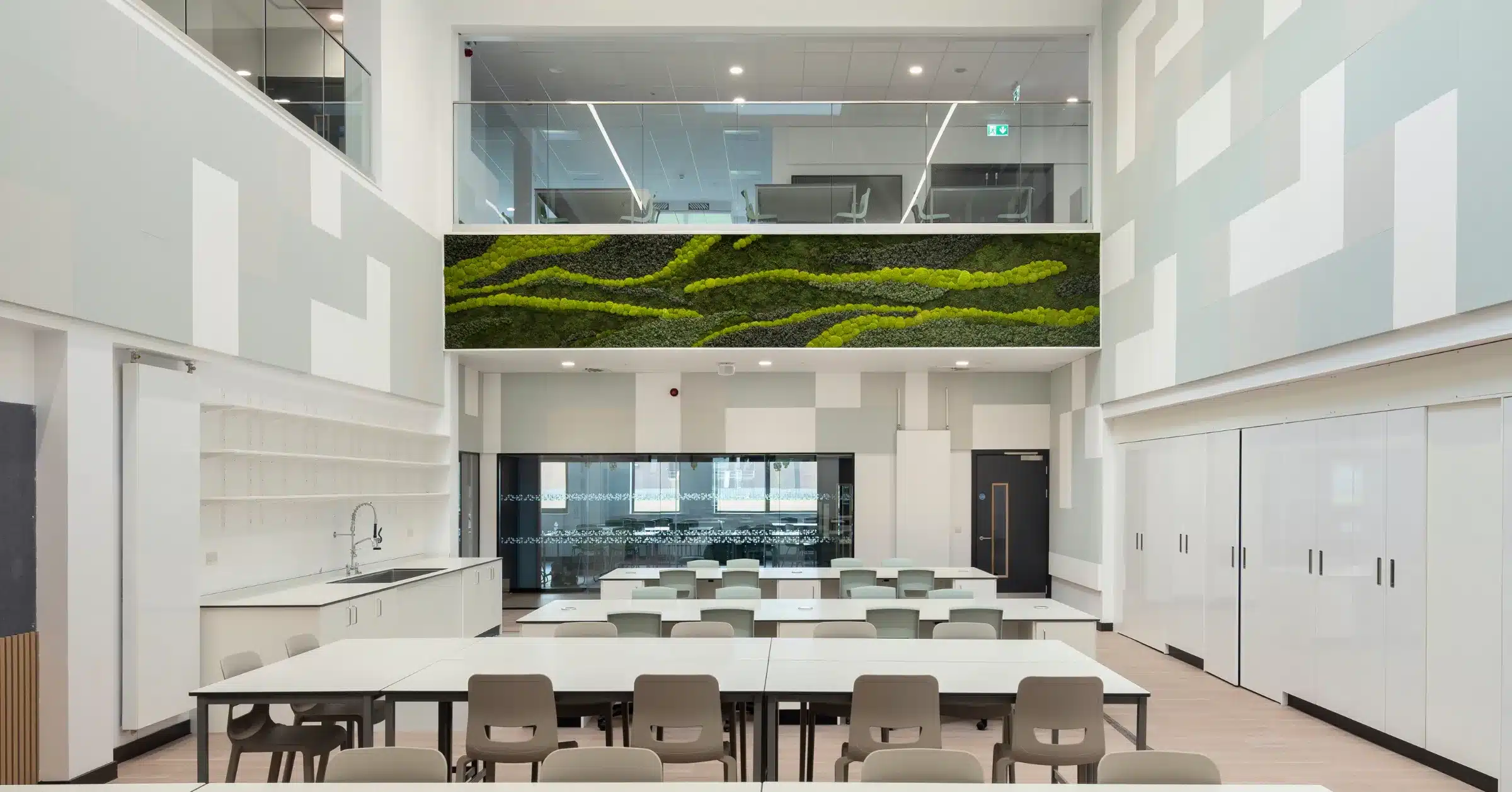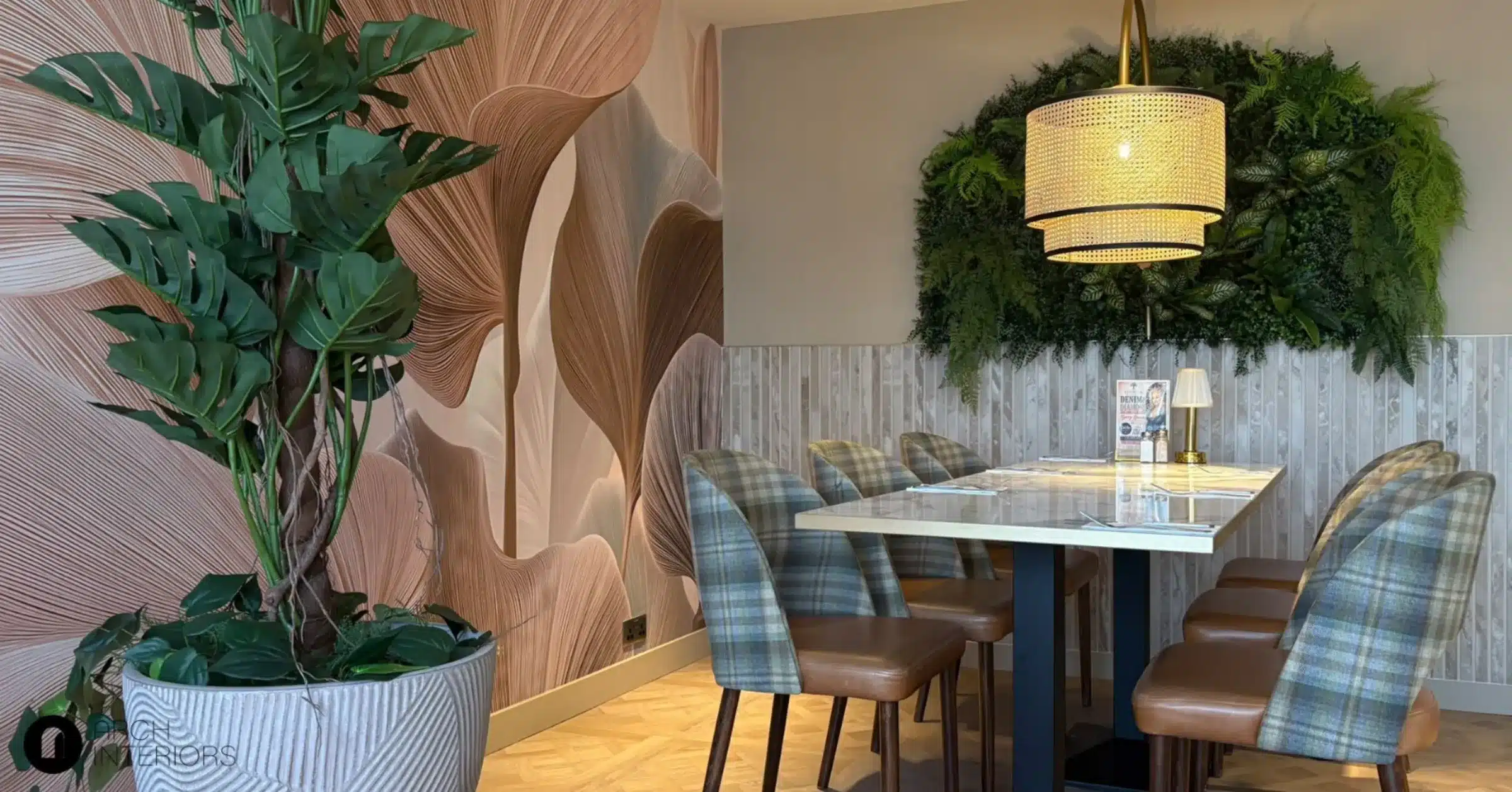
Every retailer knows that a display is only as strong as what surrounds it. Lighting, fixtures, signage and colour are all tools for guiding the eye. Plants are the one merchandising prop that is alive, changes with the seasons and quietly tells shoppers something about your brand.
So can greenery really help sell a product? In our experience, and in a growing body of research, the answer is yes, as long as it is designed rather than simply dropped in.
Think of planting as a frame for your merchandise. Soft, organic shapes set against hard shelving, glass and packaging create contrast, and contrast is what makes a product stand out. A single sculptural plant beside a hero product, trailing foliage softening the edge of a shelf, or a cluster of planters marking out a display zone all tell the shopper where to look.
Big names have been doing this for years. Apple has filled many of its stores with large indoor trees, Itsu uses planters of living orchids to give its stores a sense of freshness, and The White Company uses living plants within its product displays to create a feeling of natural wellness.
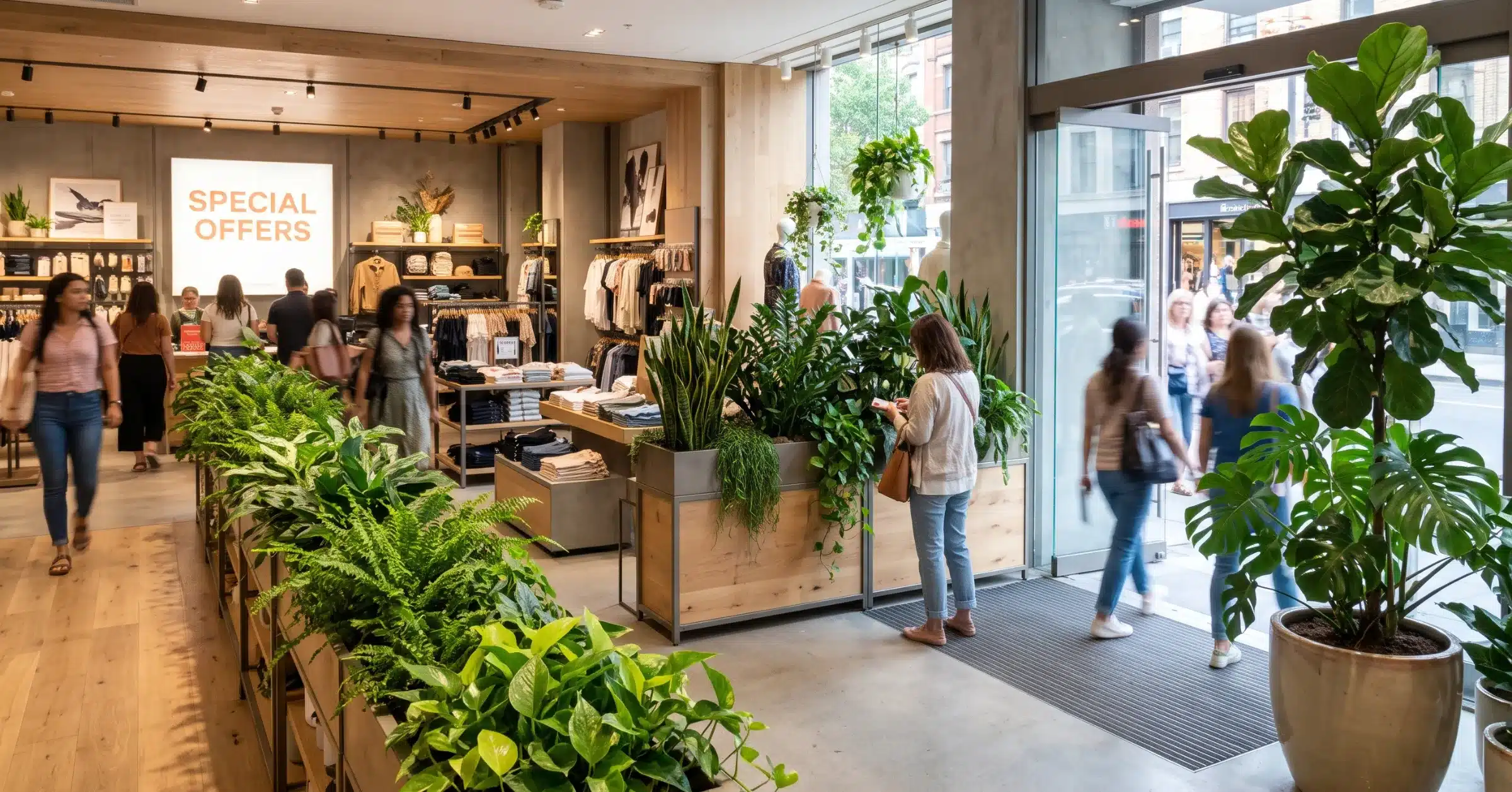
Green is a strong visual signal in most retail palettes. A tall specimen near the entrance can pull people in from the street or the mall. A run of planters can lead the eye towards a promotion on the back wall. A planted divider can create a calm pause point between zones without building a single wall.
Used this way, planting becomes part of your customer journey: it welcomes, directs and slows people down at exactly the places where you want them to look closely.
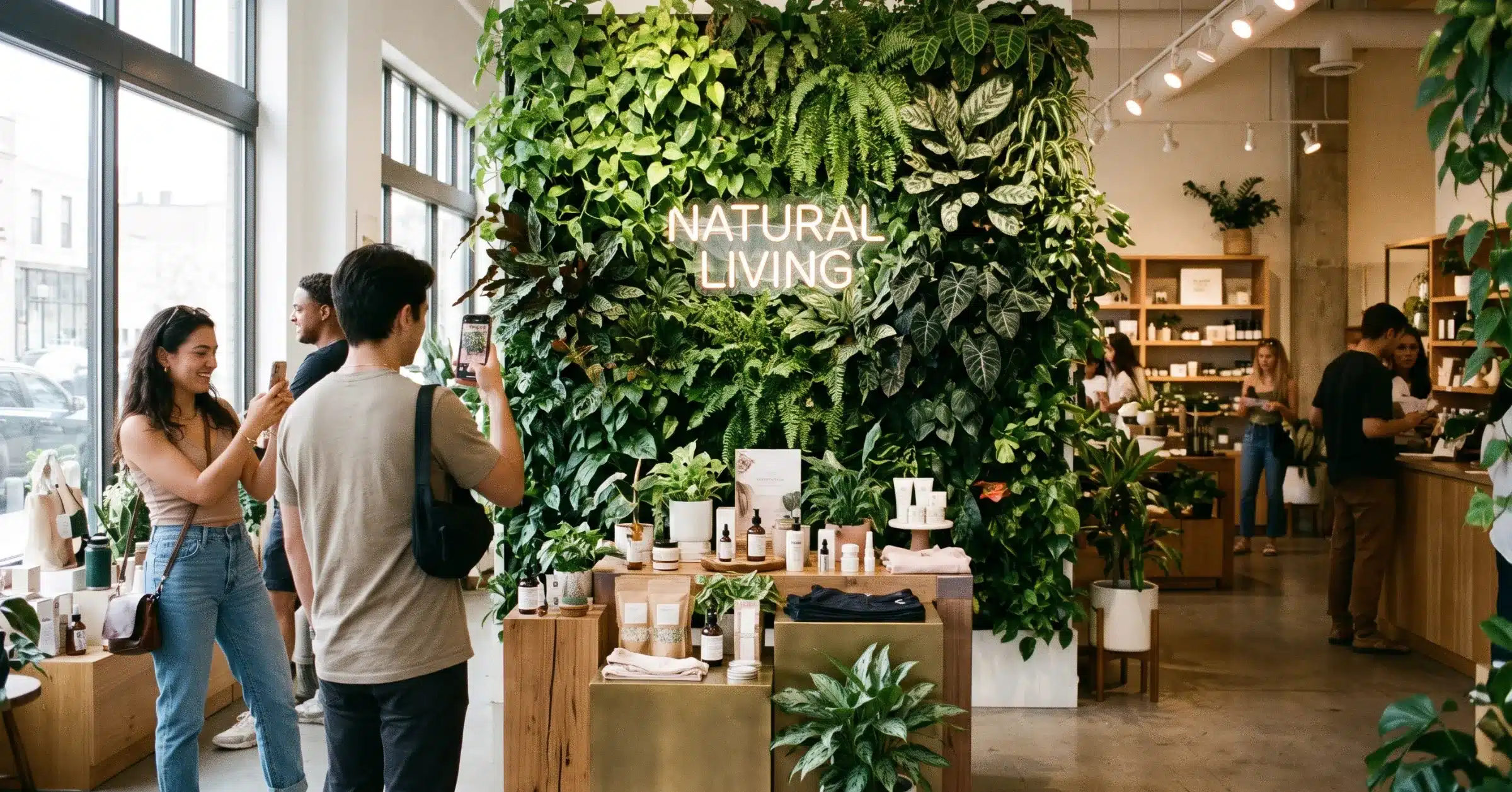
Shoppers photograph what looks good. A planted feature wall, a well-dressed window or a lush corner behind a product launch gives customers something worth sharing, and every photo they post is free exposure for your brand. Foliage also photographs well against almost any colour scheme, so it can support a campaign without competing with it.
The evidence is encouraging, with some important caveats.
There is a caveat worth taking seriously. A 2021 study of 177 participants, published in the Journal of Retailing and Consumer Services, found that simply having greenery in view was not enough on its own to improve shoppers’ responses. What made the difference was a combination of natural forms and patterns, natural materials, and a sense of order and complexity. In other words, plants work best as part of a considered design, not as an add-on.
Scale it to the space and the product. Oversized plants can swamp small items, while tiny pots disappear in a large unit. Match the plant and its container to the scale of what you are selling.
Choose plants for your conditions. Retail lighting, heating, doors opening onto cold air and heavy footfall all affect what will thrive. The right species in the right place stays looking good for far longer.
Match the planter to the brand. Containers are part of the display. Natural finishes such as terracotta, clay and stone suit a warm, crafted feel, while sleek, dark planters suit a more contemporary look.
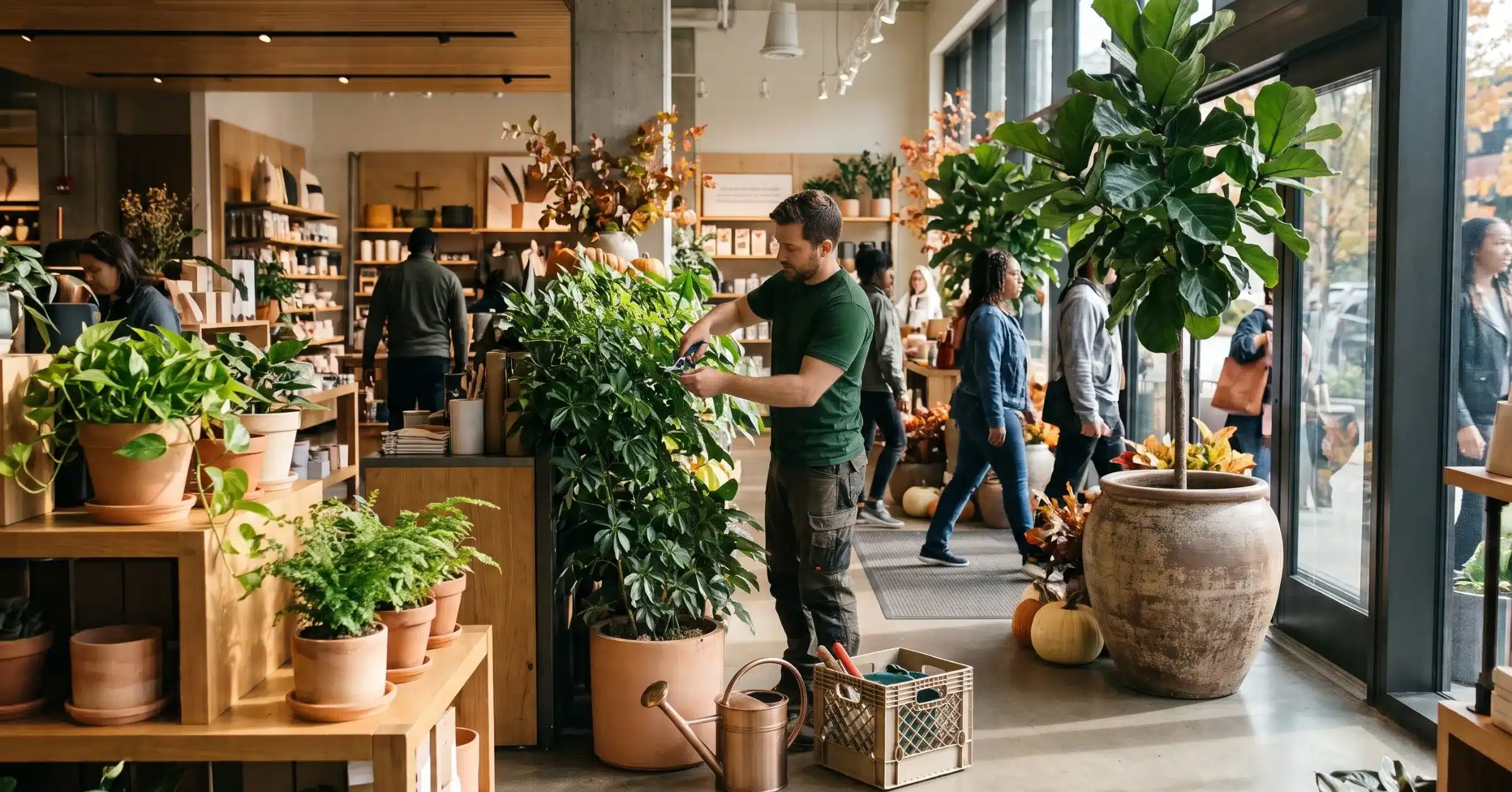
Keep it fresh. Seasonal changes keep a store feeling alive. Autumn foliage and spooky-themed plants for Halloween can give way to festive planting and seasonal floristry for Christmas, using the same planters and the same positions.
Don’t skip the maintenance. A tired or dying plant sends exactly the wrong message about your brand. Regular professional care keeps displays looking their best all year round. Artificial plants can work in spots that are hard to reach or very low in light, but they do not bring the air-quality benefits of living plants, so many retailers use a mix.
Keep sightlines and safety in mind. Greenery should frame products, not hide them or get in the way of customers and staff.
The biggest mistake we see is planting added as an afterthought, and customers can tell. Involving a planting specialist early, ideally alongside your shopfitter or interior designer, means plants can be built into the layout, lighting and merchandising plan rather than squeezed in at the end.
Based in Falkirk, Benholm Group has more than 20 years of experience supplying and maintaining interior plants for commercial premises across the UK and Scotland. From the entrance planters that welcome shoppers to in-store displays and seasonal floristry, we can design, install and maintain planting that supports your merchandising rather than competing with it.
If you would like to talk about how greenery could work in your store, get in touch with the Benholm team at www.benholm.com.