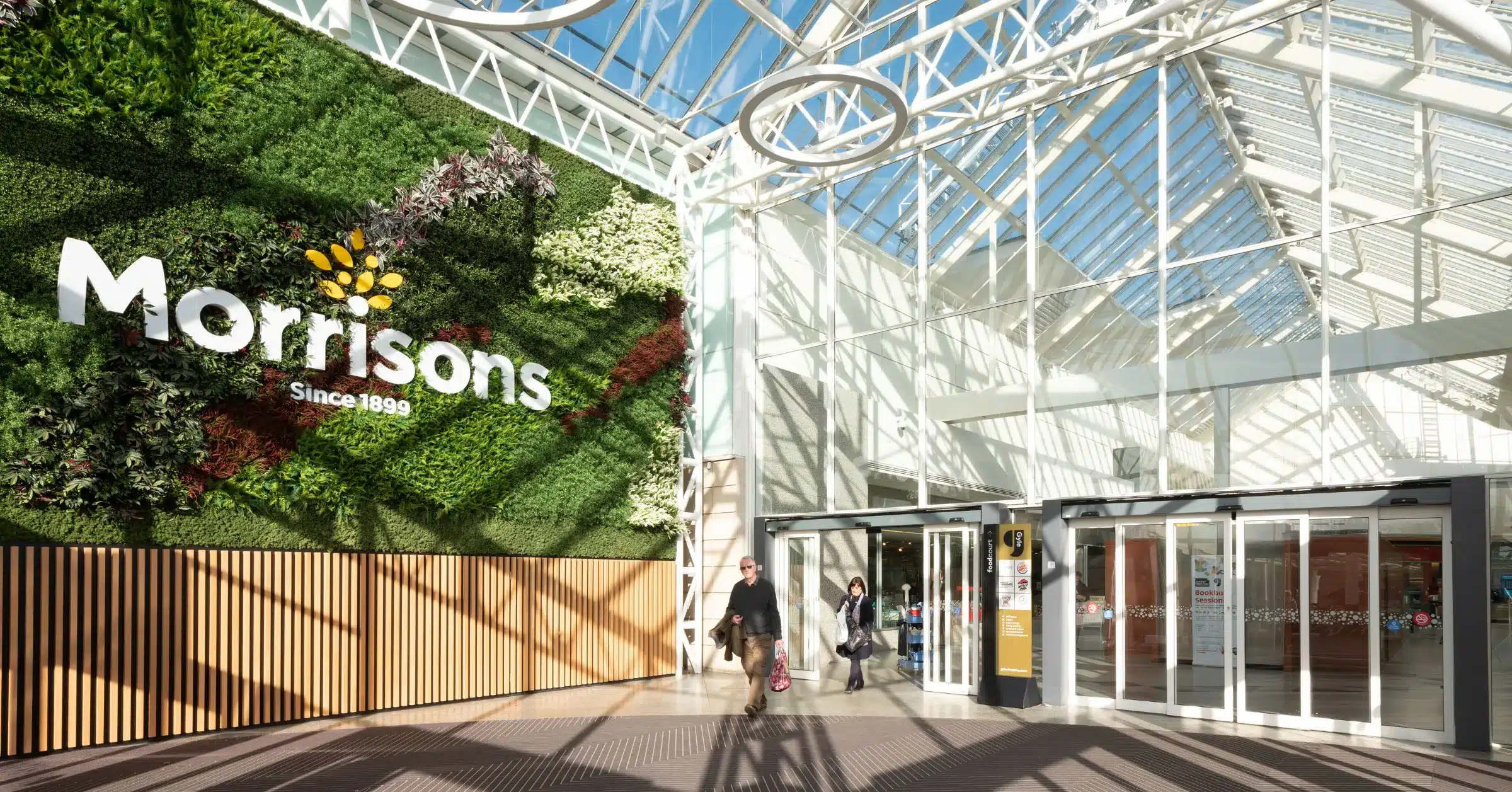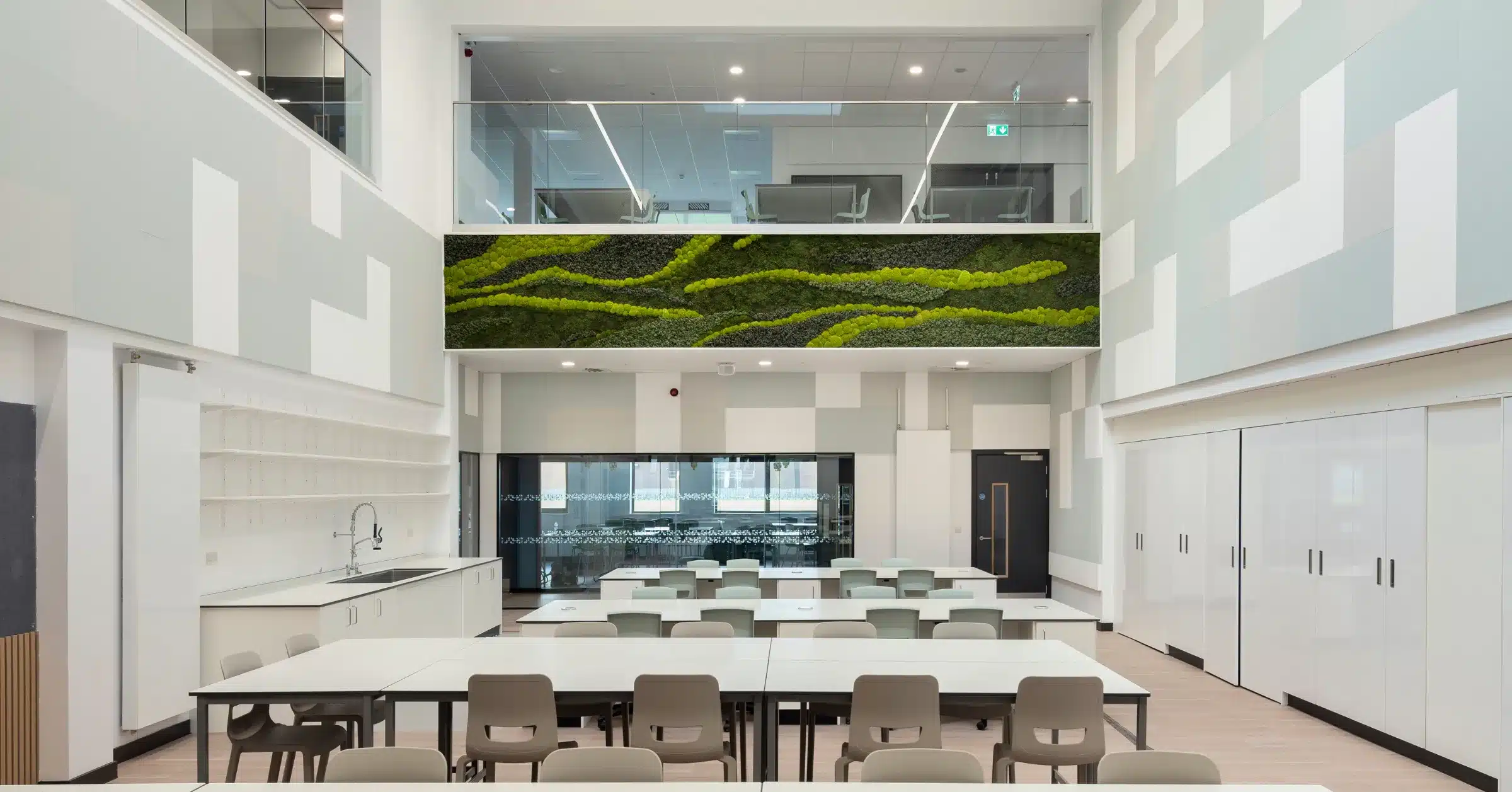
Planting can make or break a commercial interior. Done well, it softens a space and reinforces your brand. Done badly, it’s the first thing people notice — even if they can’t quite say why the space feels “off.”
We see the same handful of mistakes come up again and again, usually because planting gets specified late, by someone without biophilic expertise, or without enough thought for the conditions the plants will actually have to live in. Here are the five we see most often, and what to do instead.
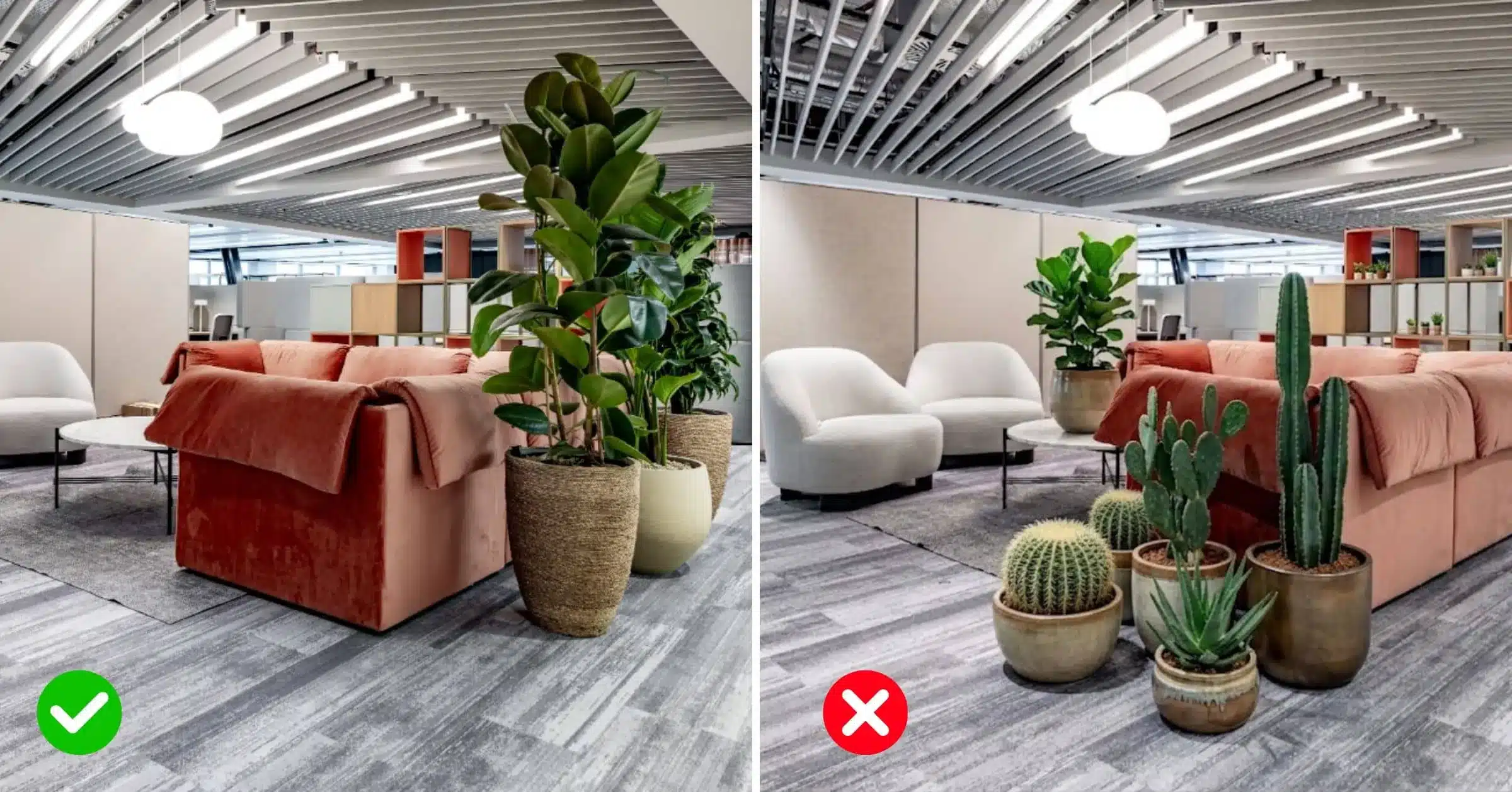
A single small planter in a double-height atrium disappears. An oversized display crammed into a narrow corridor overwhelms it. Scale is one of the most common — and most avoidable — mistakes in commercial planting, because it’s rarely about the plant itself. It’s about how the plant relates to the volume of the room, the sightlines, and the furniture around it.
The fix is to think about planting in proportion to the space from the start, the same way you’d think about the scale of a light fitting or a piece of furniture, rather than treating it as something to squeeze in at the end.
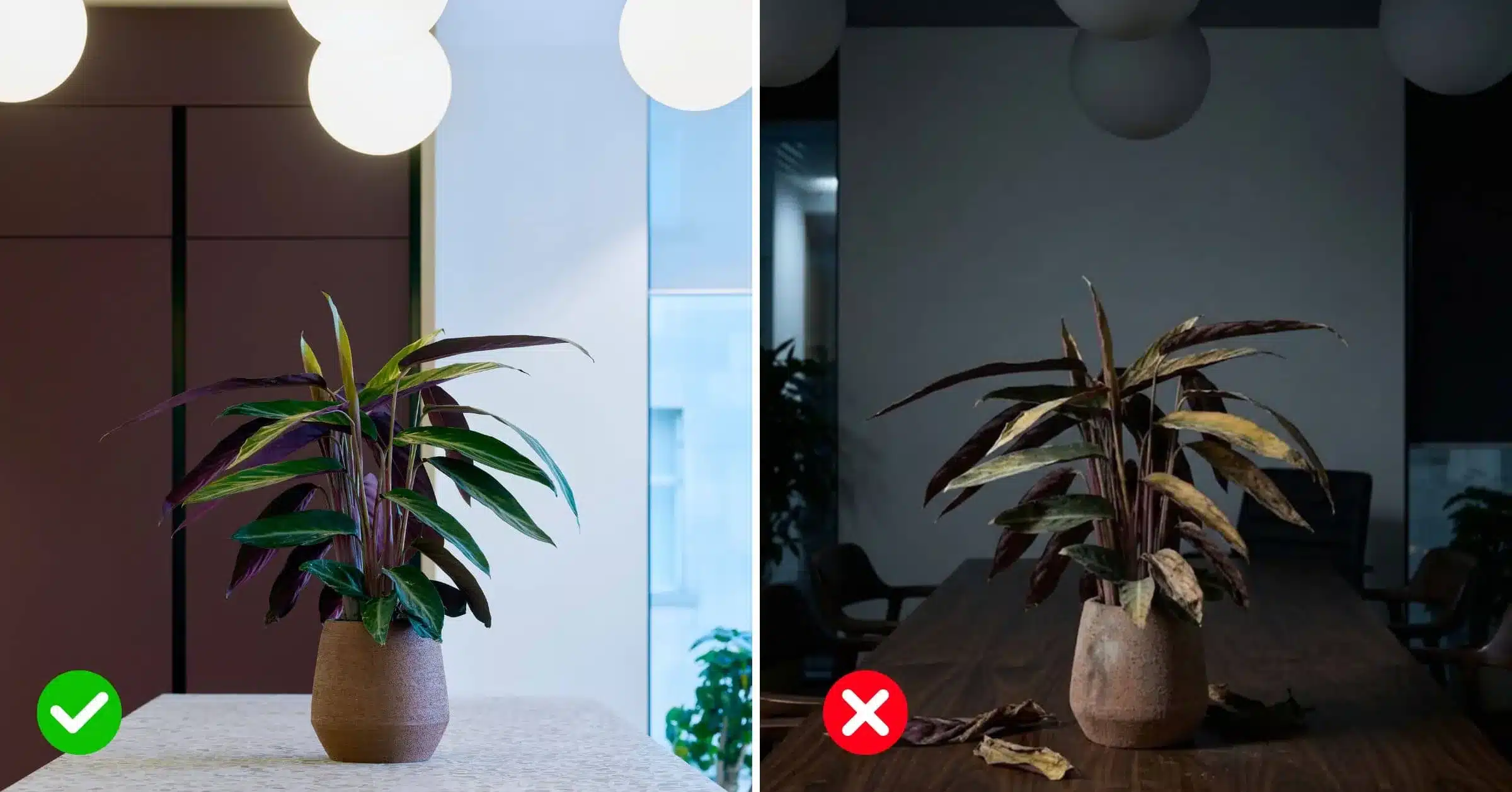
This is the mistake that costs the most further down the line. A plant that looks perfect on the day of installation can start to fade within weeks if it’s been placed somewhere it simply can’t thrive — too dark, too much direct sun, too close to a heat vent or air conditioning unit.
Every space has its own light levels, temperature, and airflow, and different species tolerate very different conditions. Getting this wrong doesn’t just mean an unhealthy plant; it means an ongoing maintenance headache and a display that never looks the way it was intended to.
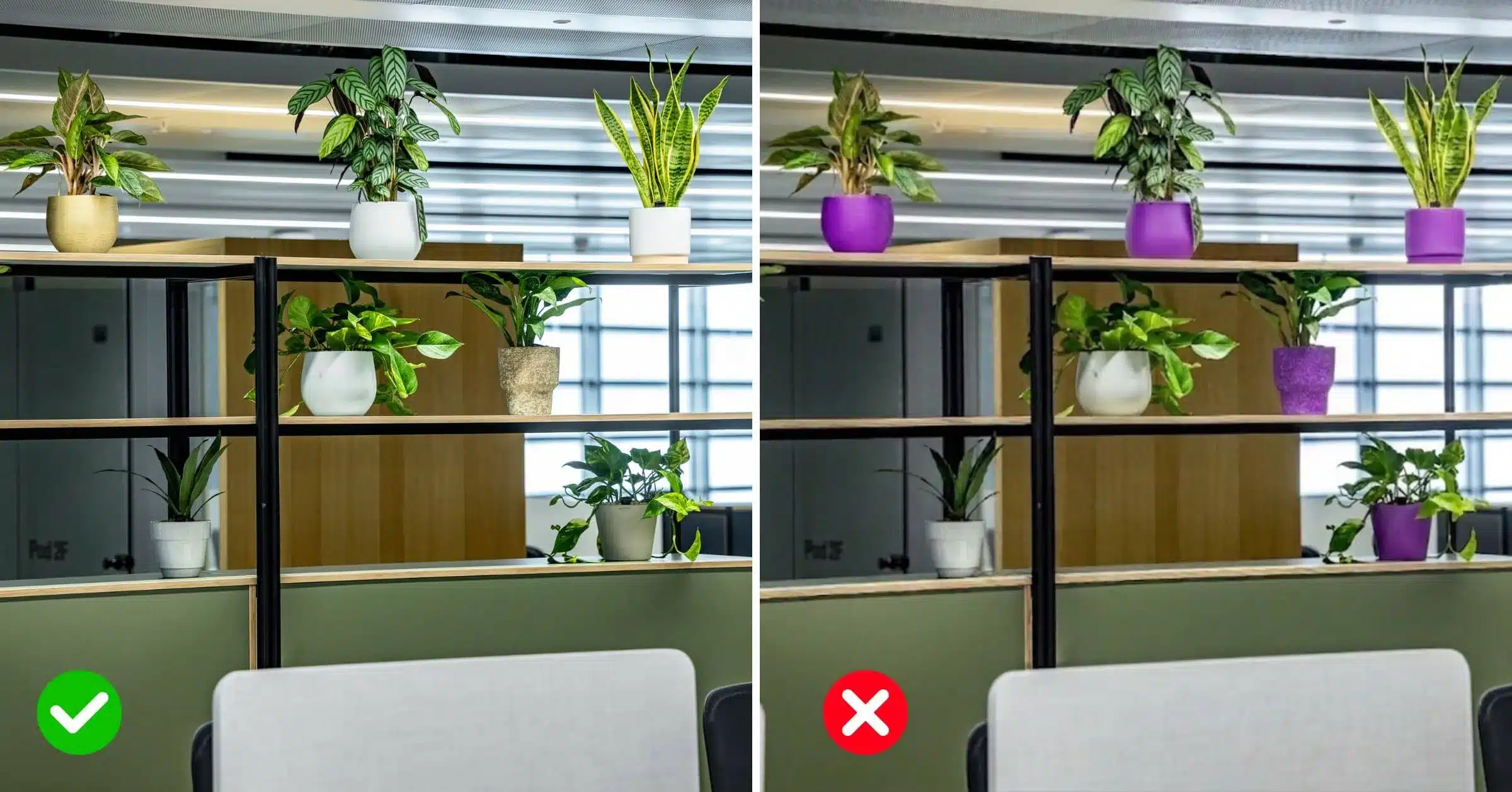
A planter that clashes with the material palette, sits at the wrong height, or looks like it’s been bought as an afterthought undermines the whole scheme, no matter how good the plant itself is.
The best results come when the planter is chosen alongside the plant and the wider interior, considered as part of the material and finishes palette rather than picked separately once everything else is decided.
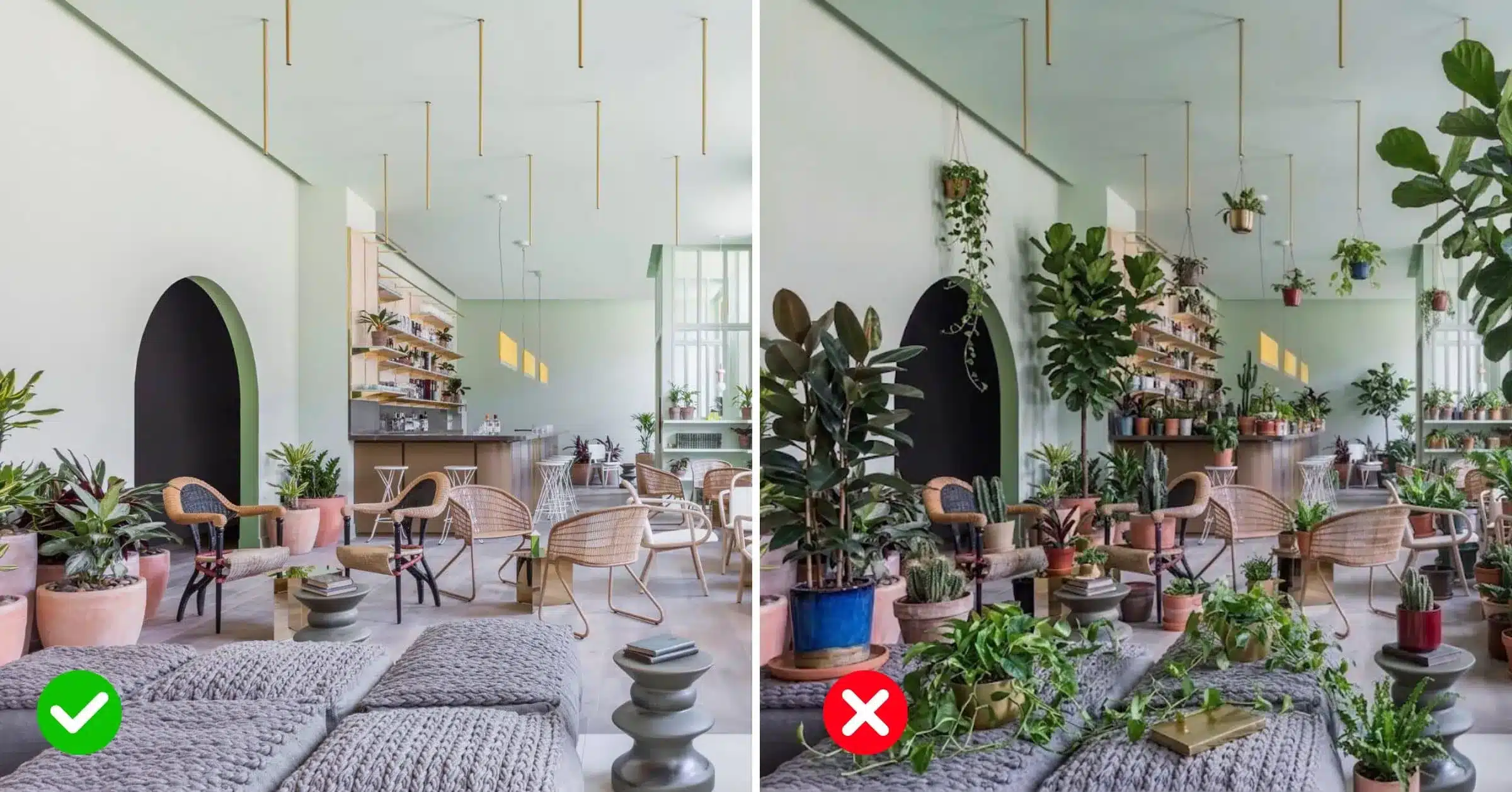
More species doesn’t mean more impact. In fact, mixing too many different plants together can read as cluttered rather than considered, especially in spaces that are meant to feel calm, professional, or premium.
A tighter palette of species — chosen deliberately and repeated with intention through a space — almost always looks more polished, and it’s easier to maintain consistently too.
This is the mistake that causes all the others. When planting is left until the very end of a project, there’s no time to think properly about scale, light, planters, or species mix — decisions get made quickly, based on whatever will fit, rather than what will actually work.
Planting deserves a place in the design brief from day one, not a last-minute addition once everything else is signed off. (We wrote about this in more detail in our blog Planting as Interior Design: Why Plants Should Be Part of the Design Process , if you want to dig into it further.)
Every one of these mistakes is avoidable — but avoiding them takes planting knowledge that most interior design teams simply aren’t expected to have, and shouldn’t need to. That’s exactly the gap we fill.
At Benholm, our friendly team works with interior designers and architects across the wider UK and Scotland to get planting right from the outset — advising on scale, species, light levels, and container choice so your scheme looks as good in a year’s time as it does on installation day. Whether you’re at concept stage or already snagging a project, get in touch and we’ll help you choose the best planting for your space.
Want more advice like this, straight to your inbox? Sign up to our emails for tips on specifying planting for commercial spaces, design inspiration, and updates from the Benholm team — subscribe here.