Retail has spent the last decade fighting for relevance against a browser tab. The stores winning that fight aren’t necessarily the cheapest or the most convenient – they’re the ones that give people a reason to physically be there. That reason is rarely the product alone. It’s the environment around it.
For retail designers, that shifts the brief. It’s no longer just “how do we put merchandise in this space effectively”, it’s “how do we make someone want to stay in it”. And one of the most consistently underused tools for doing that is planting.
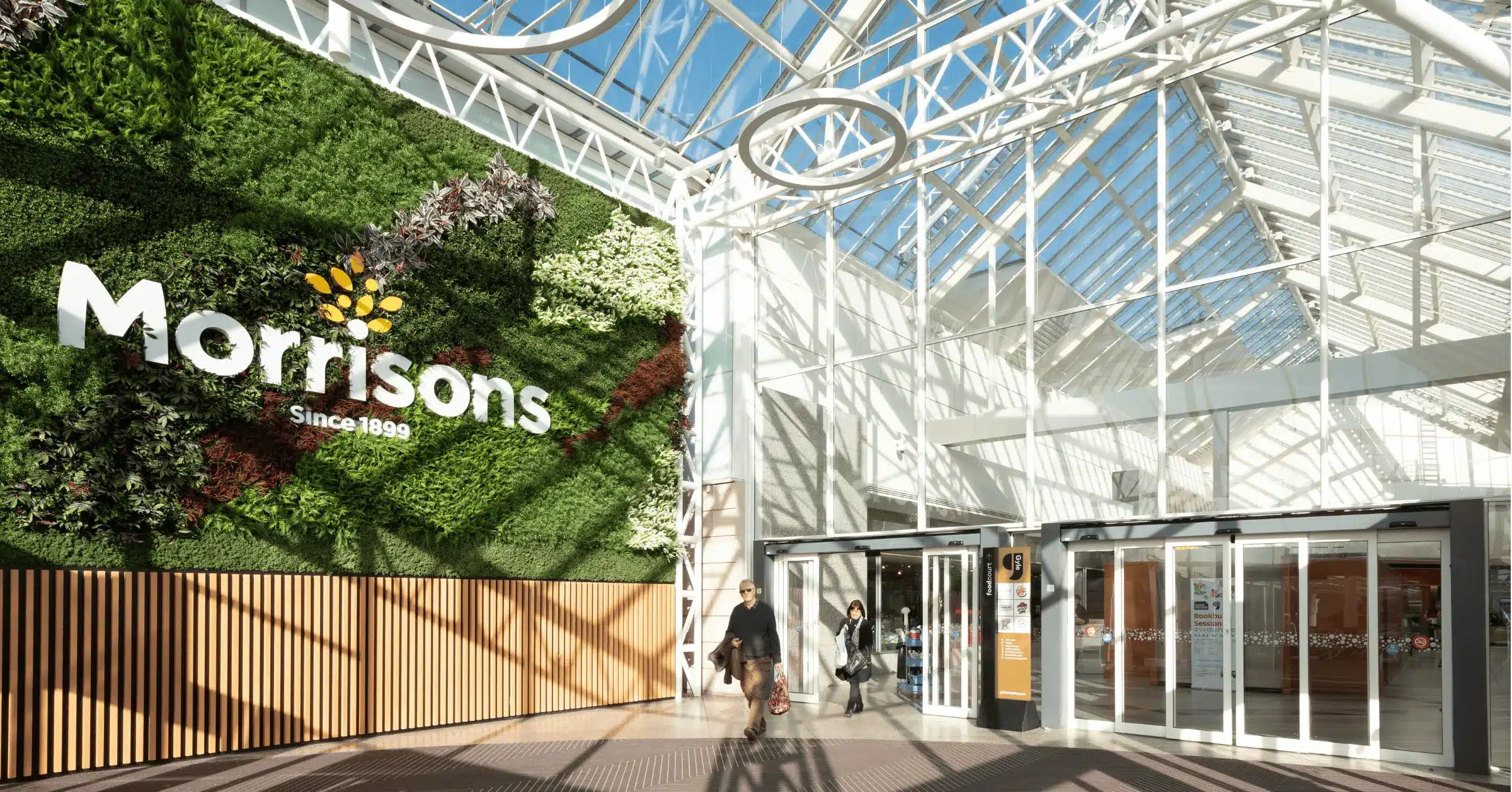
A shopping centre or high street unit competes with online retail on exactly one thing it can’t be beaten on: physical experience. Natural light, texture, scent, temperature, sound, greenery – none of that translates to a screen. Biophilic design, the practice of bringing natural elements into built environments, exists specifically to make the most of that advantage.
The evidence on this is well established in retail psychology: shoppers in greener, more naturalistic environments tend to walk slower, linger longer, and report a more positive impression of the retailers around them. That’s not a soft, nice-to-have outcome – dwell time and mood are directly linked to spend. A designer who treats planting as decoration at the end of a project is leaving a genuine commercial lever on the table.
The mistake many schemes make is bringing planting in at the very end, as a finishing touch dropped into whatever gaps are left. Used properly, living planting can do real design work throughout a scheme:
None of this requires structural changes. It’s one of the few design interventions that can be layered into an existing scheme, adjusted seasonally, and scaled to budget – which matters enormously for retail environments that need to keep evolving without a full refit every time.
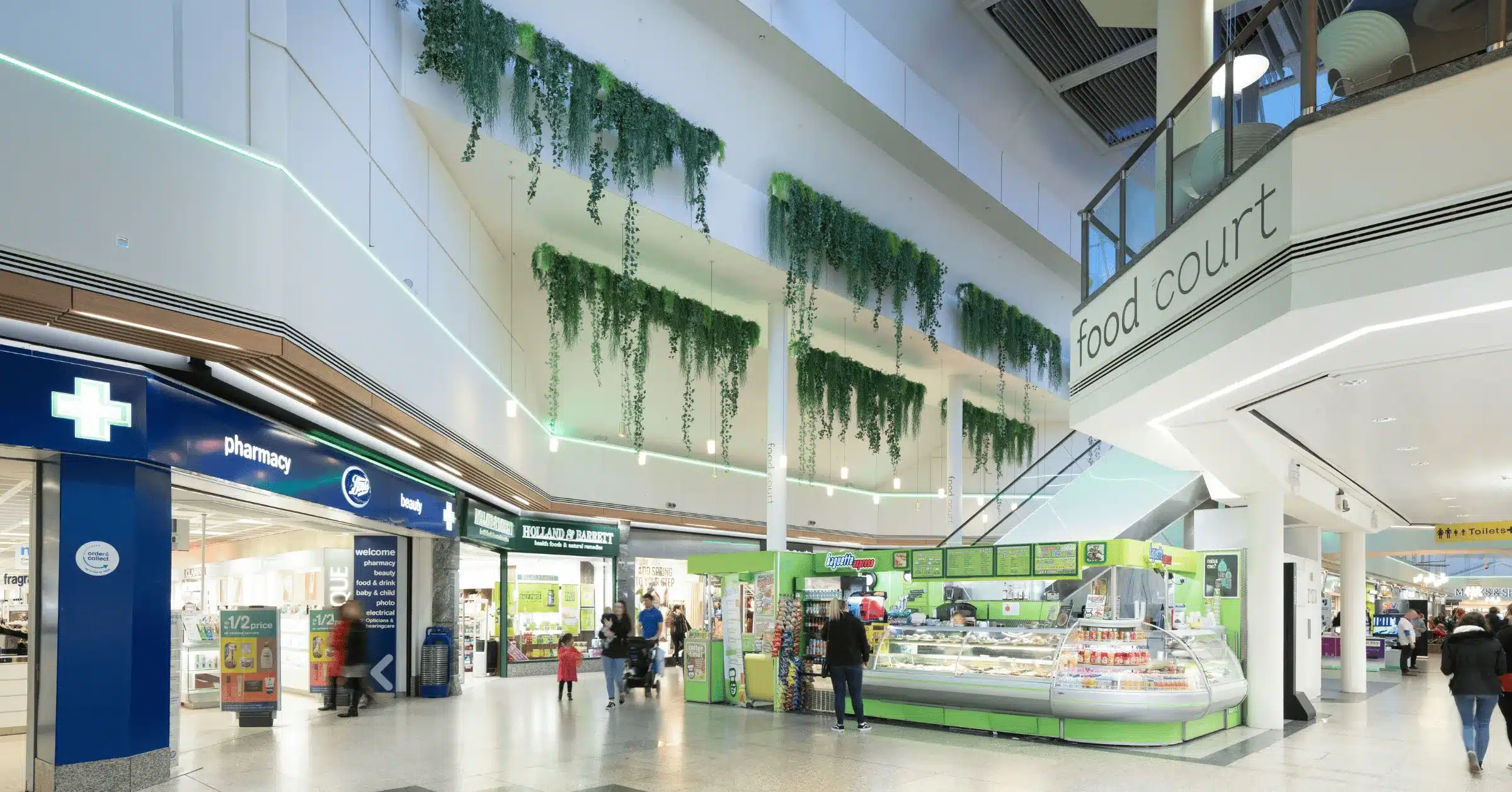
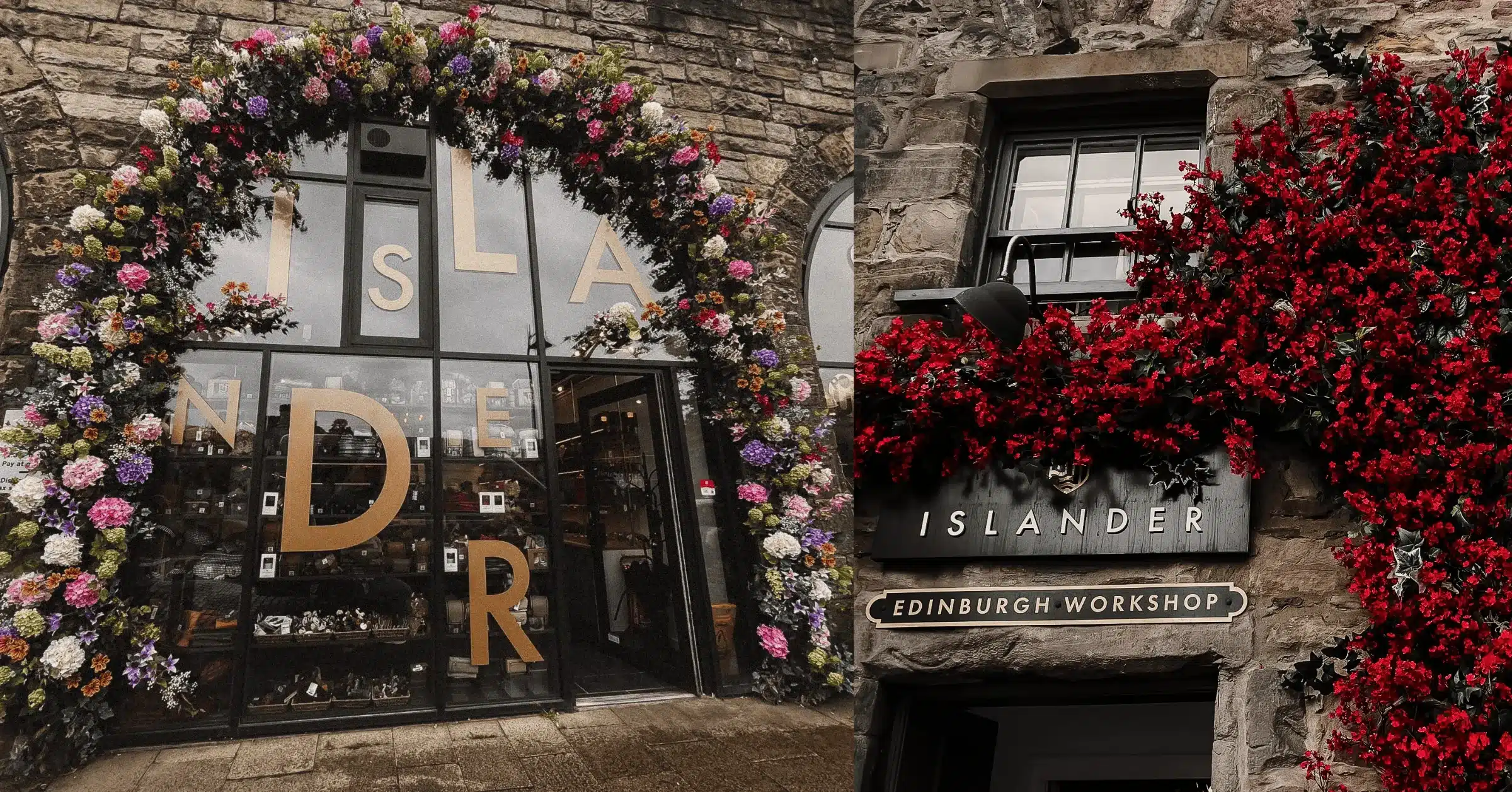
A shop floor plan on opening day and a shop floor six months later rarely looks the same – seasonal campaigns, new collections, and shifting footfall patterns all pull layouts in different directions. Planting schemes should be designed with the same flexibility in mind as the rest of the store: modular displays that can be reconfigured for a Christmas layout. Moved to reopen a sightline for a new season, or refreshed to keep a space feeling considered rather than static.
Designers who build this flexibility in from the start – rather than treating planting as a fixed, one-time installation – get far more long-term value from it, and avoid the space looking tired the moment the original scheme is out of date.
We’ve delivered planting schemes for some of the busiest shopping destinations in Scotland, including The Gyle and Silverburn – environments where planting has to hold up against serious footfall, work within tight commercial timelines, and genuinely contribute to how the space performs, not just how it photographs. That work has given us a close-up view of what separates planting that looks good on day one from planting that keeps earning its place in a scheme for years.
While our roots are in Scotland’s biggest retail destinations, we work with designers across the UK who want planting built into the design conversation from the start. If you’re briefing a new retail environment, the question worth asking early isn’t “where do we put some plants at the end” – it’s “where in this journey could greenery be doing more work than we’re currently asking of it.” Wayfinding, dwell time, seasonal flexibility, and the overall feel of the space are all things planting can genuinely influence, provided it’s considered as part of the design, not bolted on afterwards.
Get in touch with us to talk through planting as part of your next retail scheme – from concept through to seasonal refresh.
Sign up for the Benholm Group newsletter for practical thinking on planting, retail environments, and workplace design — straight to your inbox.