Every office manager has heard some version of the same warning by now: the office isn’t dead, but it has to earn its place. People will only come in if the space gives them something they can’t get at home – energy, connection, focus, comfort. Get the space wrong, and you’re paying for square footage nobody wants to use.
A recent industry interview with a workplace strategy director put this well: most businesses were never actually running near full occupancy, even before hybrid working existed. The real shift isn’t that fewer people are coming in – it’s that expectations have gone up. Spaces now have to flex around genuinely varied needs, from quiet focus work to informal collaboration, and they have to do it without the six-month lead time and six-figure budget of a full redesign.
That’s the gap where planting and biophilic design earn their keep – and it’s worth spelling out exactly why.
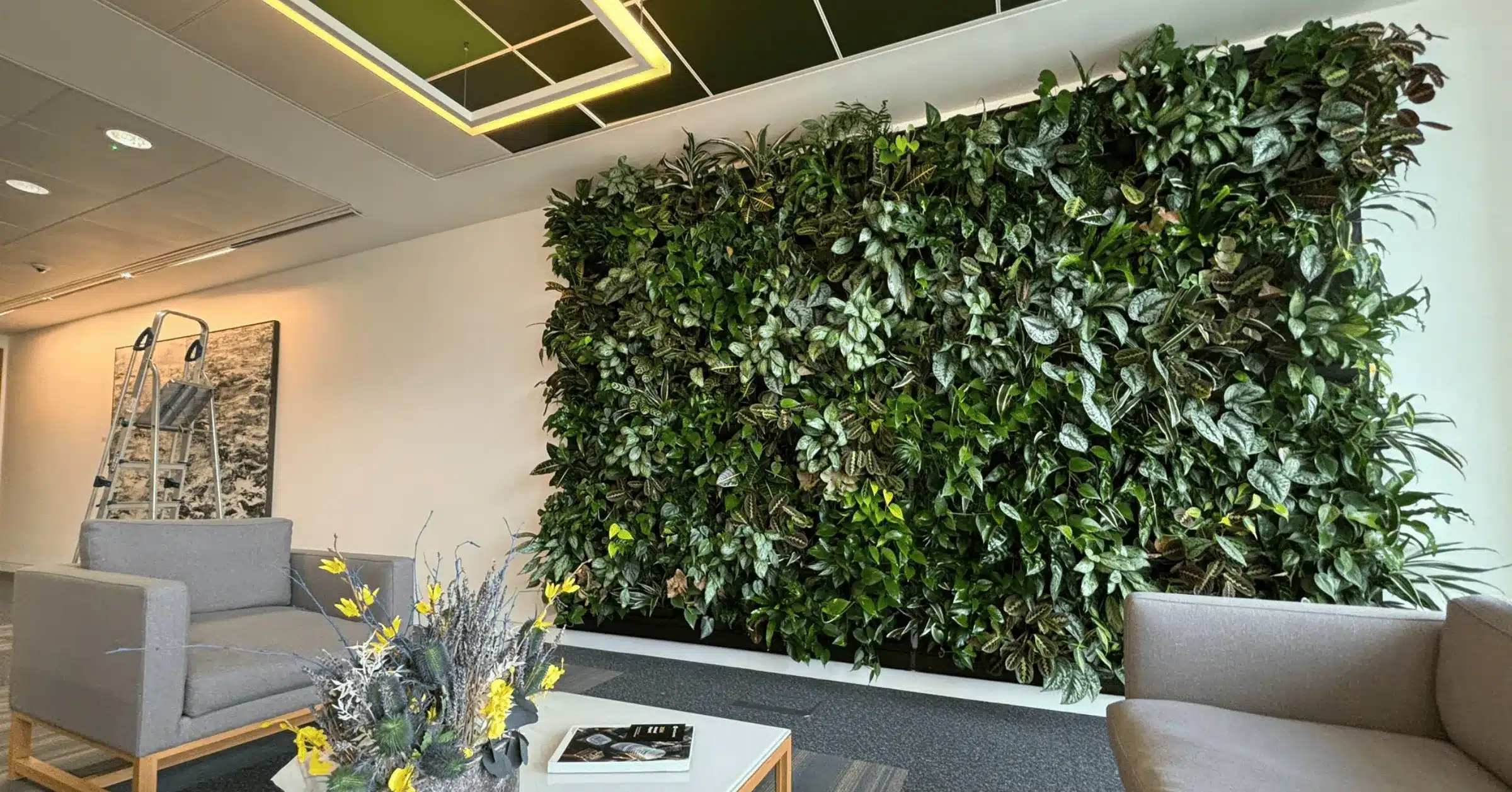
Workplace strategists increasingly talk about spaces in terms of what’s fixed and what’s flexible: hard points (walls, comms rooms, plumbing) versus soft points (furniture, layout, the things you can change without knocking anything down). The advice is to design so more of the office falls into the “soft” category, because needs will keep shifting and certainty is no longer something you can design for.
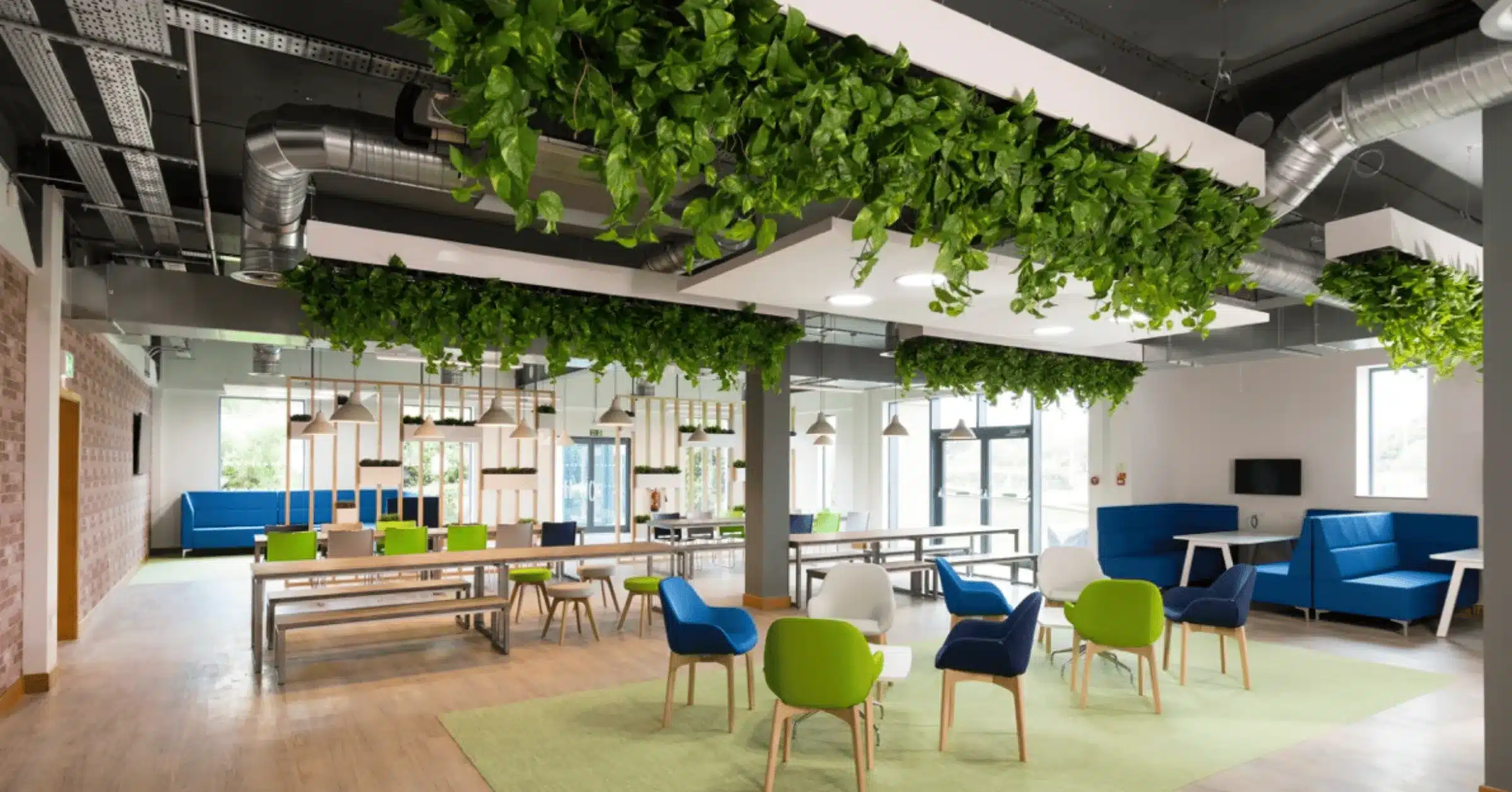
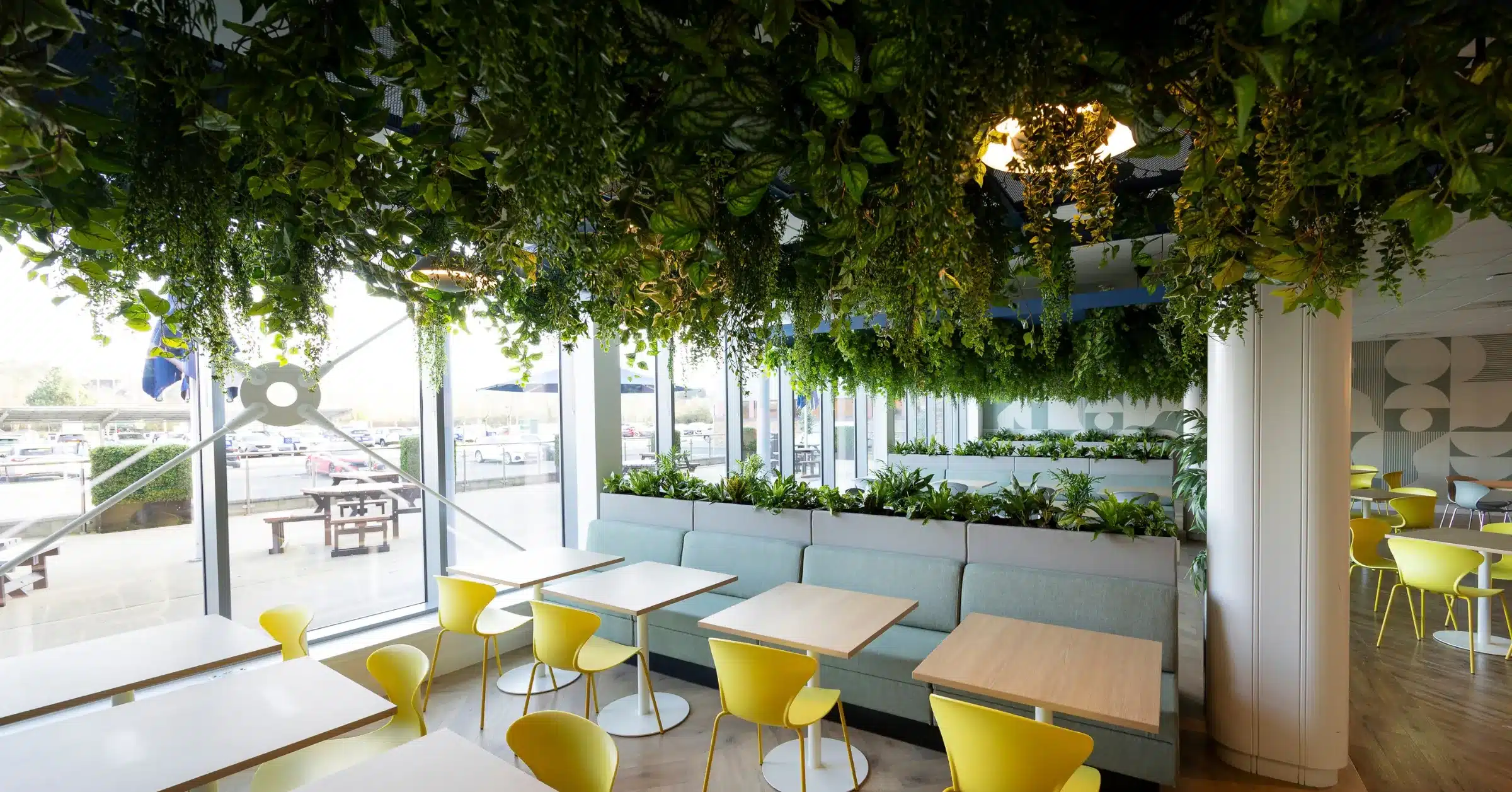
Living plants are about as “soft point” as it gets. A planted room divider, a green wall, a cluster of floor plants defining a breakout zone — none of it requires a contractor, none of it shows up on a capital expenditure form the way a refit does, and all of it can be reconfigured in an afternoon as teams, headcounts, and working patterns change. If the brief is genuine adaptability rather than a fixed solution that has to be right for the next decade, planting is one of the few interventions that’s both immediate and reversible.
Sensor data, booking systems, and occupancy monitoring are becoming standard tools for understanding how a workplace is actually used. That’s valuable — but it’s backward-looking and behavioural. It tells you where people sat, not why they wanted to be there, or how the space made them feel while they were in it.
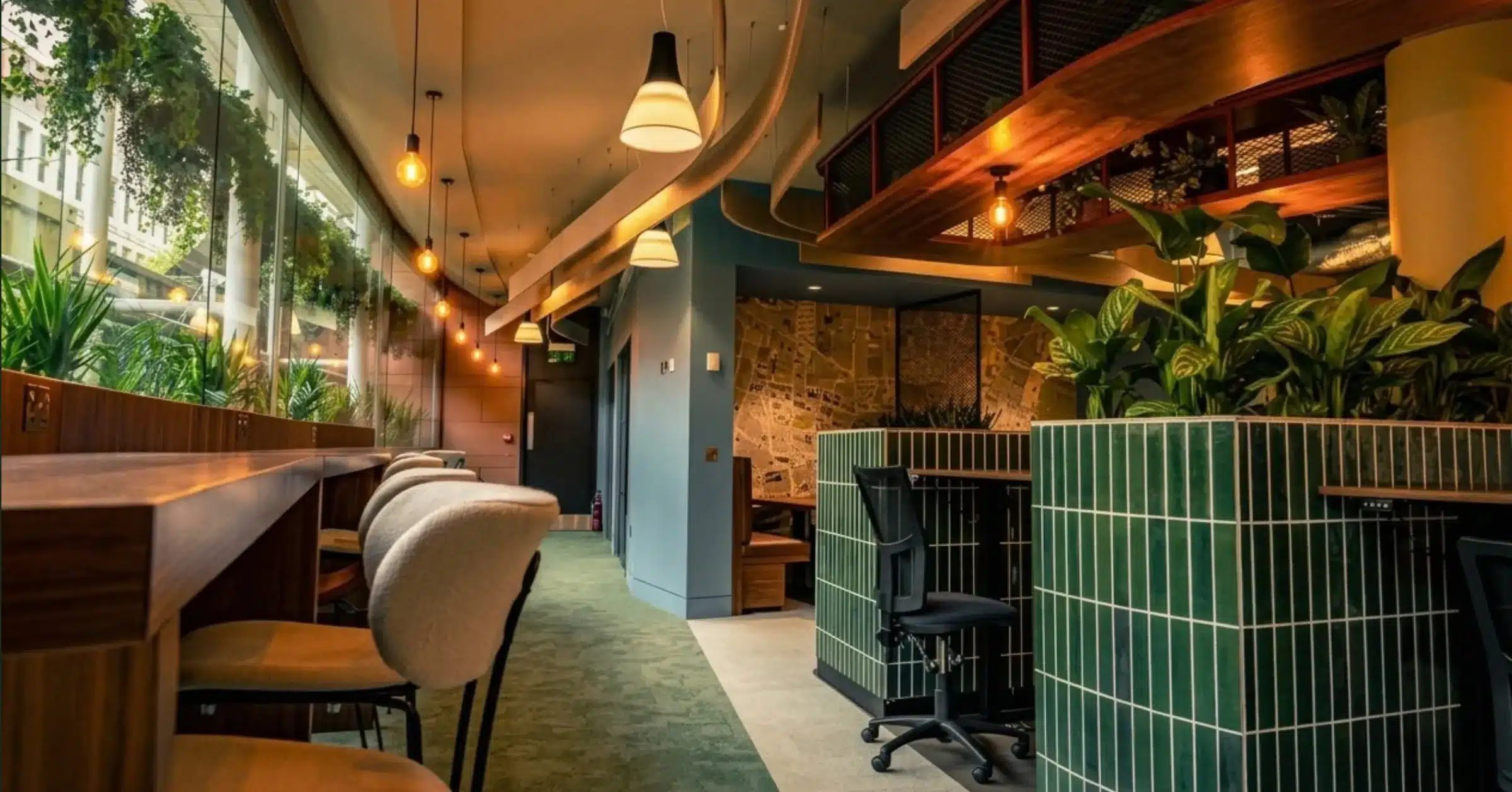
This is where the conversation about the future of the office keeps circling back to something less measurable: experience. The businesses getting this right aren’t just tracking desk usage, they’re designing for wellbeing, comfort, and a sense that the office was actually planned around people. Biophilic design — daylight, natural materials, and living planting — is one of the most consistently evidenced ways to move that needle. It lowers reported stress, supports concentration, and makes a space feel cared for rather than merely occupied. None of that shows up in an occupancy sensor, but it’s exactly what determines whether someone chooses to come in tomorrow.
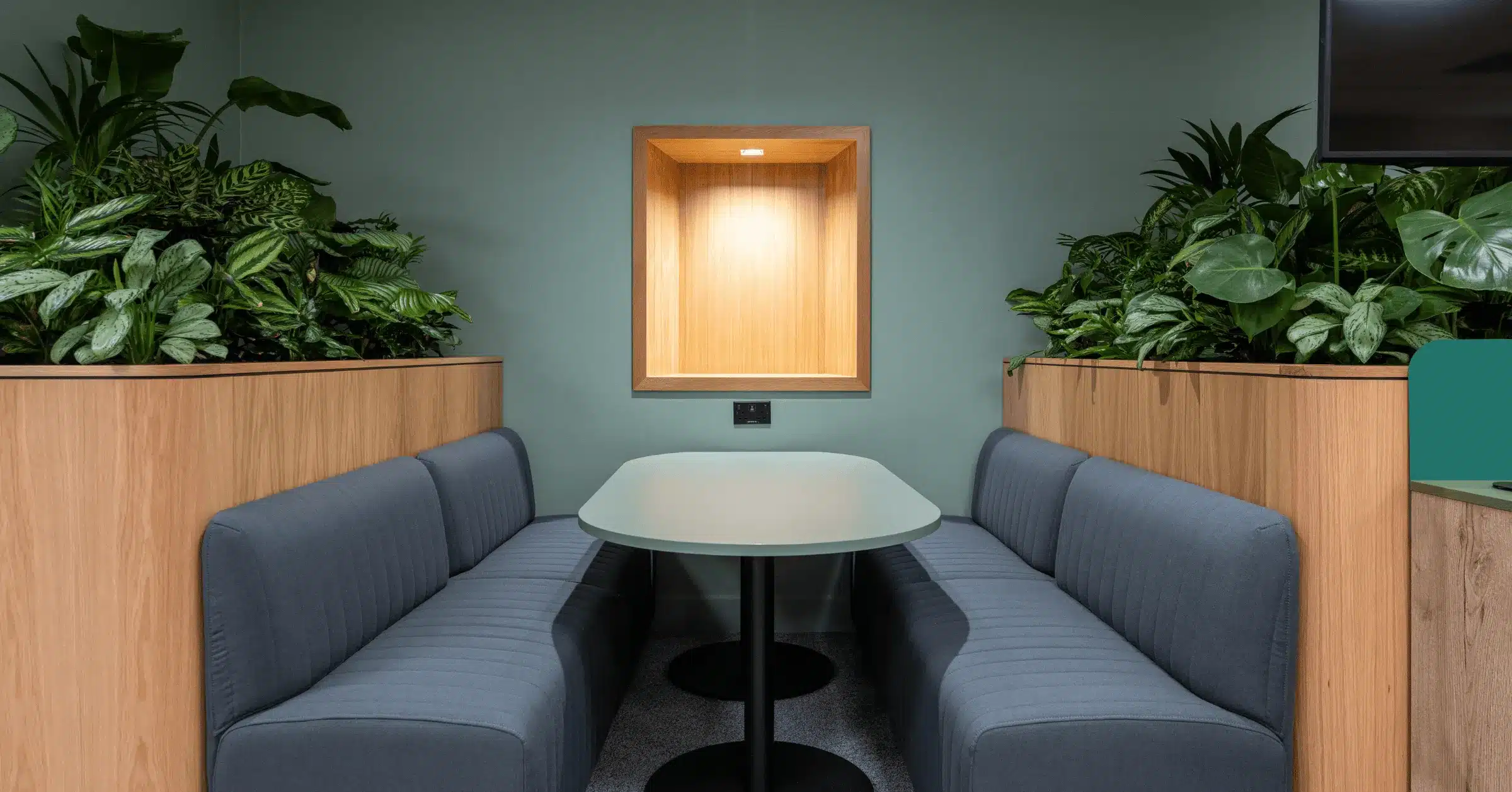
One theme comes up again and again in workplace strategy conversations: the best outcomes happen when property, technology and people stop operating in silos and start making decisions together. Planting sits naturally across all three. Facilities teams see it as low-maintenance, adaptable infrastructure. People teams see it as a visible signal that wellbeing has been designed in, not bolted on. And property teams see it as one of the few workplace investments that can be scaled up, down, or moved entirely without triggering a capital project.
For an office manager weighing up “what do we actually do with this space,” that combination — low cost, low risk, high visible impact — is rare.
If your organisation is reassessing how its office is used, the honest starting point isn’t a full redesign. It’s asking where the friction actually is: Is attendance the issue, or is it what people find when they arrive? Are your “hard” and “soft” points genuinely separated, or is everything treated as fixed? And is there a low-cost, high-flexibility layer — like planting — that could be tested in weeks rather than months?
At Benholm Group, this is the work we do every day: building living, adaptable planting schemes that flex with a workplace rather than fighting against it. If you’re rethinking how your office supports the people who use it, we’d be glad to talk through where planting could fit into that strategy.
Sign up for the Benholm Group newsletter and get practical insight on biophilic design, workplace wellbeing, and flexible office strategy — straight to your inbox, no fluff.