Most of us know that greenery makes a workplace feel better. The challenge is doing it well. Too often, “biophilic design” becomes a plant order: a few dozen pots scattered through the floorplate, a moss wall in reception, and a facilities team left to keep it all alive.
The result is rarely restorative. It looks cluttered, it’s expensive to maintain, and it can dilute the very calm that biophilic design is meant to create.
The alternative is to treat plants like any other design material, chosen deliberately and placed with purpose. Here’s how.
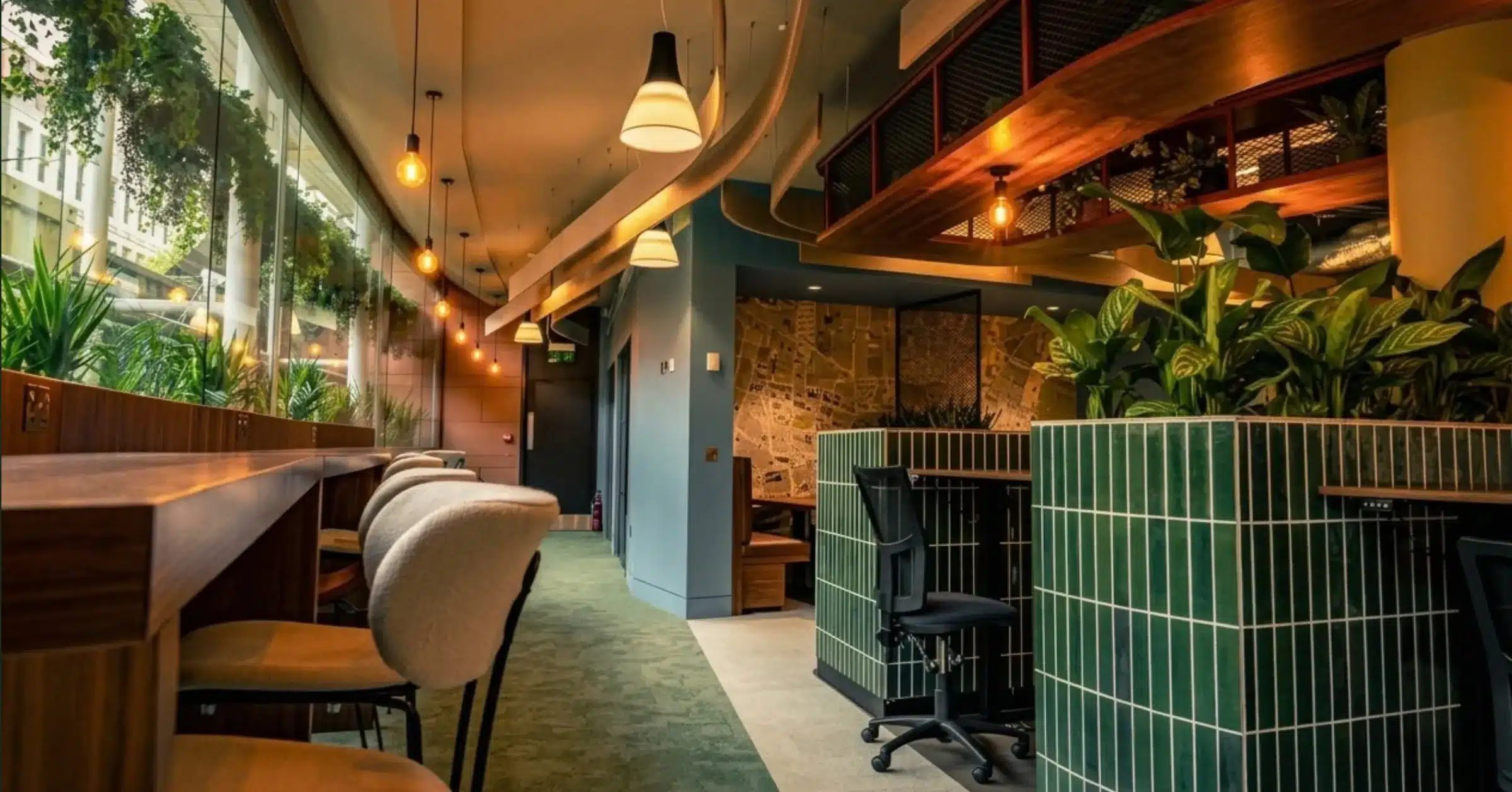
Before choosing a single species, ask where greenery will actually do some work. The best spots are the ones that shape how people move and feel:
Scattering plants evenly across a floor tends to flatten the effect. Concentrating them in considered moments makes each one count.
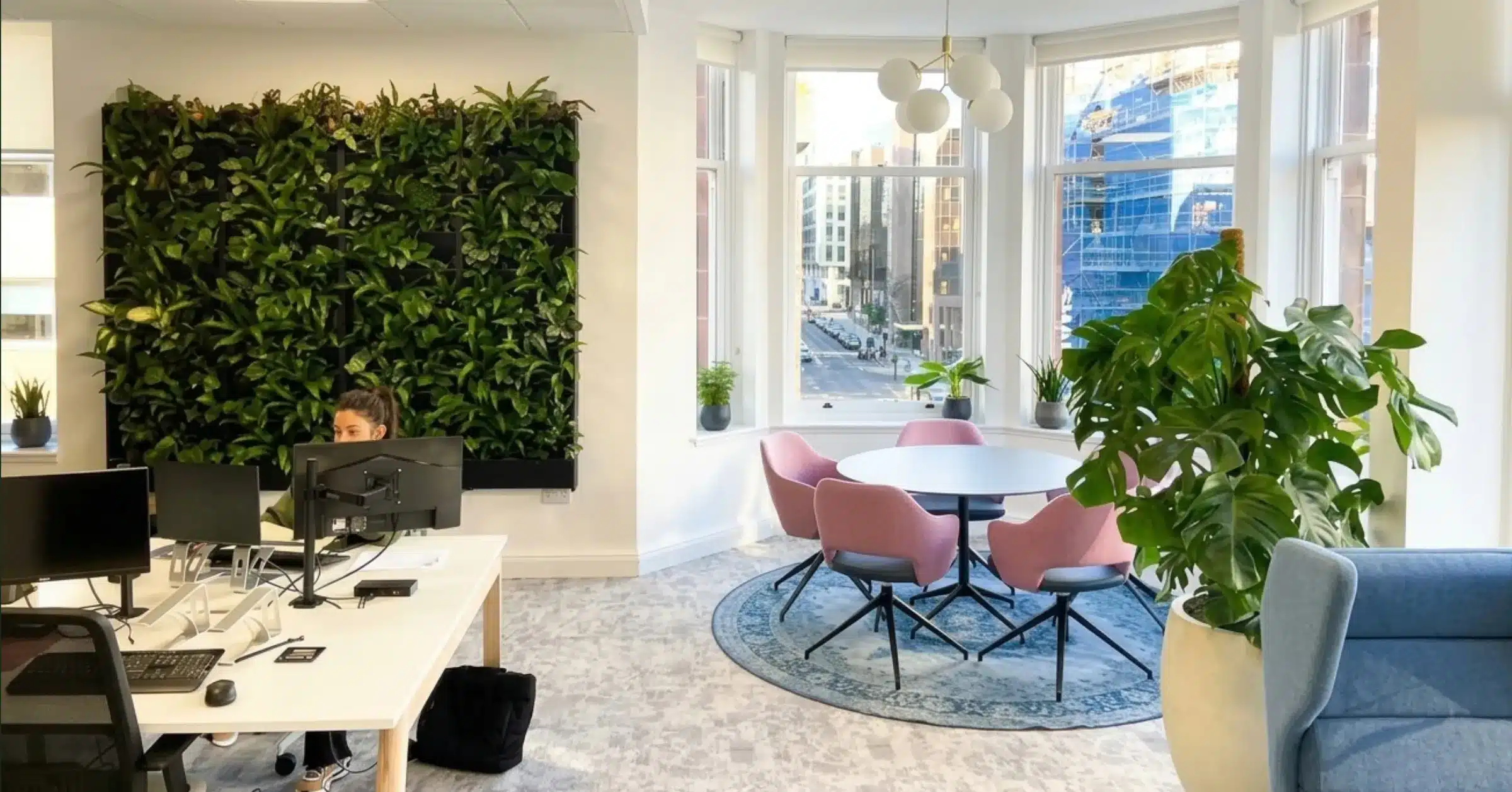
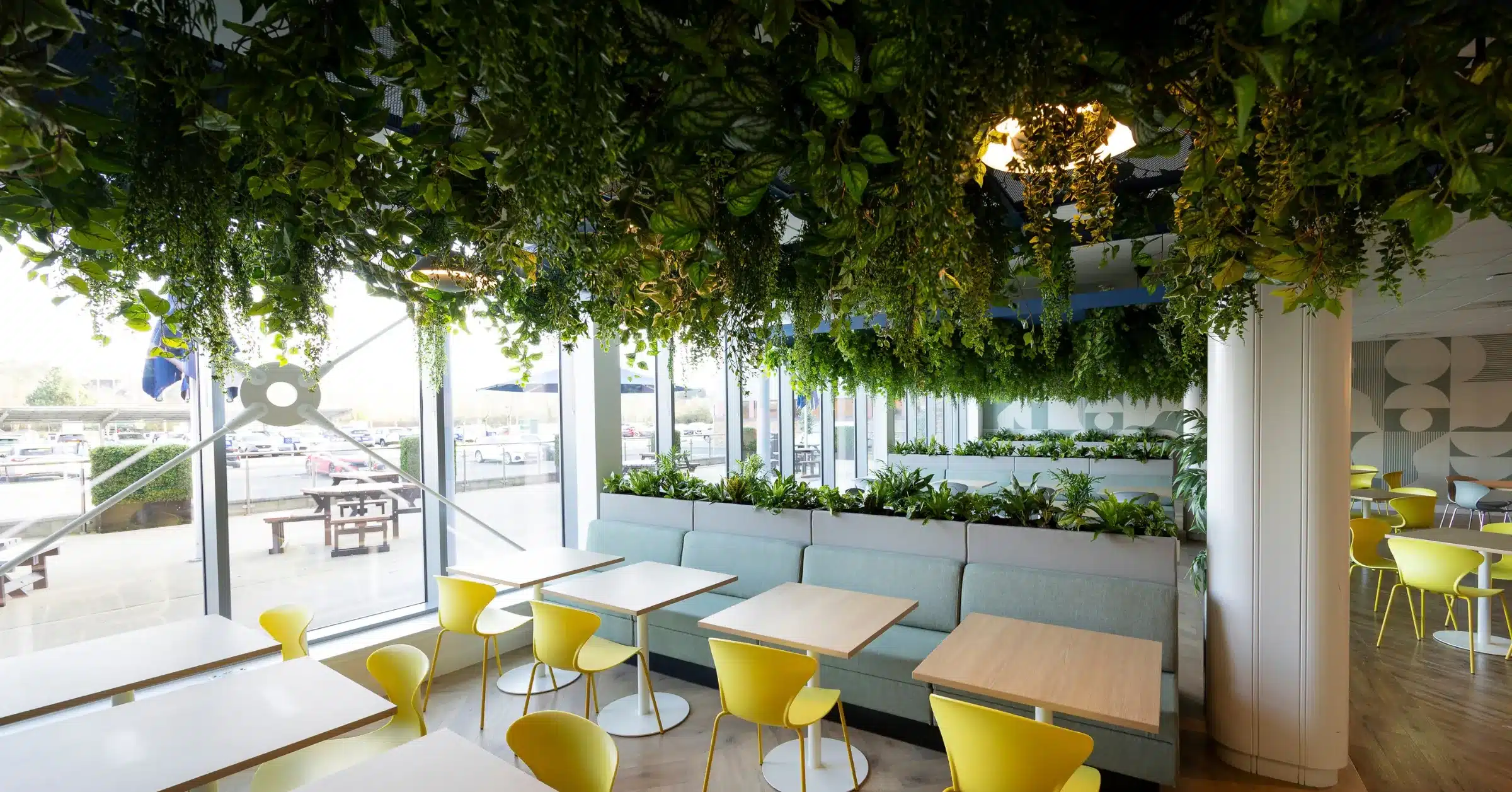
Scale is where many schemes quietly go wrong. A small pot on every desk reads as clutter. A single large, sculptural specimen reads as a feature.
Think in terms of a hierarchy:
Matching the scale of the plant to the scale of the room (and to the furniture around it) is what makes greenery feel designed rather than added.
Repetition is one of the simplest ways to make greenery feel intentional. Rather than a different plant in every corner, choose a limited palette of species and planters and repeat them across the workplace.
A consistent rhythm, such as the same planter style along a run of desks or the same plant at each break-out zone, gives the space a visual logic. It’s also practical: fewer species means simpler care routines and easier replacement.
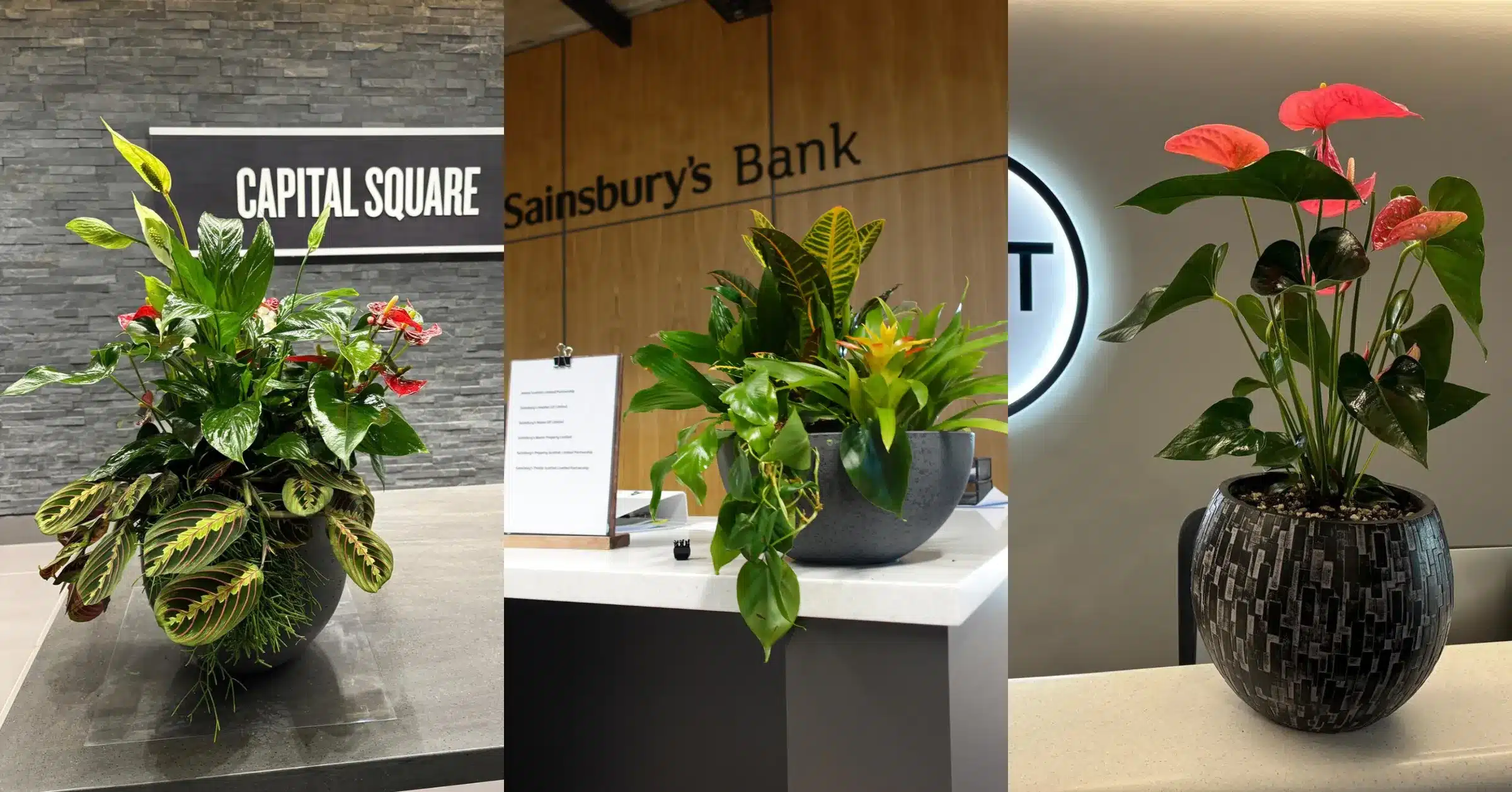
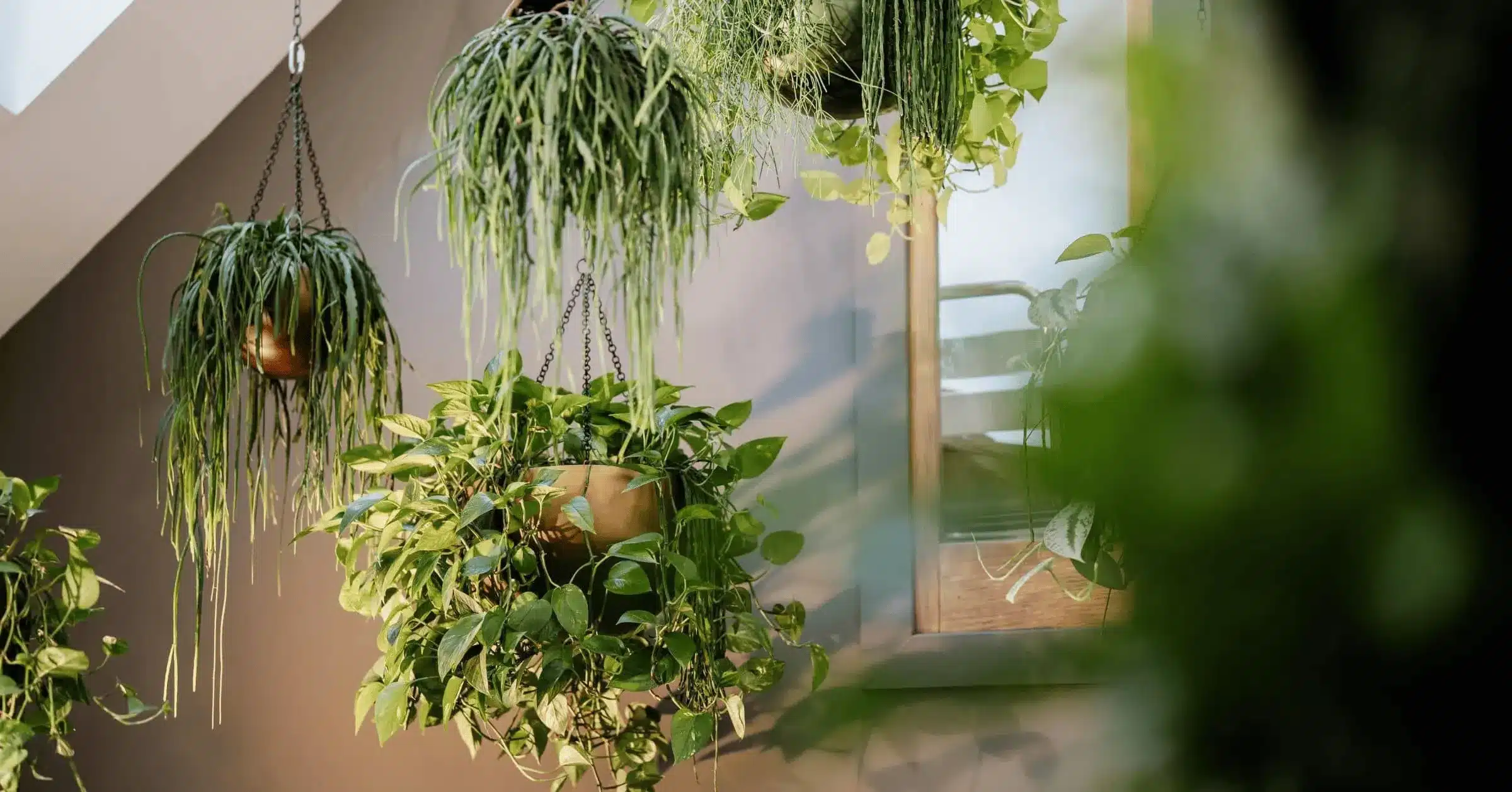
Greenery is rarely just green. Leaves range from silvery to deep, glossy to matte, and flowering plants add seasonal accents. Used well, this gives you a natural colour palette to work with.
This is the principle most often forgotten. Biophilic design isn’t about filling every available surface. Empty space is part of what makes a plant feel like a feature. A well-placed specimen with room around it has far more presence than the same plant crowded in with five others.
Leave clear floor, clean wall and open sightlines around key planting. It improves the look, keeps circulation and wayfinding clear, and makes maintenance easier.
This is the principle most often forgotten. Biophilic design isn’t about filling every available surface. Empty space is part of what makes a plant feel like a feature. A well-placed specimen with room around it has far more presence than the same plant crowded in with five others.
Leave clear floor, clean wall and open sightlines around key planting. It improves the look, keeps circulation and wayfinding clear, and makes maintenance easier.
Plants are only one expression of biophilic design. Natural light, timber and stone, organic forms, views to the outdoors, and textures that echo the natural world all contribute. A restrained planting scheme works best when it sits within this broader language, rather than carrying the whole concept alone.
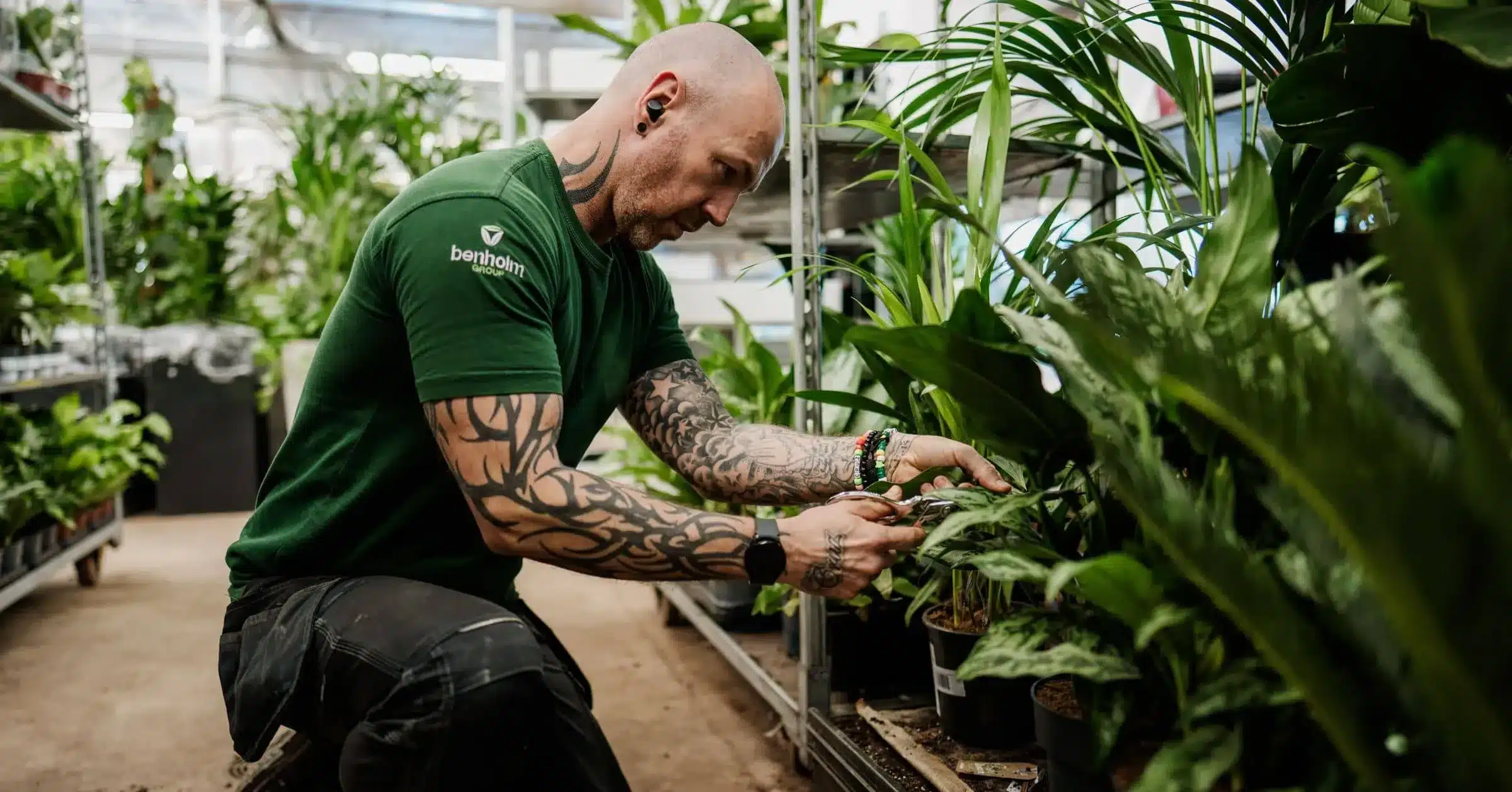
A beautiful scheme only stays beautiful if it’s looked after. Consider light levels, irrigation, and who is responsible for maintenance at the design stage. Choosing resilient species suited to the conditions, and specifying planters that make care straightforward, protects your investment well after handover.
A great biophilic workplace doesn’t shout about its plants. It uses placement, scale, repetition, colour and negative space to make greenery feel like a natural part of the architecture. Do that, and you get all the wellbeing and atmosphere of biophilic design, without anything resembling a jungle.
Join the Benholm Group design newsletter for workplace insights, project inspiration and practical ideas, delivered straight to your inbox.