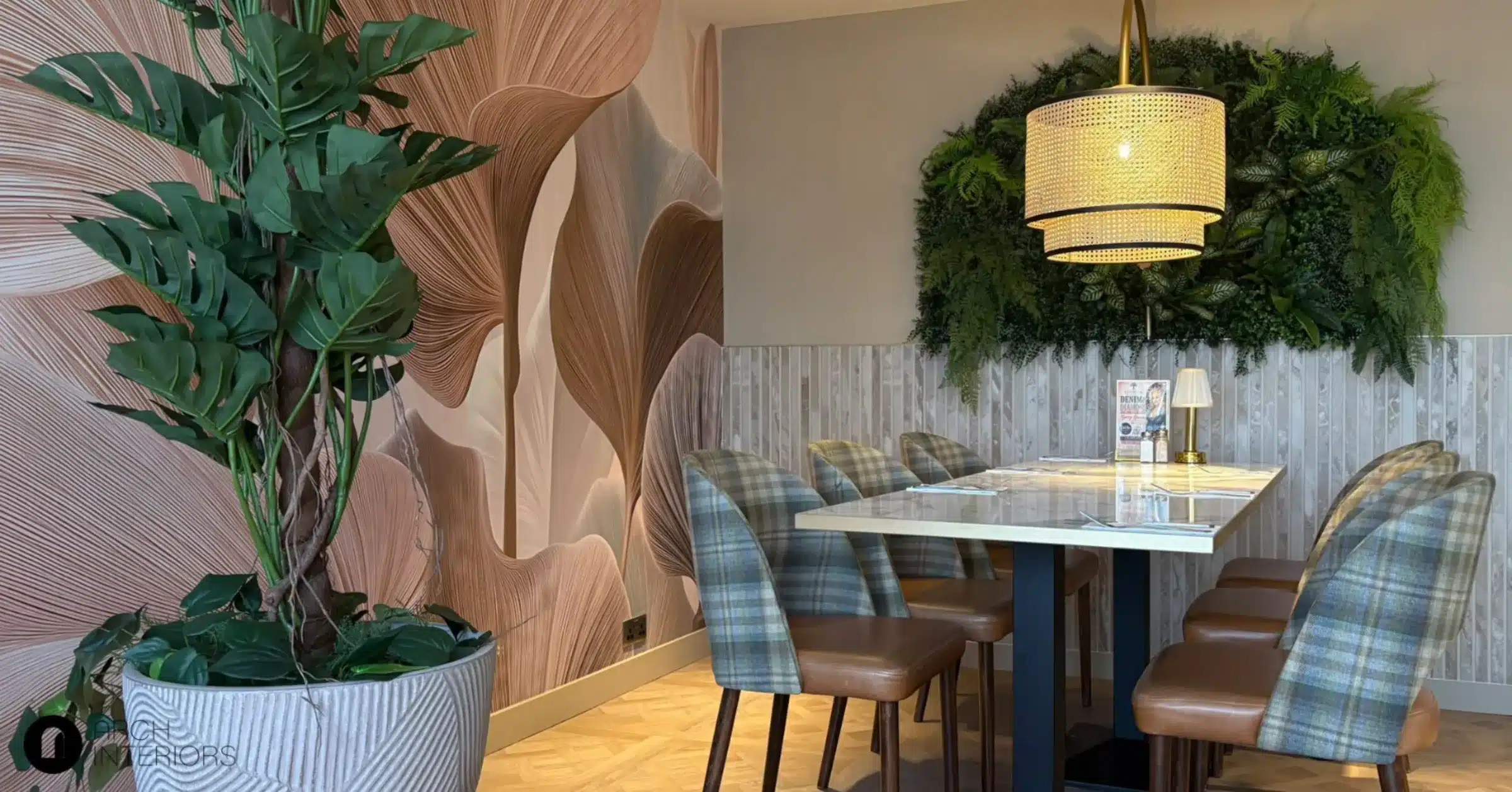

Mid-century style is all about character with a focus on quality craftmanship, bold shapes, and natural materials that bring life and warmth to any space. All of these elements work together to create spaces that are inspiring and grounding. Think burnt orange, deep forest green, and golden ochre sitting comfortably against rich timber grains, rattan details, and lush greenery. Image conversation-starting furniture, sun-drenched rooms and an effortless sense of warmth and intention.
Whether you’re designing a workplace, a boutique bar, a restaurant, or another commercial gem, our custom biophilic design solutions can help bring this vision to life – tailored to suit your space, needs and brand story.
At the heart of this aesthetic is a deep connection to nature. Biophilic design goes beyond adding a few plants, it’s about weaving organic elements throughout the fabric of a space. And nothing softens a space quite like biophilia to support wellbeing, enhance mood and reduce stress.
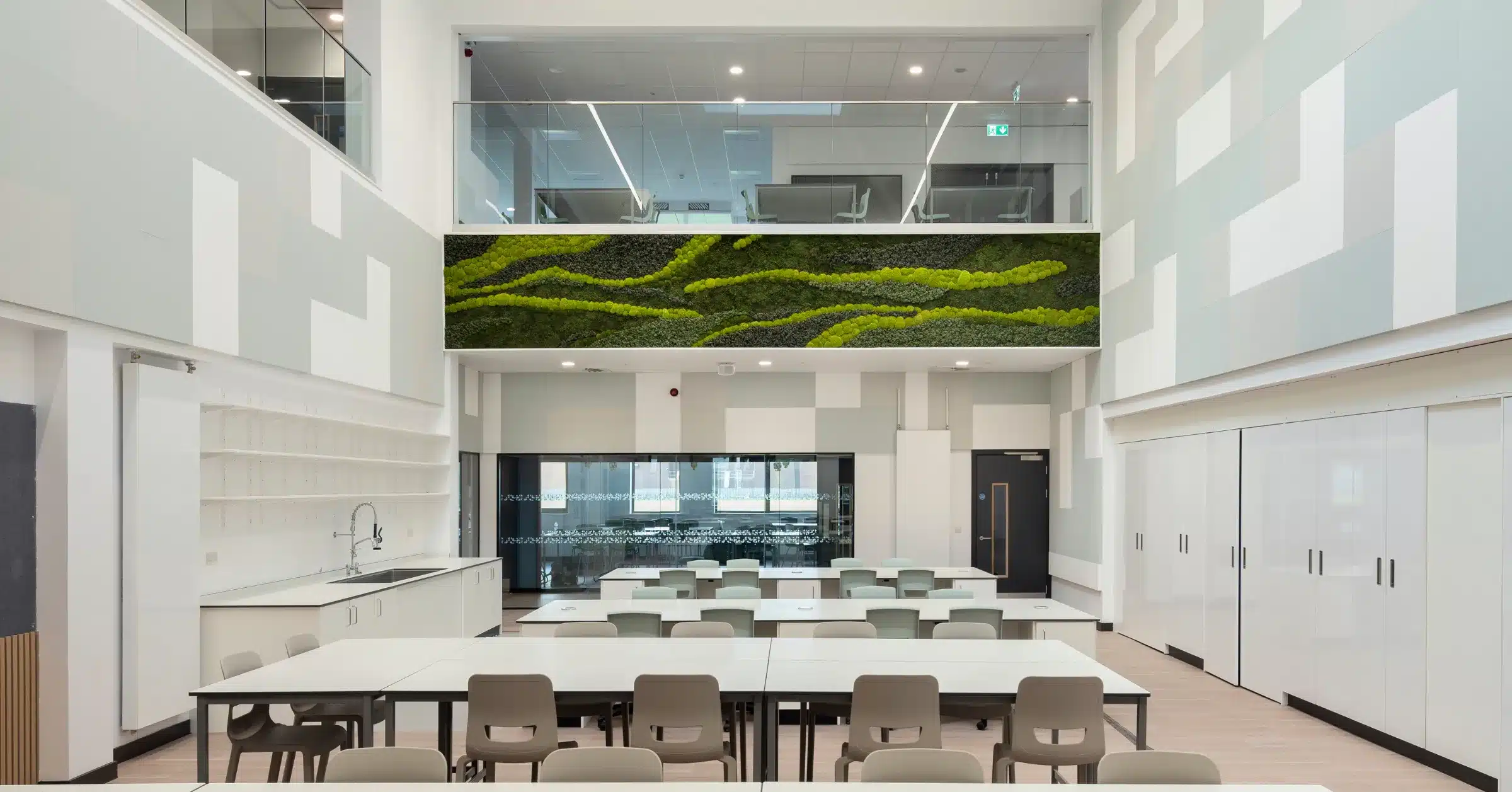
From fiddle-leaf figs, to cascading golden pothos, greenery connects your interior with the outdoors and enhances well-being. And our biophilic design solutions can help you achieve that look – whether you’re reinvigorating a busy office space, building your brand’s identity through bespoke signage, improving wellbeing for students or simply making a statement, we can improve spaces so that people can thrive.
Mass-produced furniture rarely captures the true spirit of mid-century modern design. Instead, invest in bespoke pieces that feel personal, handcrafted and full of character. Iconic mid-century furniture is known for its elegant proportions, sculptural silhouettes, and attention to detail – so look for solid wood finishes, tapered legs, curved forms that nod to the classics.
Choose upholstery in textured fabrics like boucle, velvet or wool blends, in tones that complement your palette. Rust tones, bottle greens and muted mustards all sit beautifully within this design narrative.
Skip the plastic and opt for natural wood, rattan, lines and stone – source sustainably from small independent retailers. These textures add depth, warmth and authenticity which are both key pillars of both mid-century and biophilic design.

Light is one of the most powerful design tools you have. It shapes how you feel in a space, impacts mood, and enhances colours.
Let the light in by opting for sheer curtains, open-plan layouts, and reflective surfaces to amplify daylight. It’s essential for creating a fresh, uplifting atmosphere that supports the biophilic ethos. For that filtered glow, don’t forget to layer in warm-toned, indirect lighting for evenings – brass wall sconces, paper lanterns, or sculptural floor lamps that nod to mid-century design while keeping the space inviting.
At its core, mid-century biophilic design is about the balance between old and new, built and natural, bold and understated. It’s a design language that tells a story. One where every texture, curve and colour has a purpose – to invite people in and make them feel connected.