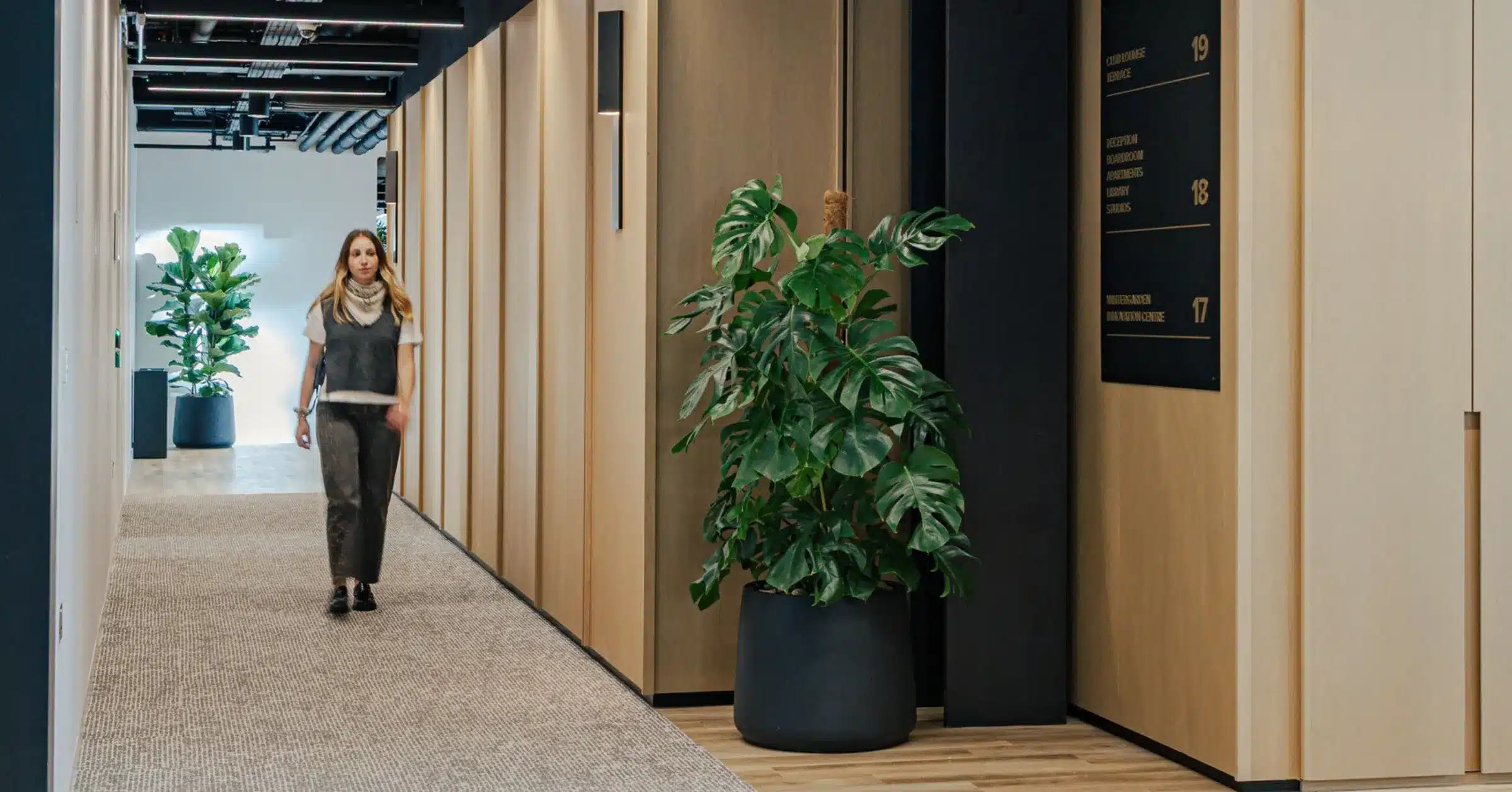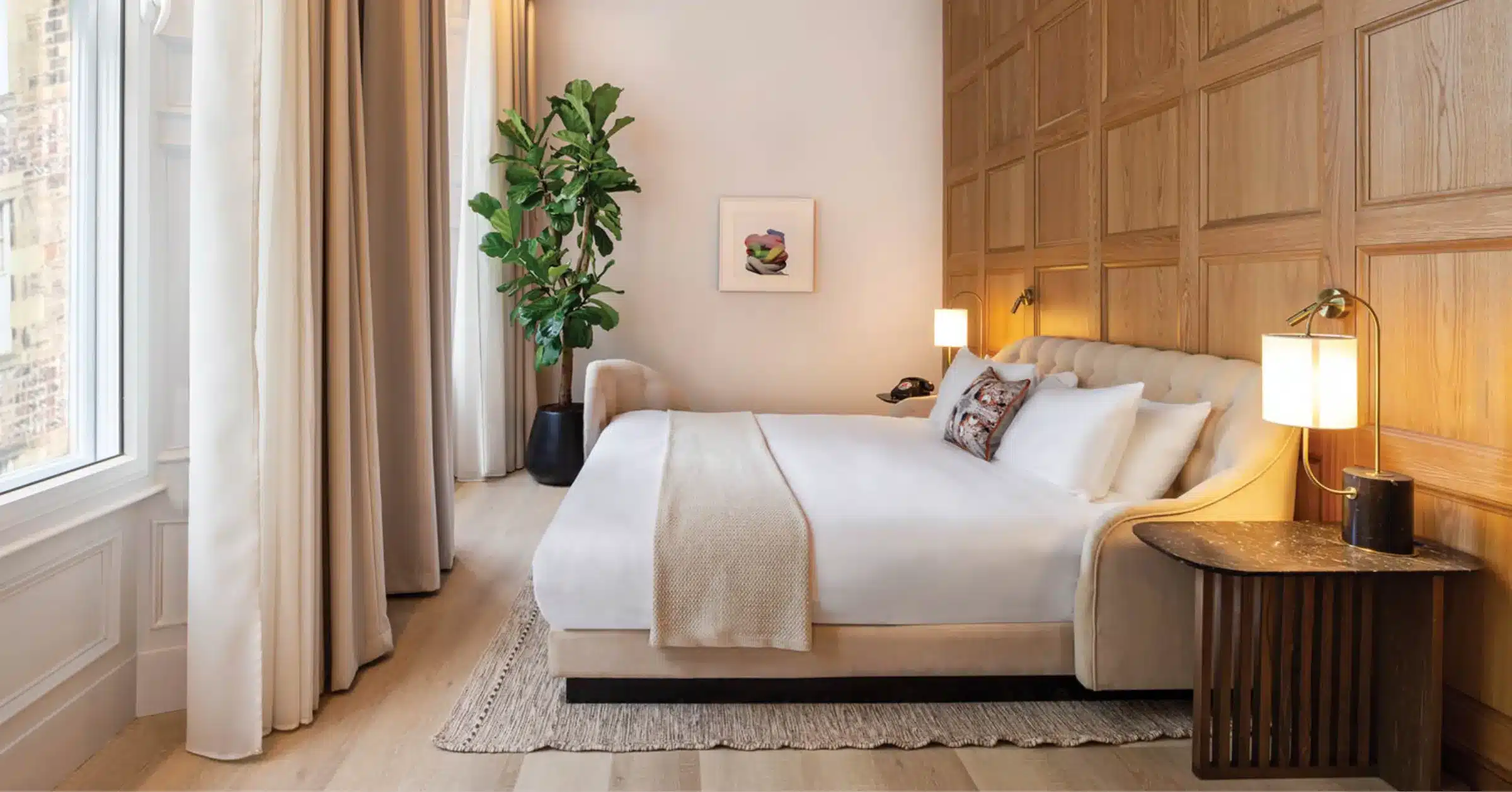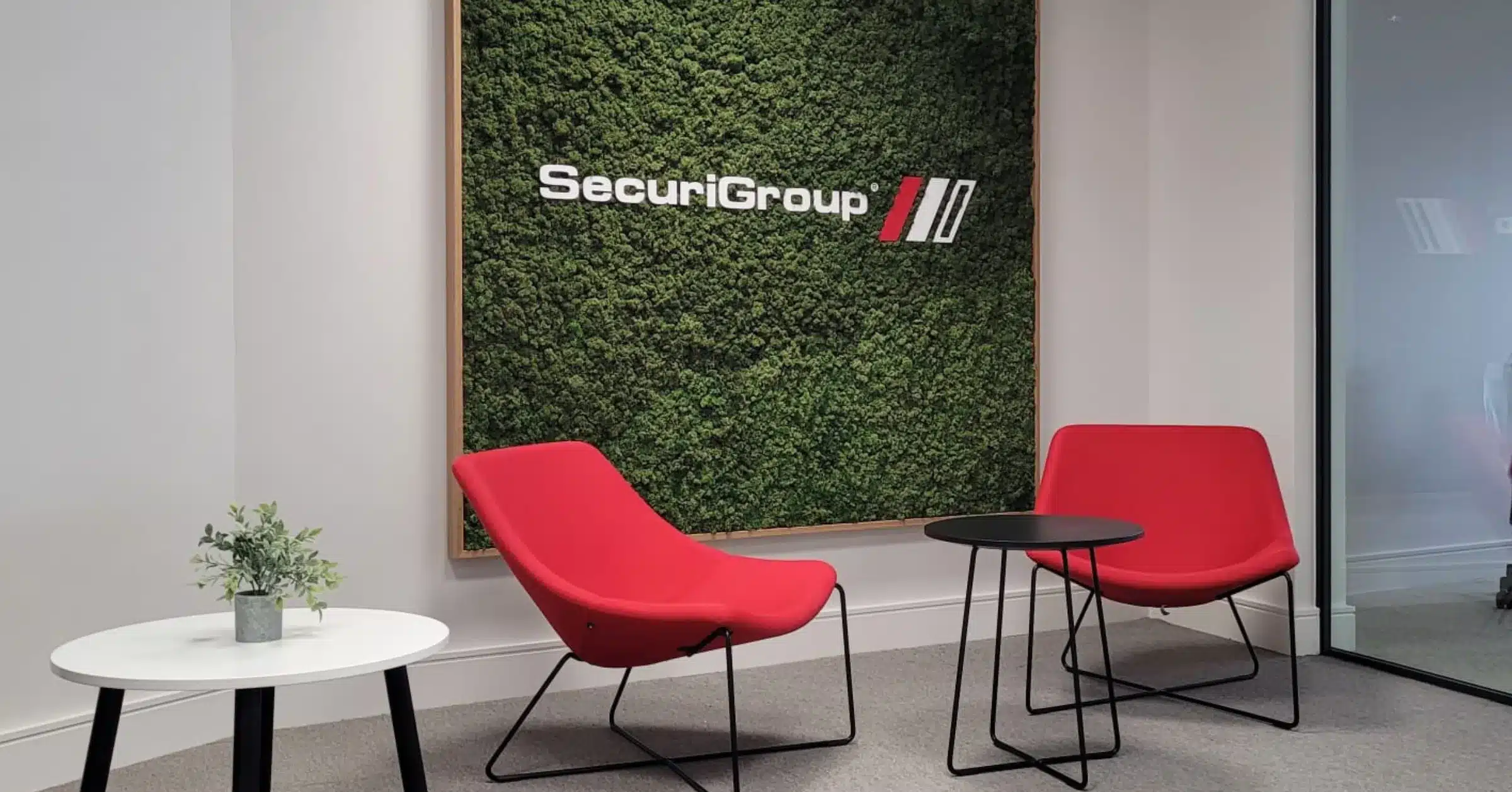
Ask a designer how they choose a sofa, a rug or a piece of artwork, and you’ll hear about proportion, colour, material and how the piece sits within the room. Plants deserve the same thinking. Yet they’re often an afterthought, picked because they looked good in the garden centre or because someone had a spare cutting.
The right plant can anchor a space, soften an architectural edge or bring a palette together. The wrong one looks awkward at best and struggles to survive at worst. Here’s how we approach plant selection at Benholm, and the questions worth asking before anything goes into a space.
Before thinking about species, look at the space itself. What is the room used for? How do people move through it? Is it a calm, quiet area or a busy, social one? A reception wants a confident first impression, while a focus room might call for something more restful. Deciding the role the planting should play makes every later choice easier.
Scale is one of the most overlooked parts of interior planting. A tall, sculptural plant such as a fiddle-leaf fig or a bird of paradise can bring drama to a double-height atrium, but it can overwhelm a room with a standard ceiling. In lower spaces, wider, bushier plants or trailing varieties tend to sit more comfortably, keeping the eye moving across the room rather than hitting the ceiling.
As a rule of thumb, leave some breathing space above the plant. A specimen that nearly touches the ceiling feels cramped, while one that fills roughly two thirds of the vertical space feels intentional.
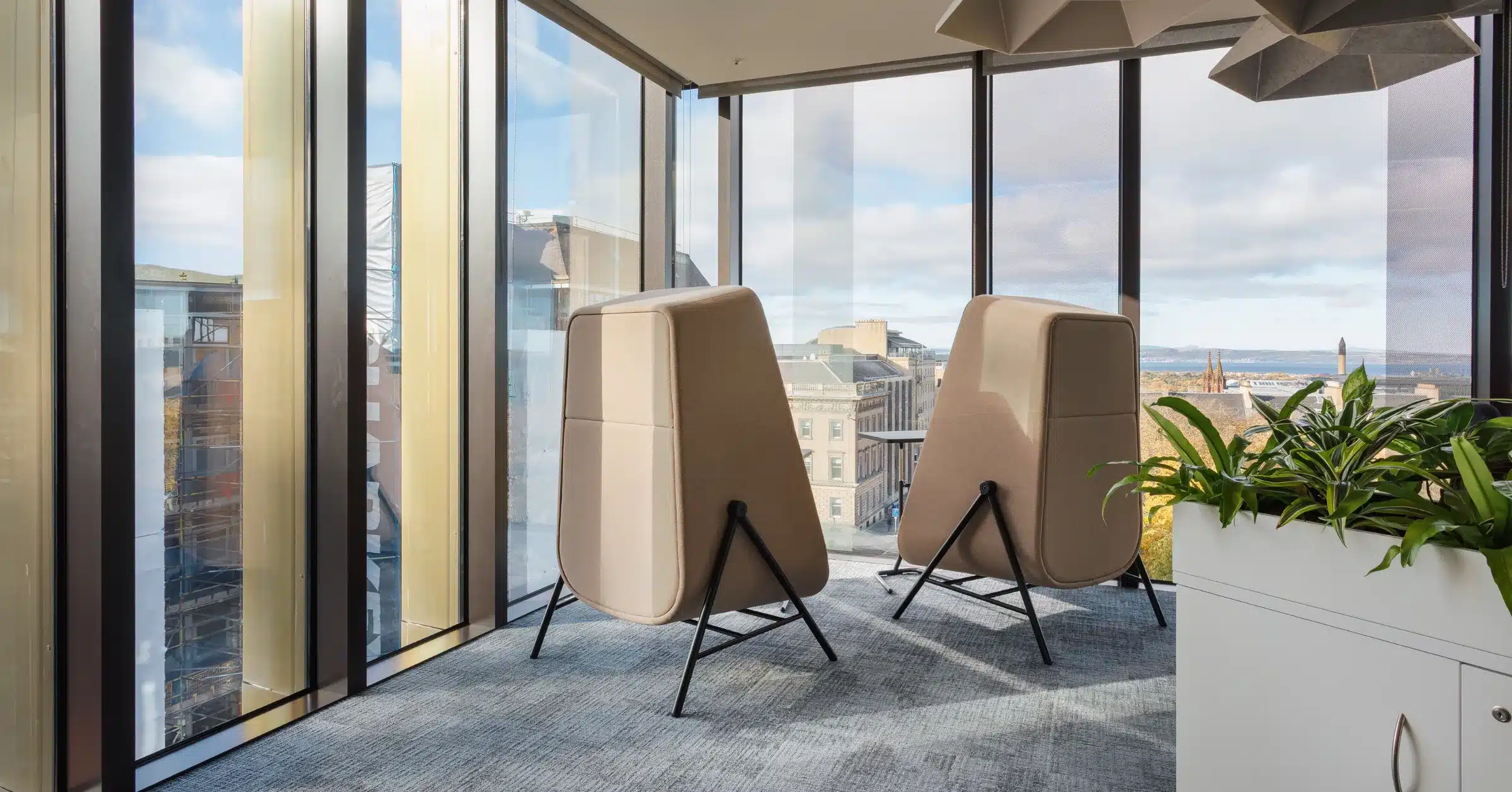
Light is where design and planting meets, and no amount of styling will rescue a plant in the wrong spot. Think about which direction your windows face, how deep the room is and how the light changes through the day.
Bright, south-facing spaces suit sun-lovers like ficus benjaminas, succulents and many palms. Lower-light areas need tougher, shade-tolerant plants such as ZZ plants, snake plants, aspidistra and some ferns. If a space has very little natural light, specialist grow lights or high-quality preserved or artificial options may be worth considering, and a good planting partner will tell you honestly which makes sense.
Foliage isn’t just green. Leaves range from deep, glossy emerald to silvery blue-grey, from lime and variegated cream to burgundy and bright pinks. Look at the colours already in the room and decide whether you want planting to blend in or stand out.
A neutral, minimal scheme might be lifted by rich dark foliage, while a space with bold colours may call for calmer, softer greens. Flowering plants can add a seasonal accent, though they usually need more care to keep looking their best.
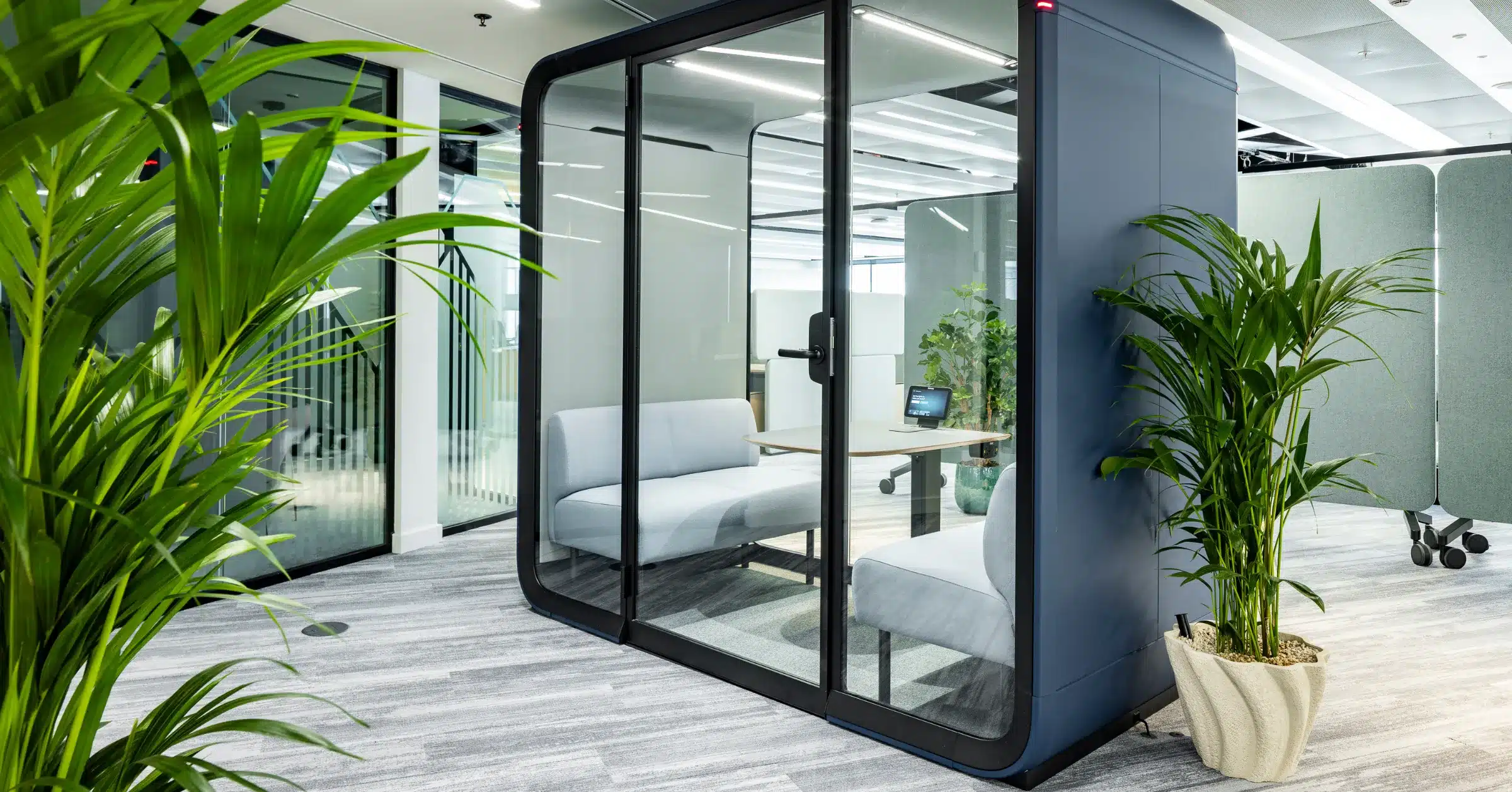
Plants have texture just as fabric and furniture do. Large, glossy leaves feel sleek and contemporary. Feathery ferns and fine grasses feel soft and organic. Architectural shapes, like the upright blades of a sansevieria, suit crisp modern interiors.
Match or deliberately contrast these with what’s already there. Polished concrete, glass and steel pair beautifully with lush, soft foliage, while warm timber and natural fabrics can handle bolder, more sculptural forms. Don’t forget the planter itself. Its material, colour and finish are part of the overall composition, so treat it as you would any other piece of furniture.
Good planting sits in balance with its surroundings. A tiny plant on a large reception desk looks lost, while an oversized one in a narrow corridor gets in the way. Consider the plant, the planter and the space around them as a single unit.
Grouping can help. Plants of varying heights, set together in odd numbers, create a layered, natural look that a single plant often can’t. Just make sure each has enough room to grow and that nothing blocks a walkway or sightline.
A beautiful design only works if the plants thrive. The best choices are suited to the conditions of the building, including light, temperature and air flow, and are healthy and well-established when installed.
This is where working with a specialist makes a difference. At Benholm, we don’t just select and install planting, we look after it afterwards. Our team handles watering, feeding, pruning and replacing anything that isn’t thriving, so the scheme looks as good in a year’s time as it did on day one, and nobody in your office has to think about it.
Choosing the right planting is a design decision, not a decoration afterthought. When you consider ceiling height, light, colour, materials and proportion together, planting stops being an add-on and becomes part of the architecture of the space.
Planning a new interior or refreshing an existing one? Get in touch with the Benholm team to talk through the planting that would work best for your space, and how we can look after it for you