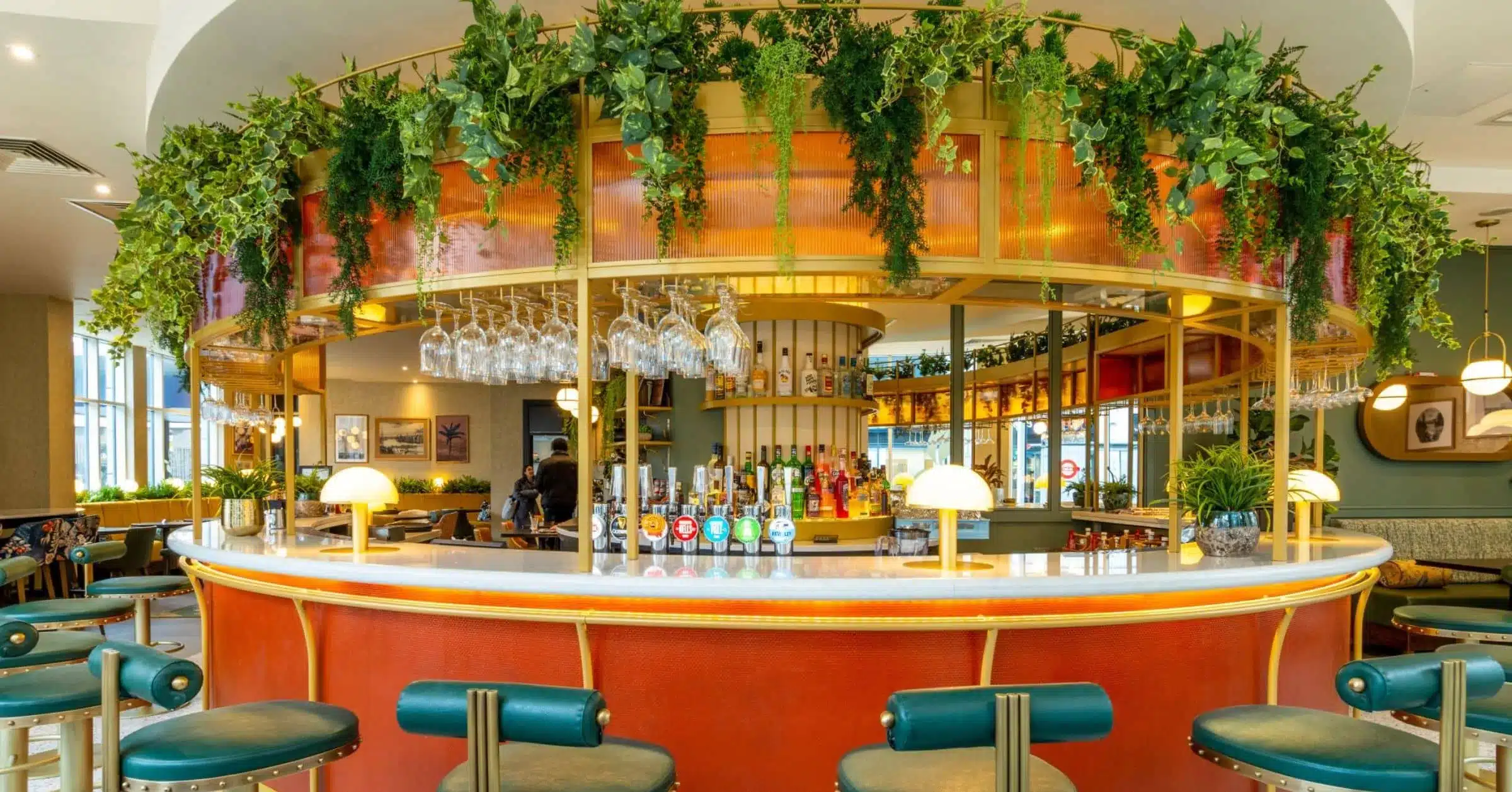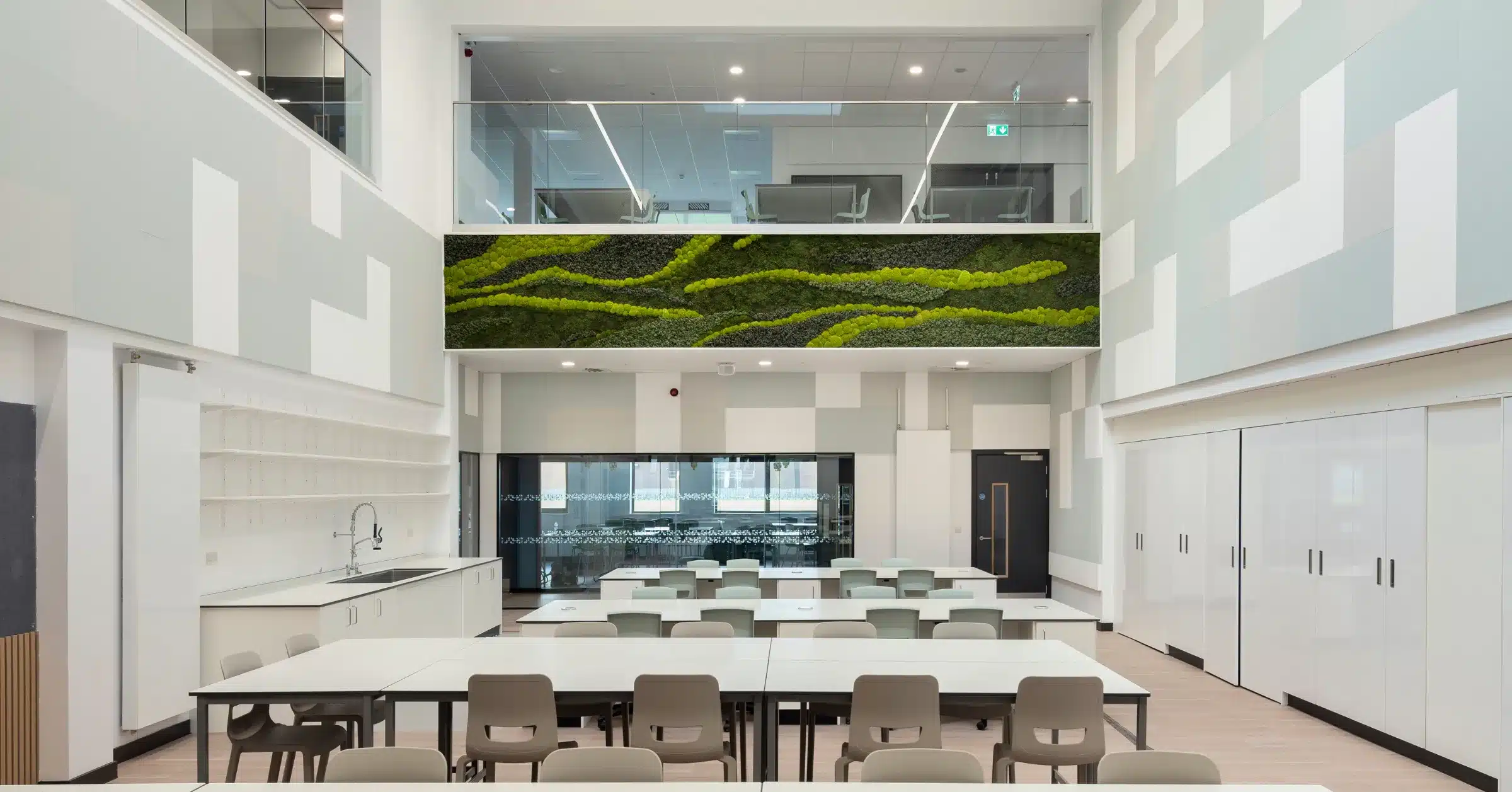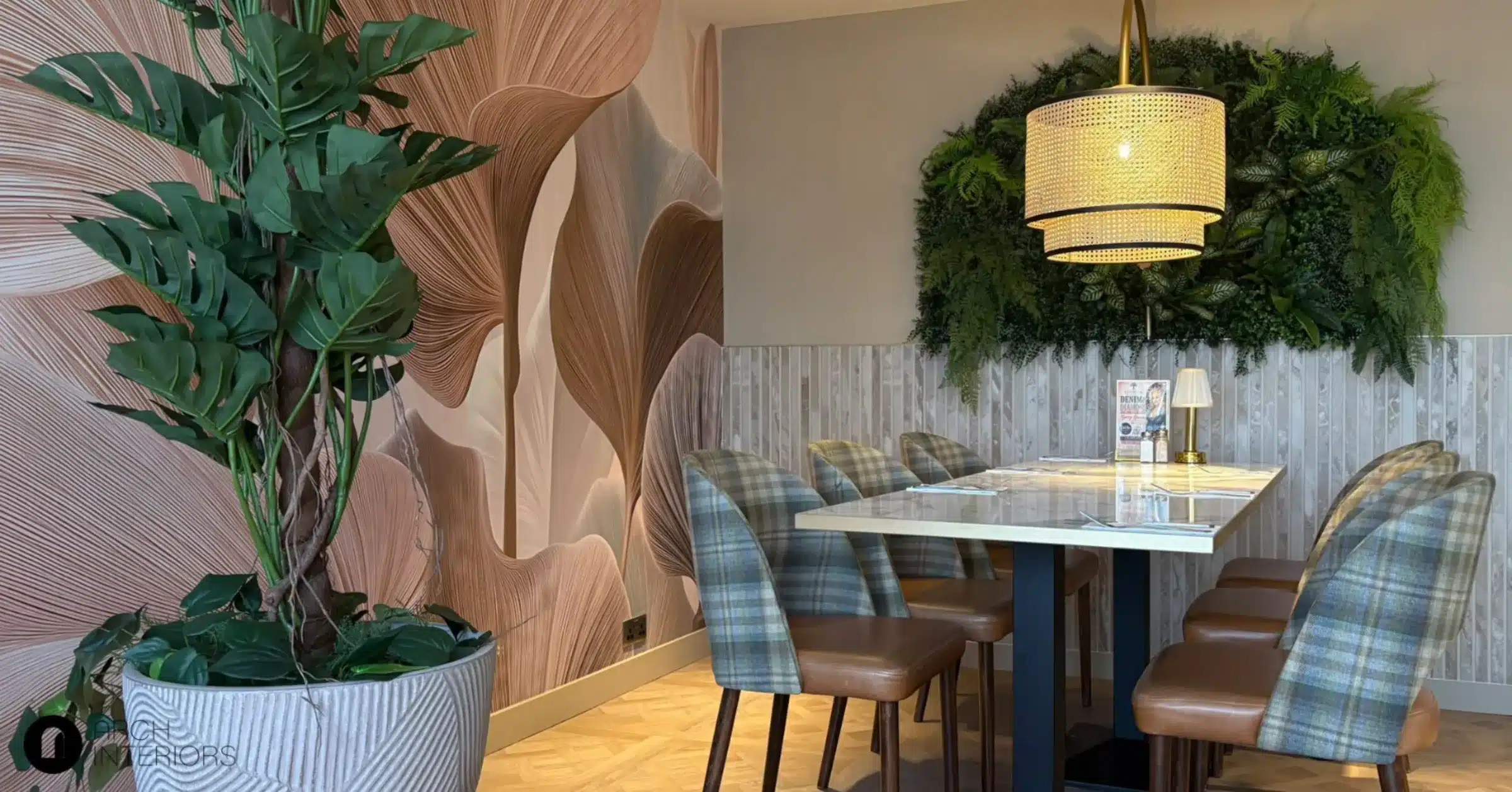
You have 45 minutes to impress a first-time guest. The lighting, the furniture, the noise level, and the greenery around them will shape whether they order dessert or ask for the bill. Biophilic restaurant designn is the discipline of arranging natural elements so that your space does the persuading for you.
This article covers what biophilic design actually means in a restaurant context, how it affects dwell time and perceived service quality, and where to start if you want to put these ideas into practice.
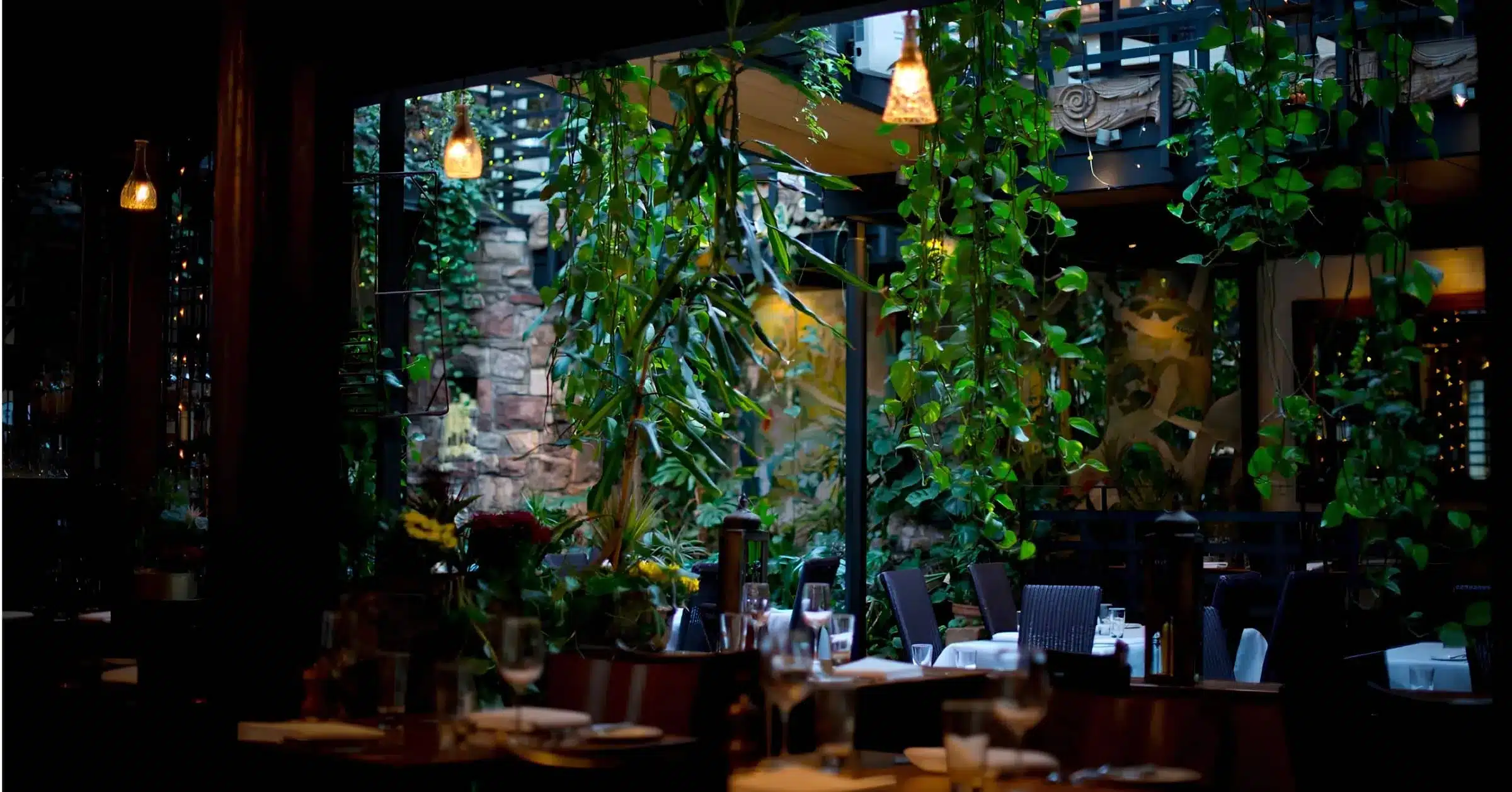
Biophilic restaurant design is the practice of weaving natural elements into a dining space so that guests experience a measurable shift in comfort and behaviour. It goes far beyond placing a pot on the counter.
The approach draws on Attention Restoration Theory, first described by Stephen and Rachel Kaplan in 1989. It explains how exposure to nature replenishes the mental resources that city life constantly drains.
In practice, this means introducing live or realistic artificial plants, natural surfaces (e.g. stone or timber), daylight-responsive lighting, and even the sound of moving water. When enough of these elements are present, the guest’s nervous system responds before any conscious decision is made.
That response is not a trend. Humans spent roughly 99 percent of their evolutionary history surrounded by nature. The reflex to relax around natural signals has not changed simply because a menu sits on a tablet.
Dwell time is how long a guest stays at the table after finishing a meal. In an evening restaurant, a wine bar, or a café, longer stays often translate directly into additional orders.
Research from adjacent hospitality settings shows that guests linger noticeably longer in spaces with greenery and natural surfaces. A 2010 study by Joye and colleagues found that shoppers spent more time examining products near green zones.
The exact percentage for any individual restaurant depends on the room, the layout, and the volume of biophilic elements installed. Post-opening measurement is the only honest way to pin down the figure for your own space.
Even a modest increase in table time can shift the numbers. If one in four guests orders an extra drink or dessert during those additional minutes, the daily uplift across multiple seatings adds up quickly.
Guests judge a space by more than the food. Surfaces matter. Wood, stone, and natural textiles raise the perceived value of a room because the brain distinguishes real materials from imitations through touch and subtle visual cues.
Sally Augustin documented this in Place Advantage (2009): authentic materials trigger a sense of quality that laminate and synthetic finishes cannot match.
Lighting plays a parallel role. A study published in the Journal of Sensory Studies (Oberfeld et al., 2009) found that the colour temperature of light changed how participants rated the taste of the same glass of wine.
Green walls and living plant installations also improve acoustics by absorbing background noise. This contributes to the impression that a room is quieter and more attentive to guest comfort. Together, these sensory signals tell the guest that the venue cares about detail.
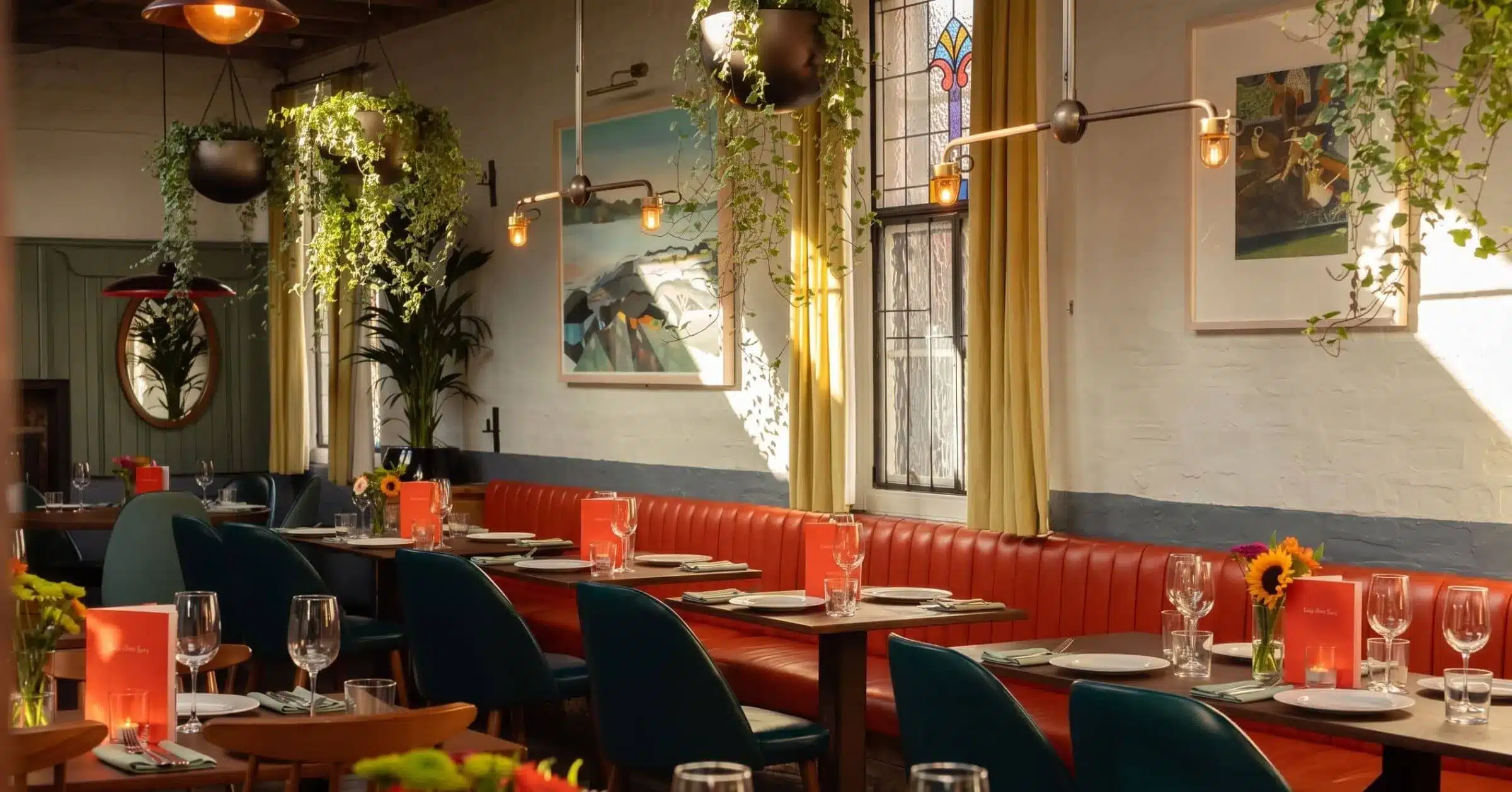
Plants are the most visible biophilic element, and their impact reaches well beyond aesthetics. Lots of indoor plants improve air quality, moderate temperature, and reduce background noise.
In a restaurant setting, plants also act as natural dividers. They create intimate zones that give guests a sense of privacy without closing off the room.
Placement matters more than quantity. Biophilic designers position plants along the guest’s route: at the entrance decompression zone, beside tables in long-stay areas, and at transitions between open and private spaces.
Benholm Group takes this principle into every hospitality project, specifying plant types based on the light, humidity, and temperature conditions of each venue.
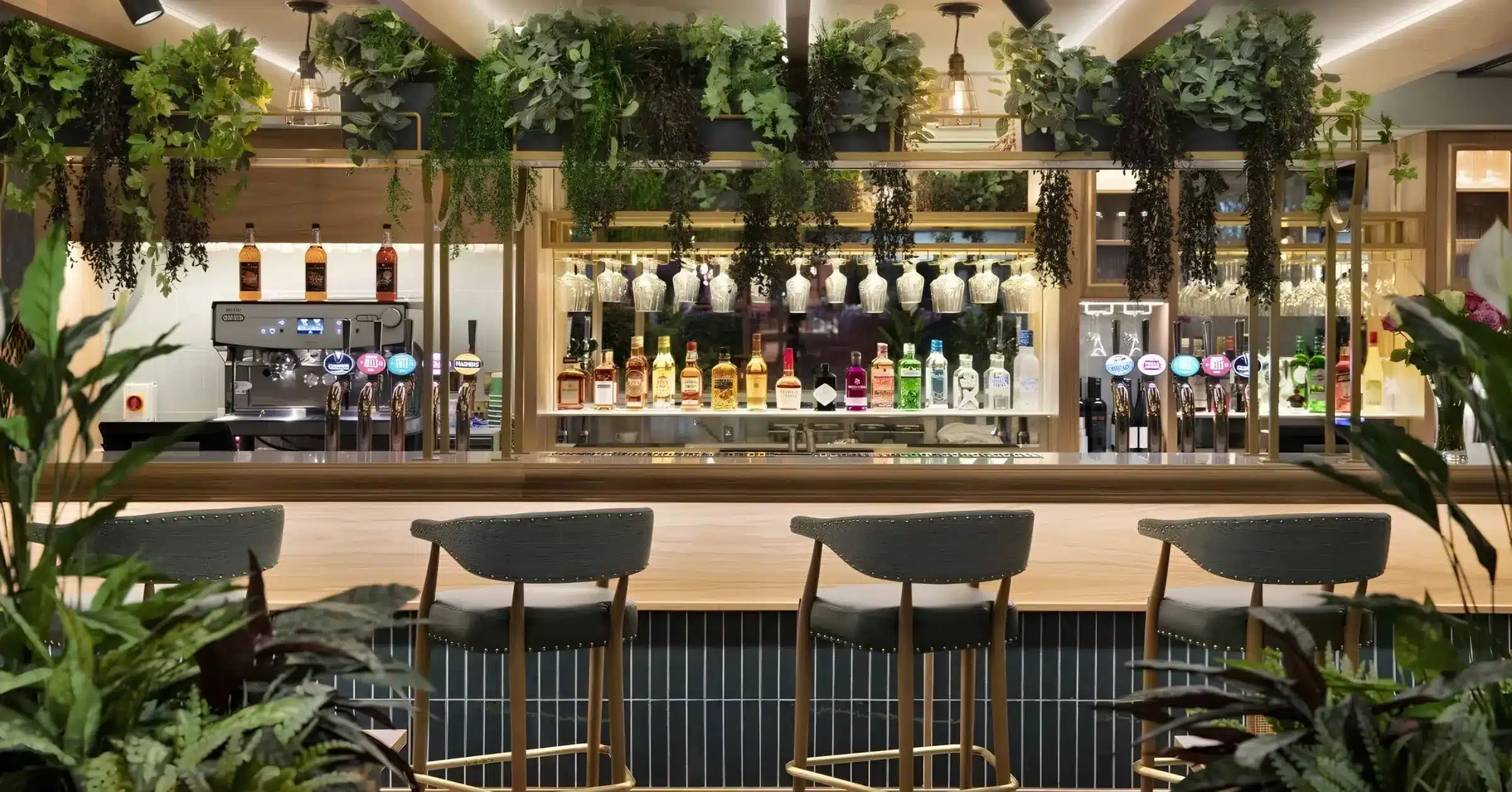
Artificial planting is sometimes the most practical choice. Restaurants with limited daylight, high ceilings, or fire-rating requirements can still achieve biophilic impact with realistic artificial specimens and preserved Nordik reindeer moss panels.
Plants are not the only channel through which nature speaks. The sound of flowing water helps guests recover from stress faster than silence alone.
According to a 2010 study by Alvarsson and colleagues, recovery from stress was 9 to 37 percent faster under natural sounds such as running water and birdsong compared with urban noise.
A water feature does not physically dampen restaurant noise. Instead, the brain tags it as a safe background signal, reducing the anxiety that builds in a full room with hard surfaces.
When paired with correctly calculated acoustics, a water element creates the feeling that the room is quiet, even at peak service.
Daylight is another powerful tool. Restaurants with large windows, skylights, or open patios tap into natural circadian cues that lift mood and encourage guests to settle in.
Where natural light is limited, dynamic colour-temperature lighting that shifts from cool to warm throughout the evening mimics the natural cycle and supports the same restorative effect.
Measurement separates a genuine design strategy from guesswork. Three metrics matter most: time at the table, the average cheque compared with the pre-change period, and the share of repeat visits.
You can track table time through reservation systems, POS data, or direct observation. Capturing baseline data before any changes is essential. Without a starting point, there is nothing to compare.
Zone-by-zone measurement is particularly useful in venues that introduce biophilic elements to part of the room first. You can compare guest behaviour in the updated area against the unchanged section of the same restaurant.
A 2025 study published in Tourism and Hospitality (Elshaer et al.) confirmed that the quality of biophilic design elements in hotels significantly increased guest well-being, perceived value, and willingness to return. The precise magnitude for your restaurant depends on your specific room, your clientele, and the volume of natural elements installed.
Biophilic restaurant design is not a passing aesthetic. It is a response to human physiology that has been consistent for hundreds of thousands of years. When you introduce enough natural elements, your guests stay longer, perceive higher quality, and return more often.
The entry point can be as simple as the right plants in the right places. From there, you can scale toward living walls, natural materials, and lighting that follows the rhythm of the day.
If you are planning a new restaurant or refreshing an existing space, speaking with a specialist in hospitality planting and décor is the most direct way to turn these principles into a scheme that works for your venue, your guests, and your bottom line.