Skip to the content
Environmental, Social, and Governance (ESG) frameworks, driven by organisations such as the United Nations provide businesses with a structured way to understand, measure, and communicate their impact on wider environmental and social challenges. While ESG targets have evolved from earlier initiatives focused on health and safety, pollution reduction, and corporate philanthropy, they now represent a far more comprehensive approach to responsible business strategy.
Looking beyond financial metrics, organisations are expected to demonstrate transparency, accountability, and measurable progress across key sustainability priorities. ESG highlights that sustainability extends beyond environmental concerns alone, performance across all three pillars is increasingly linked to reputation, stakeholder confidence, and long-term business success.
The Confederation of British Industry research found that two-thirds of investors take ESG factors into account when investing in a company meaning ESG has the potential to grow business while benefitting the environment and community.
Across the built environment, this raises an important question: can thoughtfully integrated greenery, delivered by commercial planting specialists, play a meaningful role in supporting ESG targets?

ESG targets are measurable key performance indicators (KPIs) that shape a company’s sustainability and ethical strategy. Defined by clear metrics, timelines, and accountability structures, they guide both daily operations and long-term decision-making. In 2024, Grant Thornton International Business Report found that 43% of businesses in the UK had sustainability targets in place, which was higher than the global average (39%).
By embedding ESG targets into business strategy, organisations are better equipped to manage risks and capitalise on opportunities arising from evolving environmental, economic, and social conditions. Clients, employees, and investors increasingly assess organisations against these criteria, with strong ESG performance often seen as a marker of resilience, responsibility, and future readiness.
ESG is typically defined across three pillars:
Environmental
The environmental pillar considers a company’s impact on the natural world, including energy consumption, emissions, waste, and resource efficiency. It influences both operational practices and supply chain decisions, with poor performance often carrying financial and regulatory risk.
Social
The social pillar focuses on how a business supports people, covering employee wellbeing, health and safety, diversity and inclusion, and relationships with local communities.
Governance
Governance relates to leadership, ethics, transparency, and accountability. It addresses how decisions are made, how performance is monitored, and how organisations maintain trust with stakeholders.
Effective ESG performance relies on a structured, data-driven approach, including:
This level of measurement demonstrates genuine, long-term commitment. Organisations that actively track ESG metrics are better positioned to meet stakeholder expectations and achieve sustainable growth.
Hotels across the UK are now preparing for tighter sustainability reporting rules as ESG targets continue to reshape how hospitality businesses measure and disclose their impact. These changes form part of a wider shift in corporate reporting, with implications for hotel groups, independent operators and their supply chains.
Commercial planting specialists have the potential to support a strategic role in improving ESG performance.
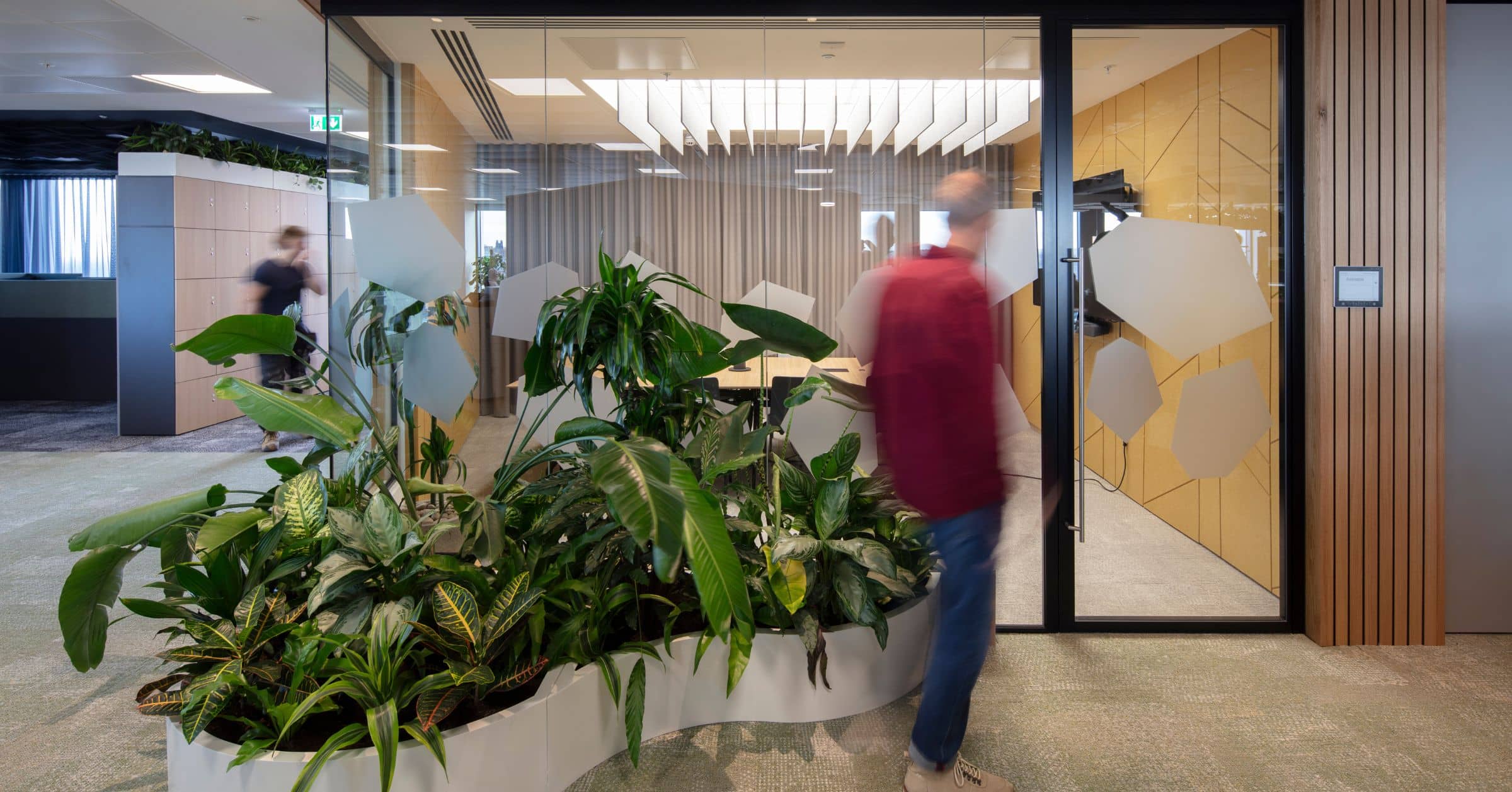
The integration of greenery in commercial environments is a performance-driven solution rather than just a design choice. When properly specified, installed, and maintained, planting schemes can contribute across all three ESG pillars, supporting both business objectives and wider sustainability goals.
Well-designed planting schemes can:
Expert plant selection, placement, and maintenance ensure these benefits are aligned with environmental performance targets.
According to NASA research, indoor plant species have the ability to remove Volatile Organic Compounds from the air which occurs through a process called phytoremediation, in which they absorb and metabolise pollutants, turning them into harmless by-products.

From a corporate workplace perspective, greenery delivers tangible human benefits:
Professionally implemented planting schemes help to create spaces where people perform better and feel better, directly supporting social ESG objectives.
Plants also have the potential to increase bacterial diversity in an environment which supports the human immune system and improves overall wellbeing.

Greenery also contributes to business governance by:
Working with experts ensures these outcomes are intentional, measurable, and aligned with broader ESG frameworks.
According to Dr Matsuoka, a scholar from the Shimizu Corporation in Japan, who is currently conducting research on the benefits of plants in the workplace, current research indicates that biophilic design positively influences both physiological and psychological indicators.

When the incorporation of greenery into sterile office environments is intentional and considered, it has the potential to contribute towards ESG targets by improving the wellbeing of individuals, purifying air quality and demonstrating a wider company commitment to environmental targets.
When delivered by commercial planting specialists who can incorporate greenery in a meaningful way, planting becomes a functional business asset, supporting environmental performance, enhancing human experience, and strengthening ESG outcomes in a tangible way.
This can help large businesses to bridge the gap between sustainability ambition and real-world impact.
If you’re reviewing how your workspace supports ESG targets, planting is often one of the most visible and immediate opportunities to make progress.
We work with organisations across the UK. To discuss your requirements, call us on 01324 861300, email sales@benholm.com or submit an enquiry here.