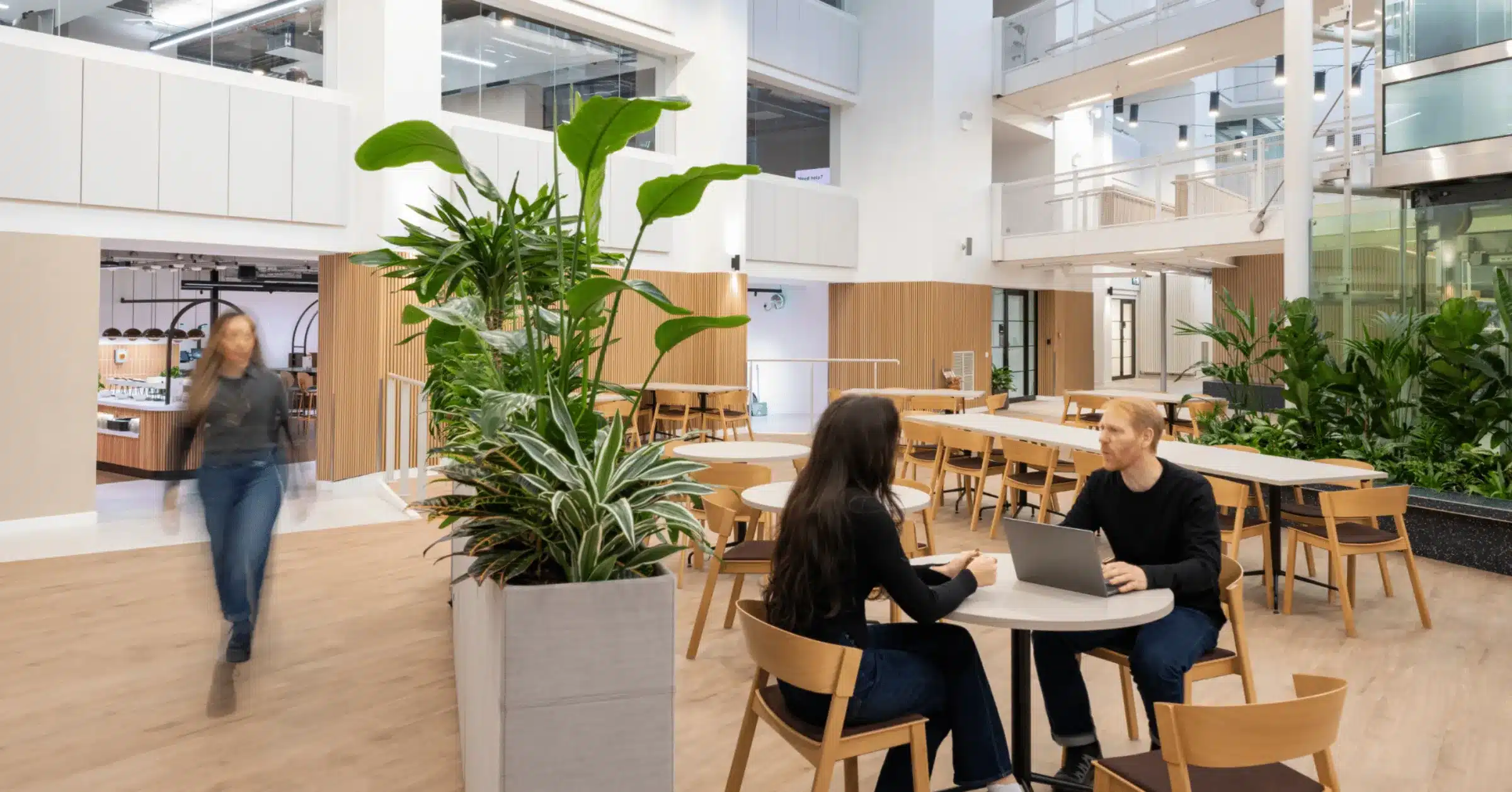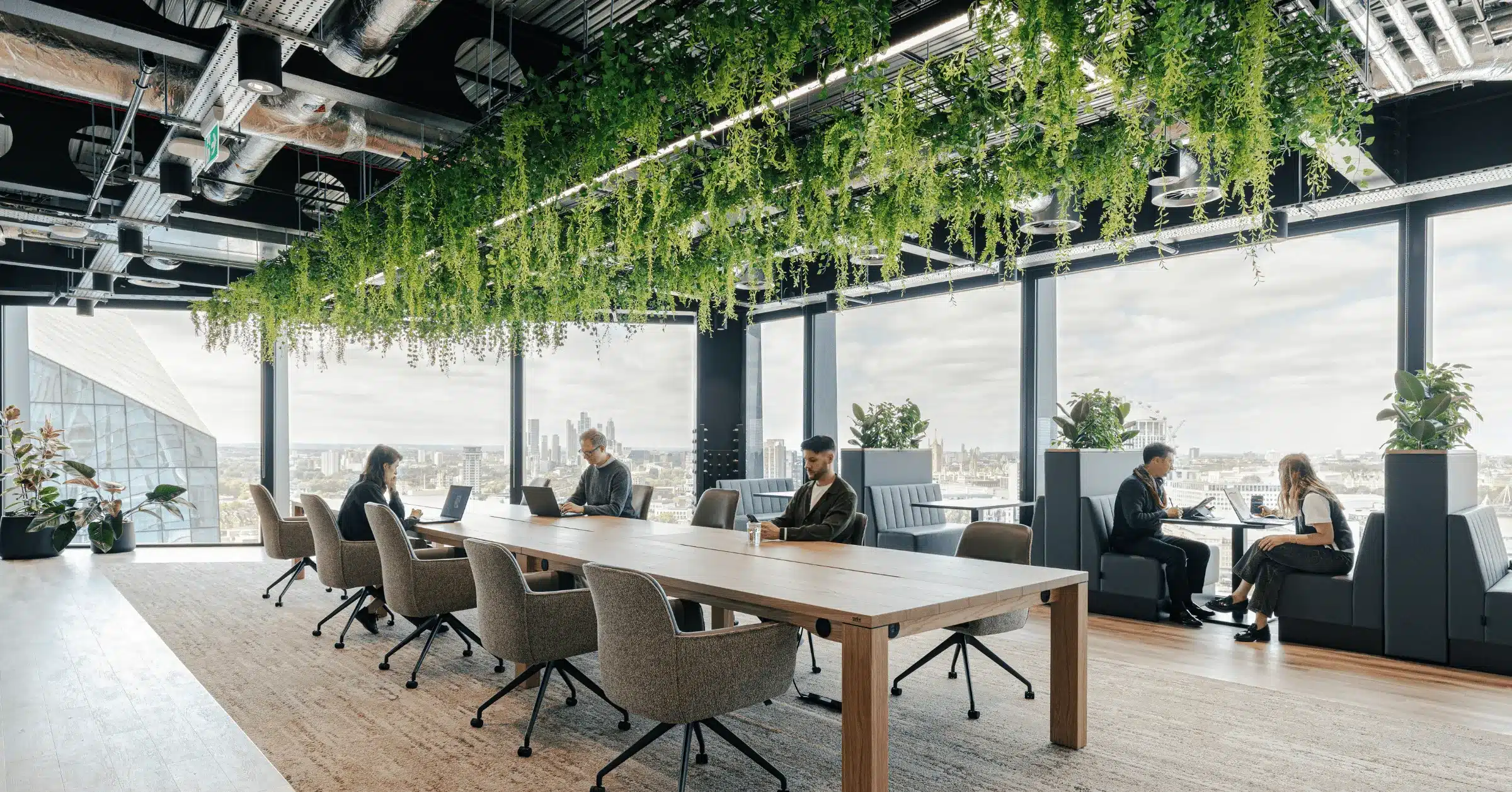
Following our earlier announcement about Benholm’s involvement in Nottingham Trent University’s research into how plants influence wellbeing in the workplace, we recently caught up with Dr Tatsuya Matsuoka, visiting scholar from Shimizu Corporation in Japan, for an update on how the study is progressing.
The research—led by Professor Emeritus Derek Clements-Croome (University of Reading), Associate Professor Yangang Xing (NTU), and supported by Benholm Group—aims to provide measurable evidence of the benefits of biophilic design in office environments.
Below, Dr Matsuoka shares insights into the current stage of the project, early findings, and the importance of this research for the future of workplace wellbeing and design.
This project is a collaborative effort led by Emeritus Prof. Derek Clements-Croome from the University of Reading, Associate Prof. Yangang Xing from Nottingham Trent University, Mr. Adrian Byne from Benholm, and the Japanese construction company Shimizu Corporation. Prof. Clements-Croome had successfully worked with Benholm on other biophilic projects. I would like to express my deepest gratitude for the warm and sincere guidance provided by this research team, which has been instrumental in enabling me to conduct this research.
We are currently in the middle stage of our experiment, which involves evaluating biophilic design in the office through the use of wearable devices and life logs. By the end of July, we presented at the 13th International Conference on Sustainable Development in the Building and Environment at Cambridge University. Our presentation reviewed recent related research and highlighted the importance of this technology. (View the conference paper here)
Research involving plants has assessed human responses through wearable devices, indicating that biophilic design positively influences both physiological and psychological indicators. These findings align with other studies. More detailed results will be published in future research papers.
Employees spend so long in the workplace, where they must remain productive despite artificial environments and limited natural exposure. Health and Productivity Management is a strategic initiative that aims to improve employee health through occupational hygiene and business practices. A key component of this approach is biophilic design, which incorporates natural elements into typically sterile environments like offices. This design is believed to enhance employee wellbeing and productivity. However, there are few verified cases of its effects in actual workspaces, necessitating tailored experiments to measure long-term changes. This research will contribute to the development of evaluation techniques and optimal planting designs that consider human physiological and psychological aspects.
Research indicates that, although the results can vary depending on the conditions for introducing plants, certain physiological indicators—such as heart rate, blood pressure, and electrodermal activity—as well as psychological indicators like subjective stress levels and positive emotions, are likely to improve. If these effects are sustained on a daily basis, it is anticipated that employees’ physical and mental health in the workplace will be maintained, which could help prevent mental illness and enhance productivity.


Working with Benholm has been a valuable experience. The plants used in our experiments needed to adapt to a low-light indoor environment while remaining vibrant and healthy. To maximise the benefits of these plants, it was essential to determine the appropriate planting substrate and maintenance method, alongside advice on plant type. Benholm, leveraging their expertise and proven track record, offered valuable advice on incorporating plants effectively. I was impressed by their careful consideration and consistent focus on the purpose of the greening.
I learned a great deal about plant maintenance and species selection by working with Benholm, and look forward to continuing our work together on international and interdisciplinary industry-academia collaborations.
We are currently employing a research method that combines wearable devices with lifelogging to explore the relationship between individuals’ health status and the effects of biophilic design. At Nottingham Trent University, under the guidance of Professor Emeritus Derek Clements-Croome and Associate Professor Yangang Xing, we are preparing an experiment involving subjects who will engage with plants in university facilities. This study aims to go beyond the location-specific research on biophilic design that has characterised many previous studies, enabling us to accumulate data on long-term effects with a focus on individual differences.
Additionally, Shimizu Corporation London is implementing plantings in actual office spaces, collecting physiological and psychological data throughout the day as part of a demonstration experiment related to this project. We hope to continue conducting demonstration experiments with more cases and subjects to develop knowledge that addresses a broader range of greening purposes, thereby contributing to its effective use and generalisation.
What stood out was the significant individual variation in how people reacted to plants in indoor spaces. This variation was evident not only in the data but also in the diverse reactions and expressions observed as participants entered the experimental space. Biophilic design encompasses more than just plants; it also includes furniture and building surfaces made from natural materials like wood and incorporates biomimicry elements. Reactions to these features are likely influenced by factors such as personal preferences, daily connections with nature, and the individual’s mood that day.
To explore more effective ways of integrating biophilic design, we aim to leverage insights gained from examining the effects of such design based on the use and purpose of the space, as well as from the perspective of plant management. This will enable us to propose optimal design solutions.

We’re proud to continue supporting this pioneering research and to see our planting expertise contributing to a study with the potential to shape how workplaces are designed in the future.
The project is set to run through to December 2025, and we look forward to sharing further updates as new findings are published.
At Benholm, we’ve always believed that plants have the power to transform spaces and enhance wellbeing—and this research is helping to demonstrate exactly how and why.