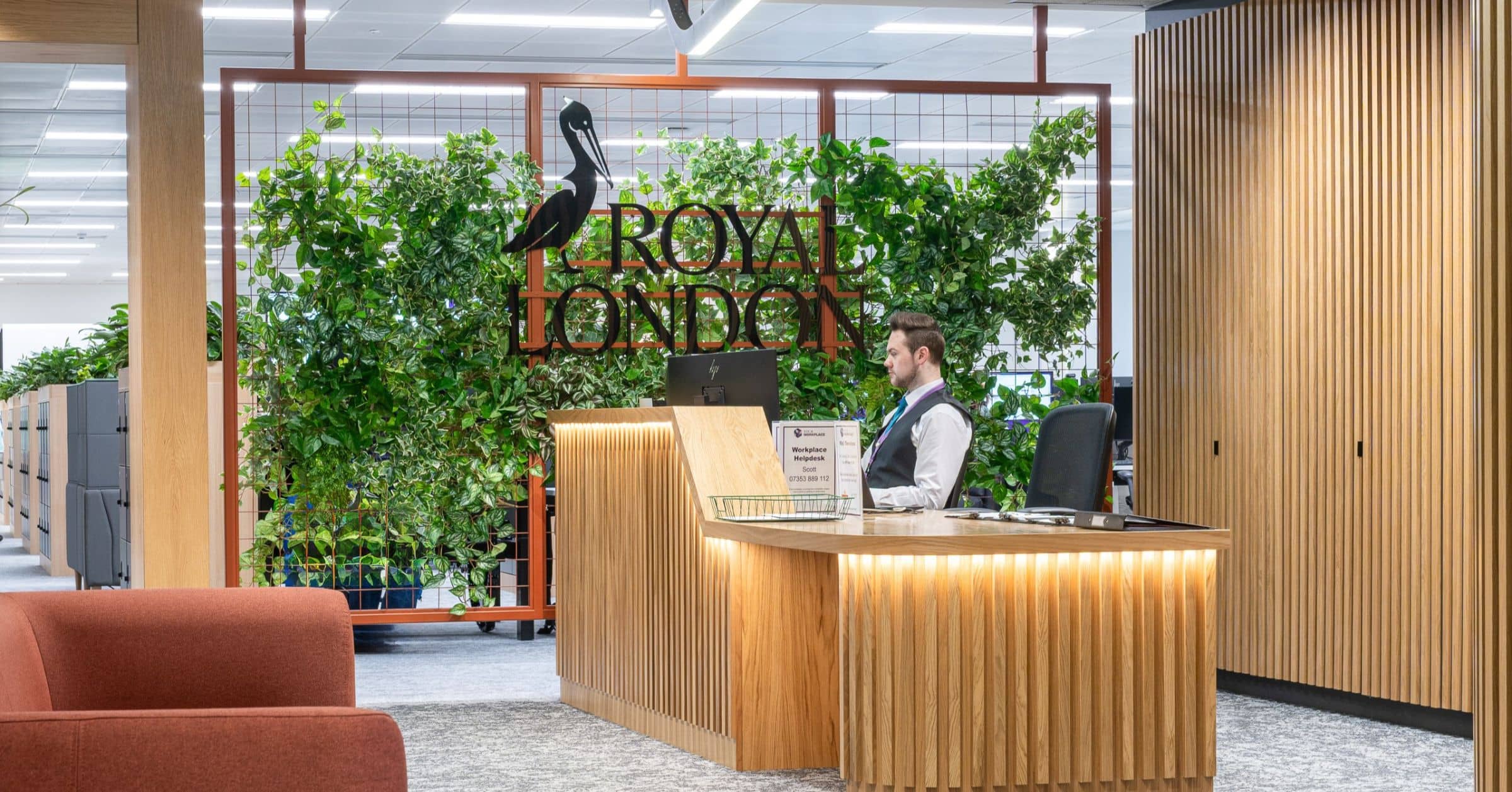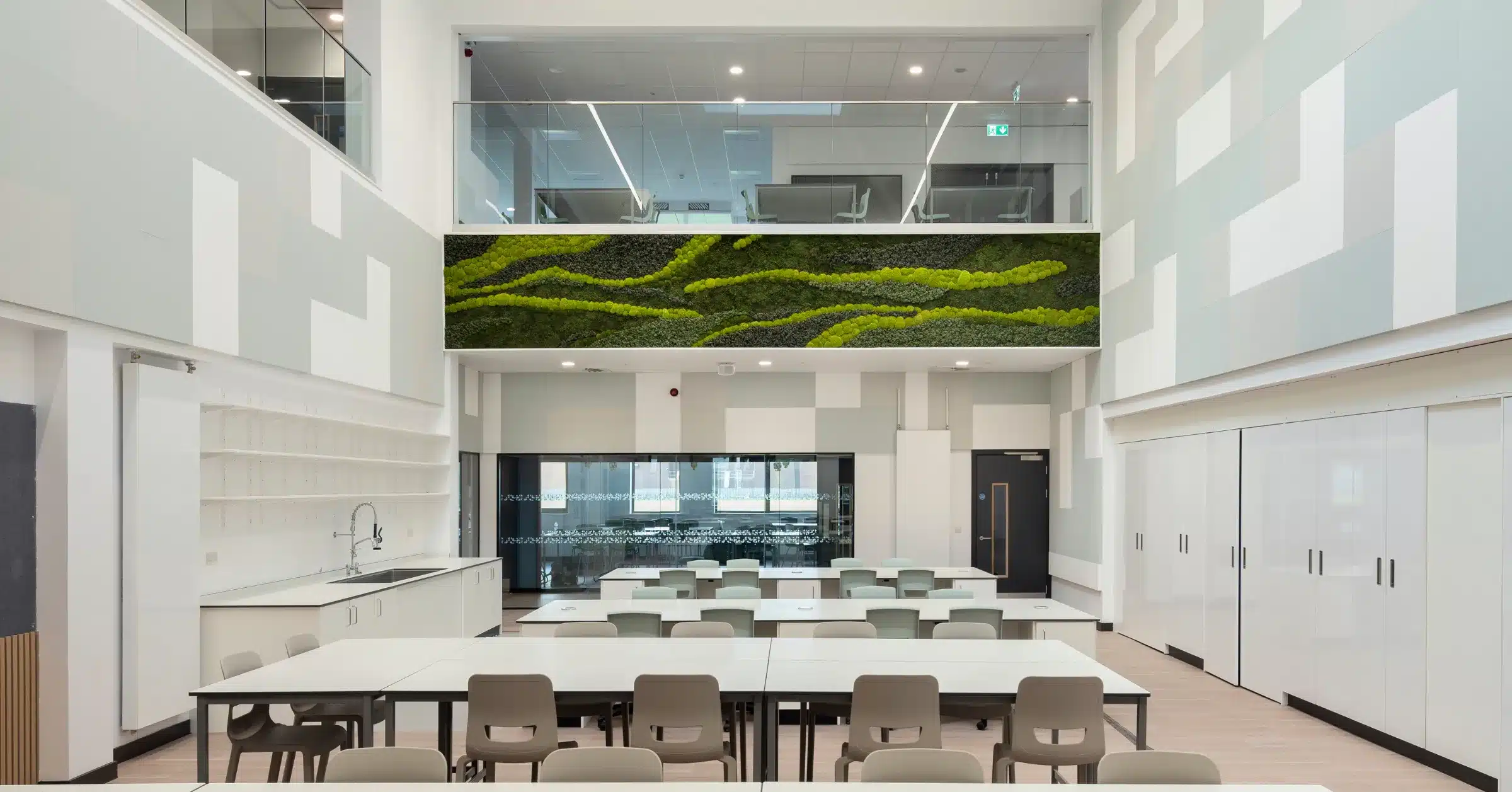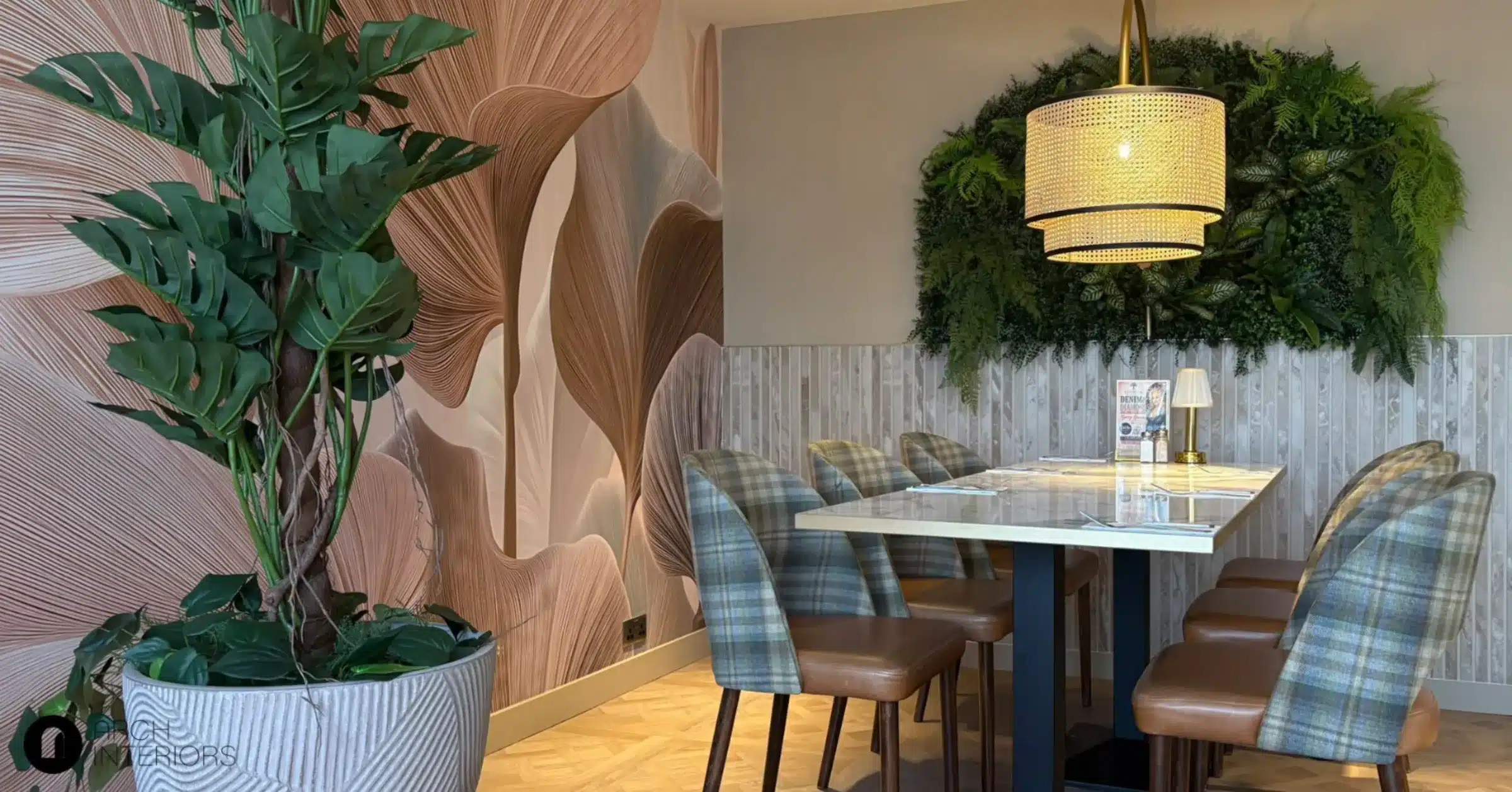
In recent years, sustainability has often been treated as a buzzword. As something visual, seasonal, or trend-led. A few plants here, some reclaimed wood there, and the job feels done. But for organisations thinking long-term, sustainability is not about appearances. It is about how a space is built to function, how it is built to support people, and how it holds up over time.
A truly sustainable workplace is designed with intention. It considers not just how a space looks on day one, but how it performs years down the line. At Benholm Group, we see sustainable design as something that should feel natural, long-lasting, and genuinely beneficial to the people using the space every day. These are the core pillars shaping that approach.
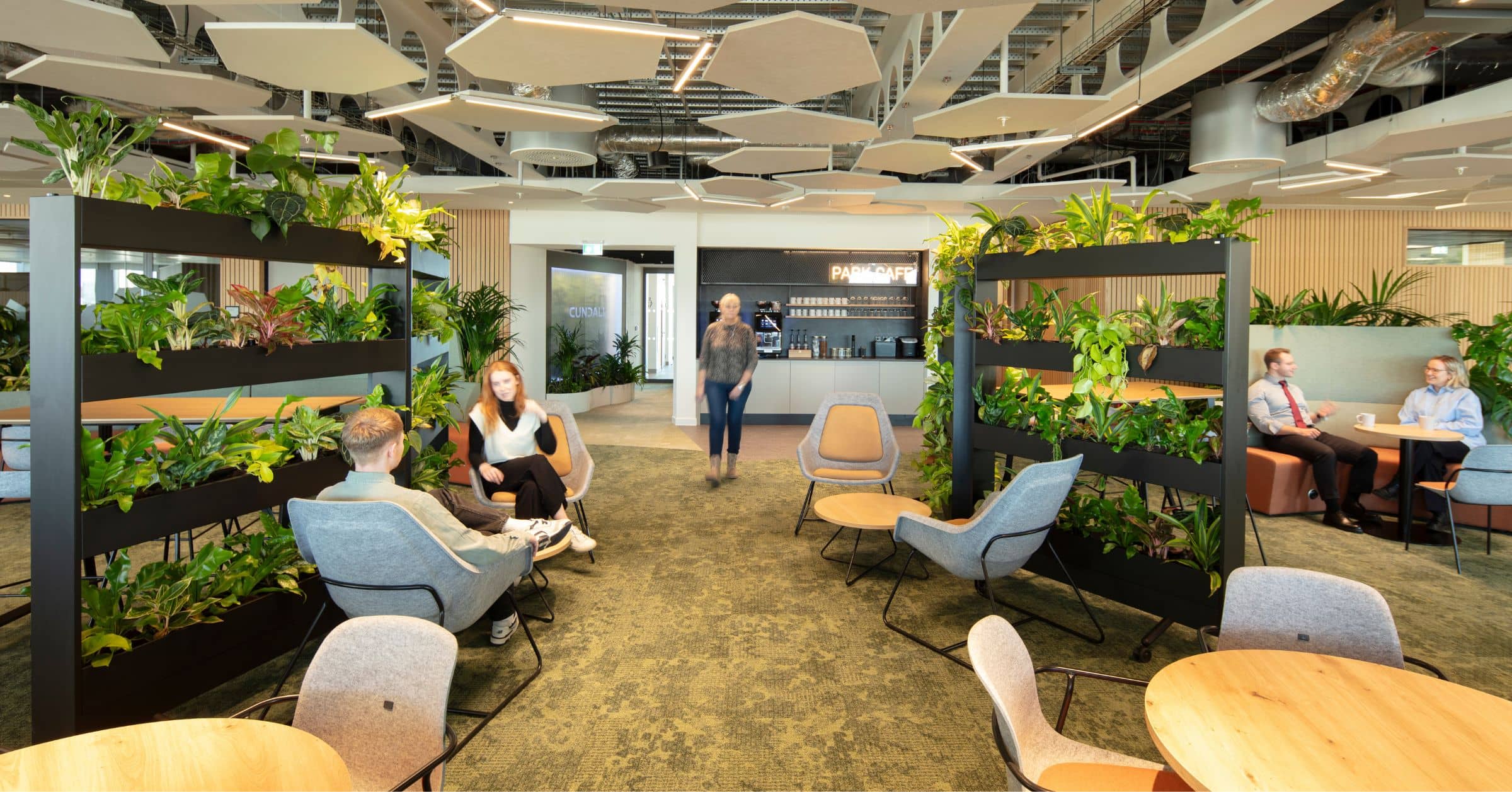
Biophilic design is often misunderstood as simply “adding plants”. In reality, it’s about restoring a connection to nature that many indoor environments have lost.
Humans are naturally wired to respond to natural elements – light, greenery, water, organic textures. When these are thoughtfully introduced into a workspace, they can help reduce stress, improve focus, and even support better cognitive performance.
This can take many forms:
The shift we’re seeing:
Workplaces are moving away from decorative planting and towards integrated living systems. Living walls, large-scale planting schemes and built-in planters are becoming part of the architecture itself – contributing to acoustics, air quality, and overall atmosphere.
Office spaces have traditionally followed a wasteful cycle. Fit out, use, rip out, repeat. Every few years, perfectly useable materials are stripped away and sent to landfill simply because needs have changed.
Sustainable design challenges this model by asking a simple question: what happens to this later?
Designing for reuse means:
The shift we’re seeing:
More projects are embracing circular design principles, where materials are selected not just for how they look and perform now, but how they can be reused, reconfigured or recycled in the future.
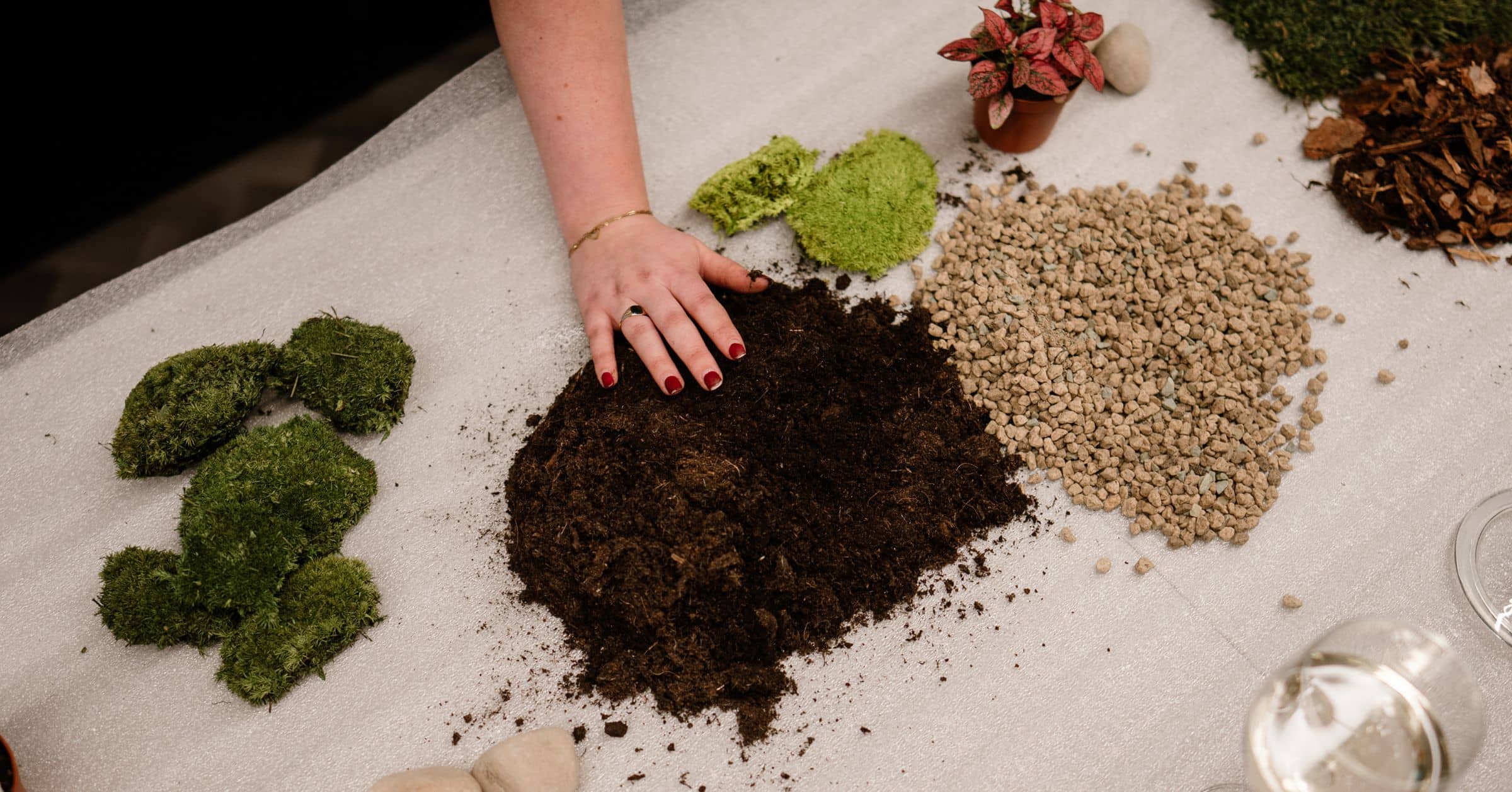
A workspace can look clean and modern but still have poor air quality. Many common materials – paints, adhesives, finishes – release Volatile Organic Compounds (VOCs), which can contribute to headaches, fatigue, and burn out.
Sustainable design puts equal weight on what’s in a space as what’s visible.
This involves:
The shift we’re seeing:
There is a growing focus on transparency. This includes knowing exactly what materials are made from and how they affect indoor environments. Healthier material choices don’t just support sustainability; they directly improve day-to-day wellbeing.
Energy efficiency is often associated with technology. Smart systems, sensors, and automation. While these play a role, some of the most effective strategies are much simpler.
Good design can reduce energy use before technology even comes into play.
For example:
The shift we’re seeing:
A move towards passive design strategies. Spaces that naturally require less energy to operate, instead of constantly correcting the environment with systems. The goal is to design spaces that feel comfortable from the outset.
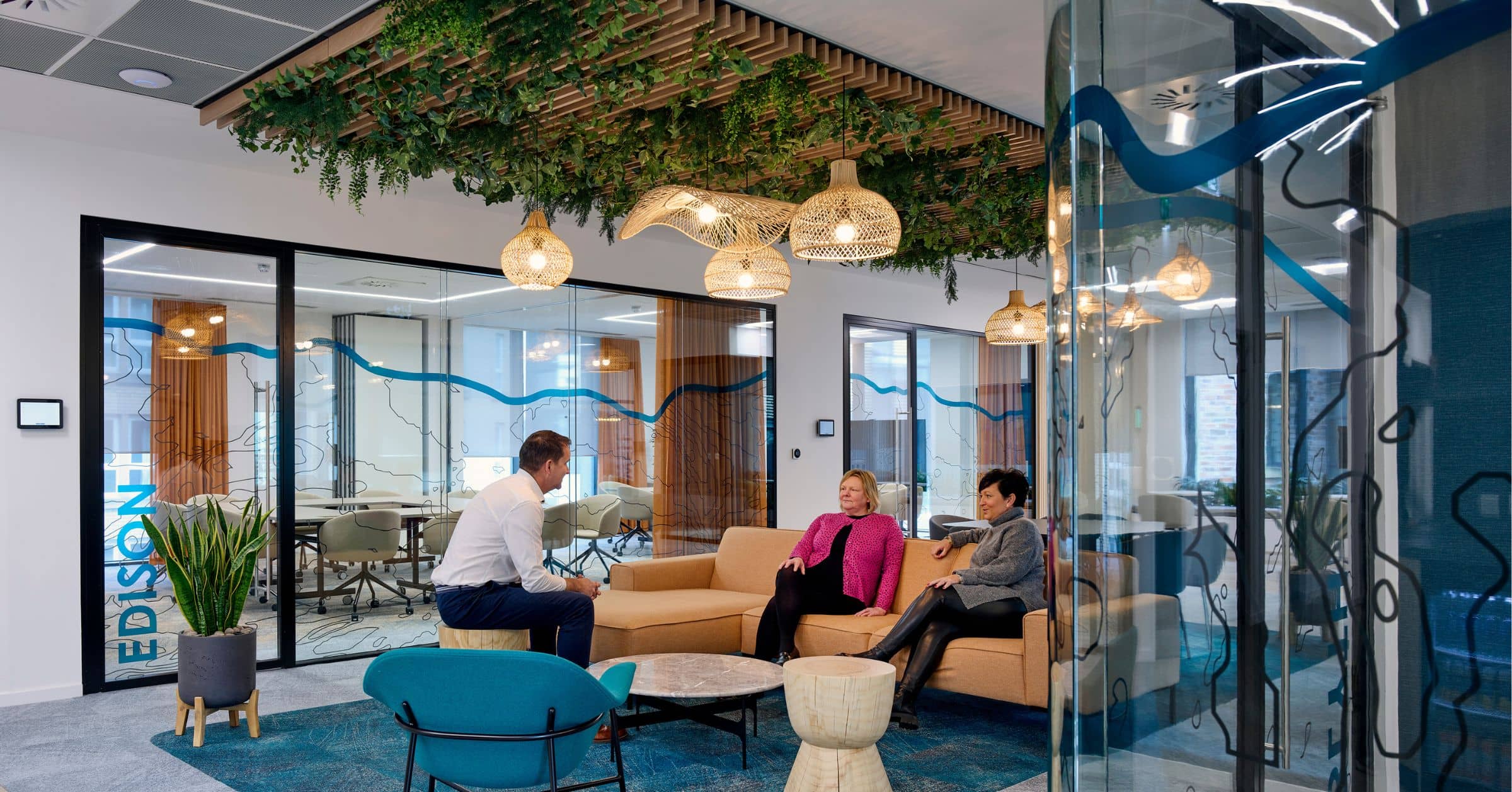
Furniture is often one of the most overlooked contributors to waste in the workplace. Low-cost, short-life pieces are easy to replace – but that convenience comes at an environmental cost.
Sustainable workplaces take a different approach:
The shift we’re seeing:
A move away from ‘fast furniture’ towards pieces that are designed to evolve. Flexibility is key. Furniture that can be reconfigured or adapted helps extend its lifespan significantly.
Sustainability isn’t just about materials, it’s also about where they come from. Transporting products across long distances adds to a project’s carbon footprint, often unnecessarily.
Sourcing locally can:
The shift we’re seeing:
A growing application for slow design. Taking the time to source materials and products more thoughtfully. Locally sourced timber, planting, and bespoke elements can give a space a more grounded, authentic feel.
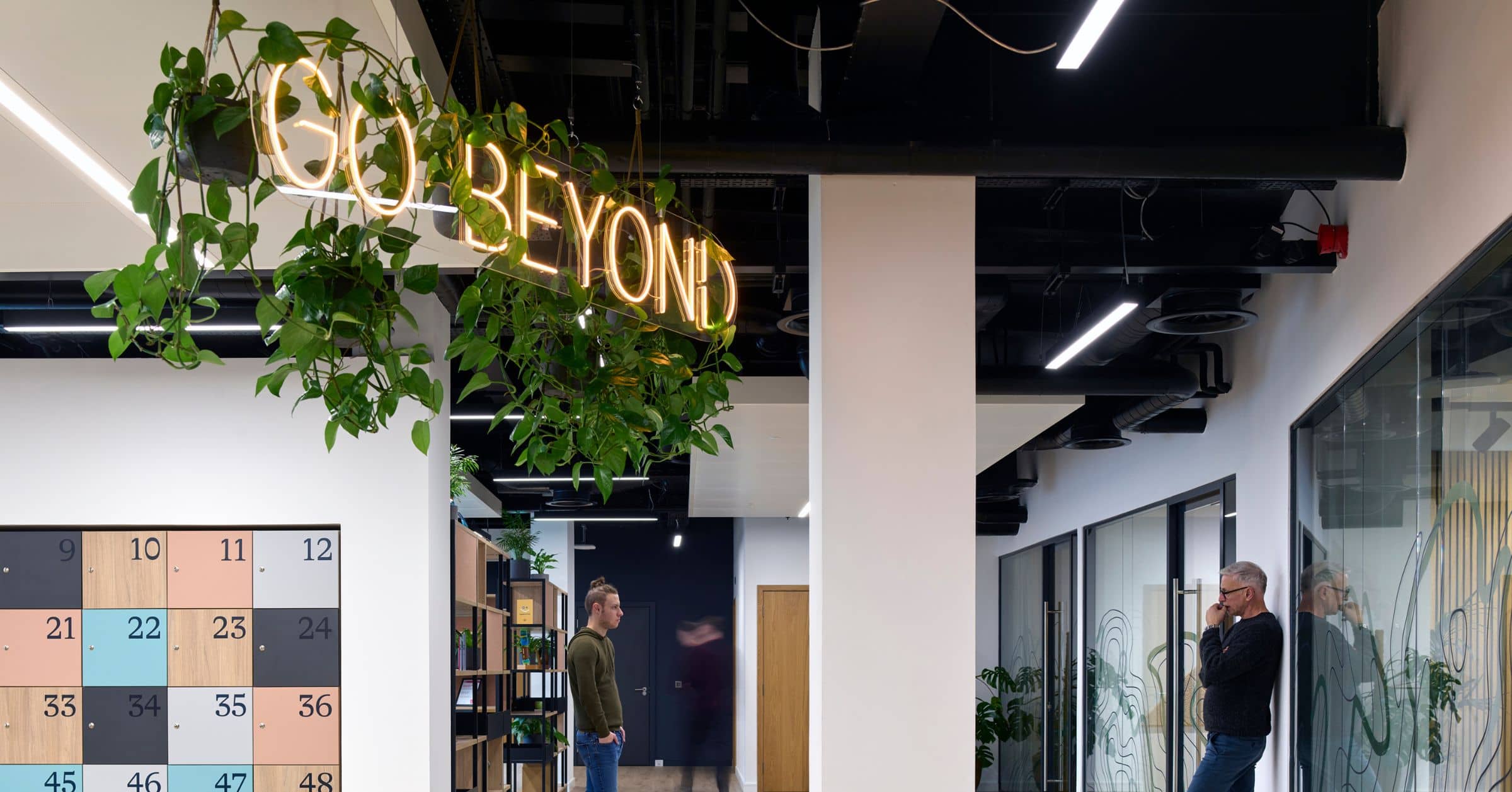
A sustainable workplace isn’t created through a single decision, it’s the result of many small, considered choices coming together.
It’s about:
When these principles are applied consistently, the result is a workplace that not only looks good, byt works better for the people inside it and the world outside it.
Get in touch with Benholm Group to explore how thoughtful, lasting planting design can transform your environment.
We share ideas, insights and real-world examples of sustainable design in our monthly newsletter. Subscribe to stay inspired and keep up to date with what’s happening in the world of sustainability.