Skip to the content
London-based designer and maker, Alexander Kneller has long been driven by a fascination with organic and natural forms. Working primarily with sustainable materials such as timber, he creates distinctive pieces that range from small-scale explorations to fully realised furniture.
Alexander says, “I was always interested in the art world, and after studying at Camberwell College of Arts, I spent many years creating artwork for artists and architects such as Damien Hirst, Rachel Whiteread, Mona Hatoum, Tonkin Liu Architects, Jake and Dinos Chapman, Tim and Sue Webster, and Julian Opie.”
“I liked the idea of creating a physical object with clear purpose and application,” he says. And in 2007, he released his first product called, Side Chair 2. “It sat somewhere between sculpture and furniture: a minimal, multifunctional object inspired by childhood imagination.”
That sense of curiosity with making began from an early age. Growing up in the countryside, Alexander was constantly creating, starting with drawing and Lego, and developing into building structures outside like treehouses.”
“As a child, you’re always playing with scale, whether it’s small surfaces or large surfaces, through toys or other materials. The inspiration behind my initial product came from that idea of the viewer existing within a surface.”
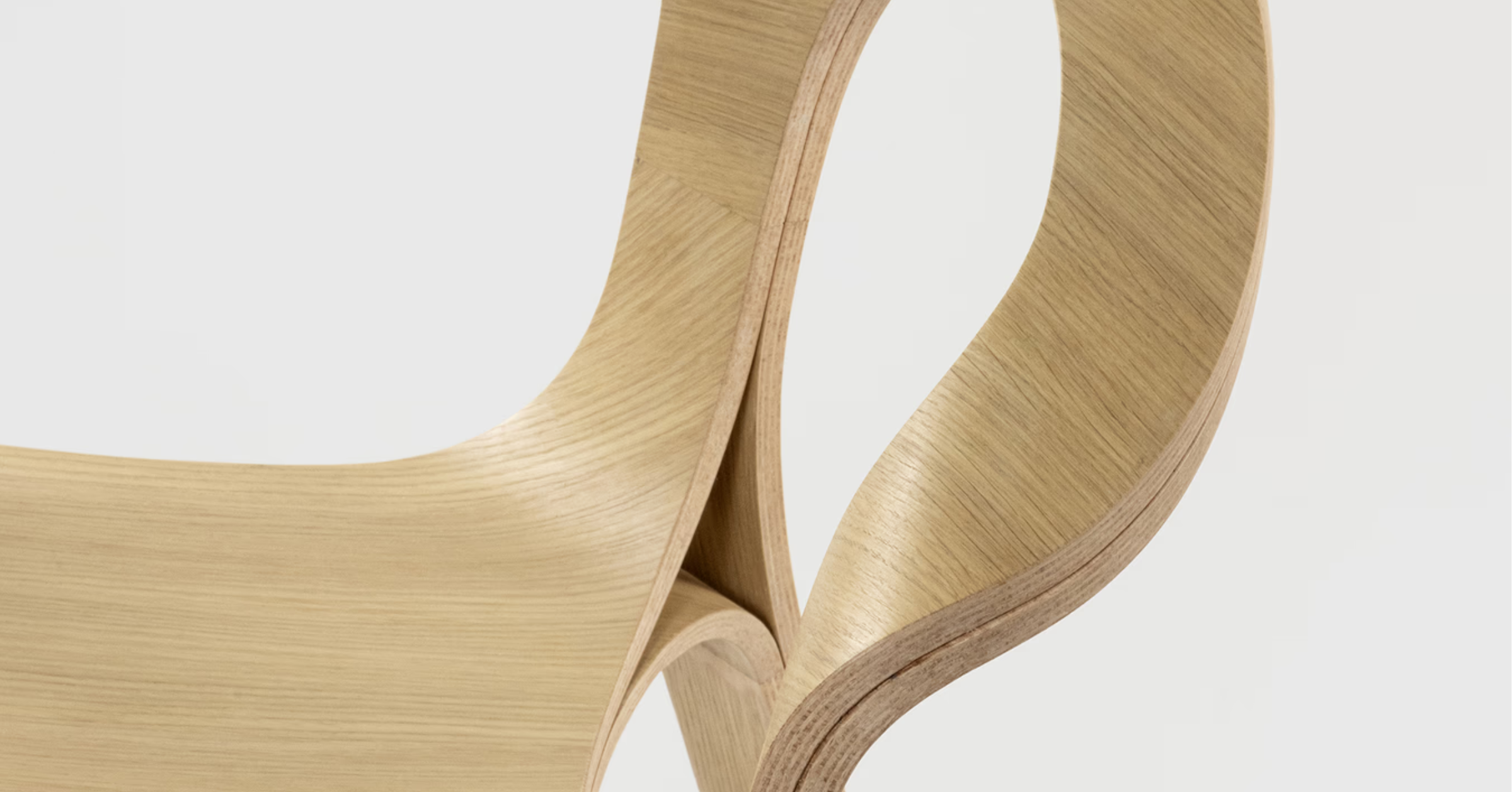
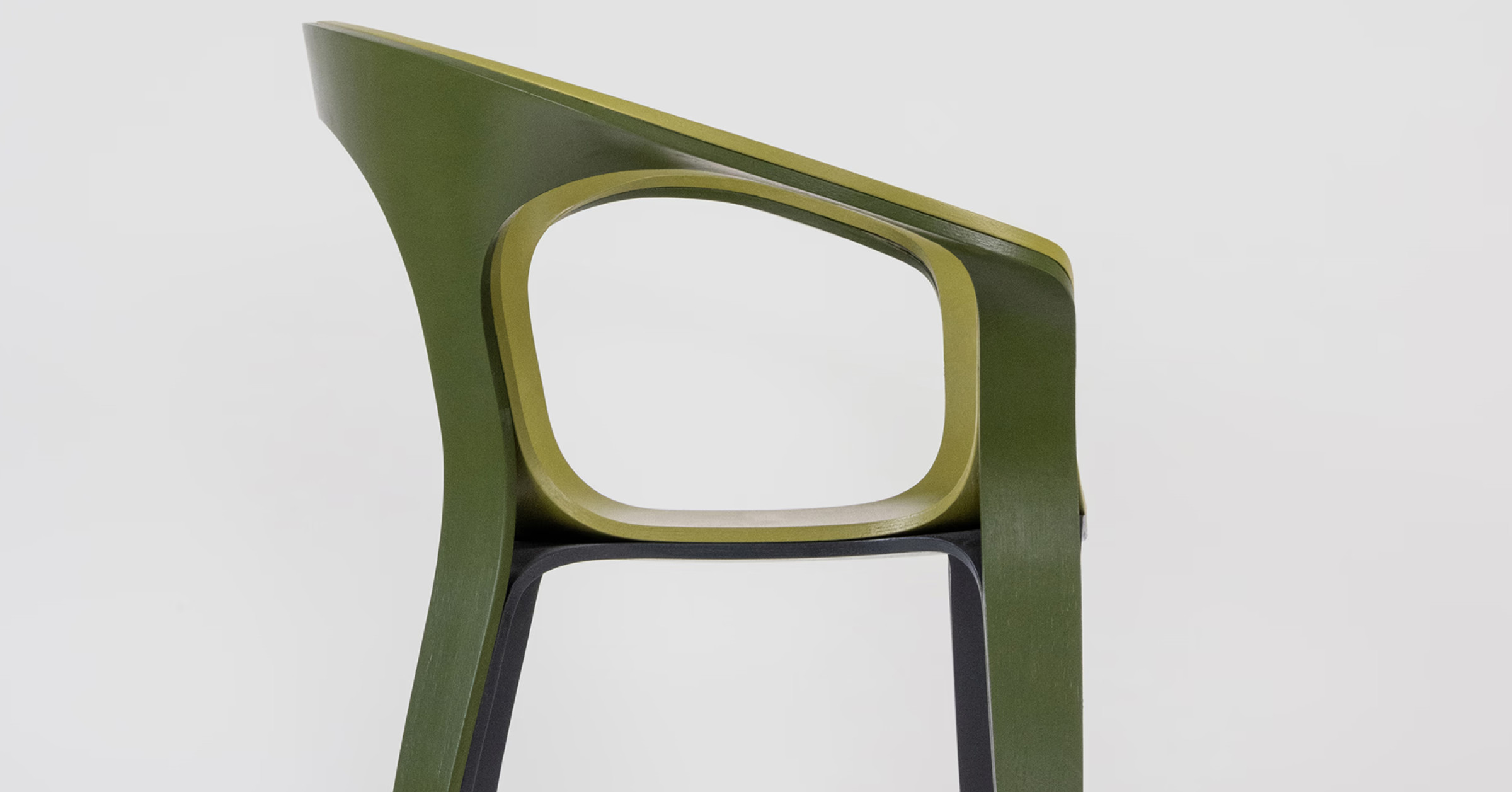
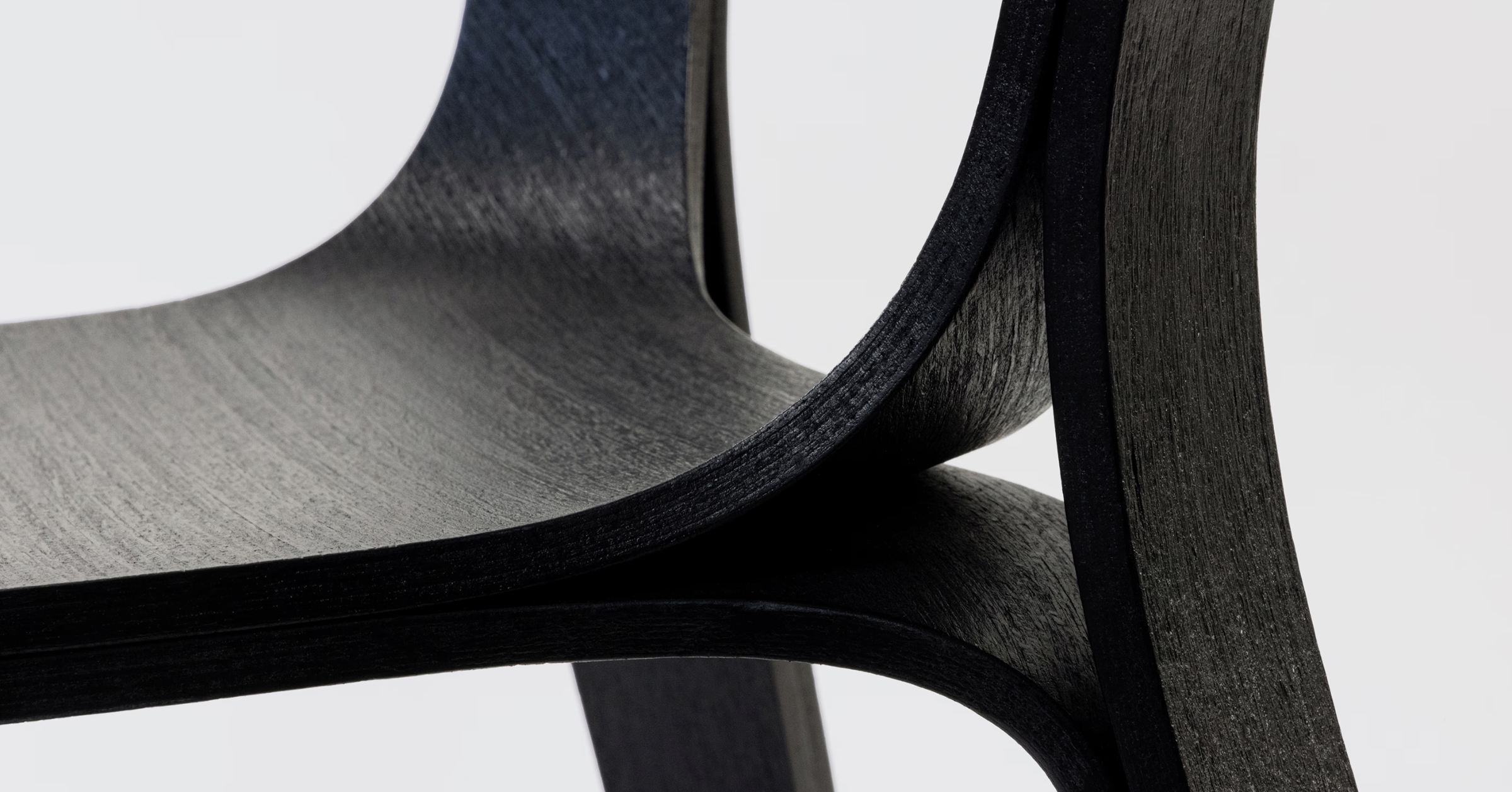
Alexander’s most recent piece, “Lamina“, a unique chair which takes the form of a sculpture, takes its name from the Latin word for “sheet” and draws on both natural forms and the physical process of fabrication. The chair is crafted from layered plywood, with carefully arranged veneers that accentuate its gradual curves, transforming it from a rigid three-dimensional object into something more fluid.
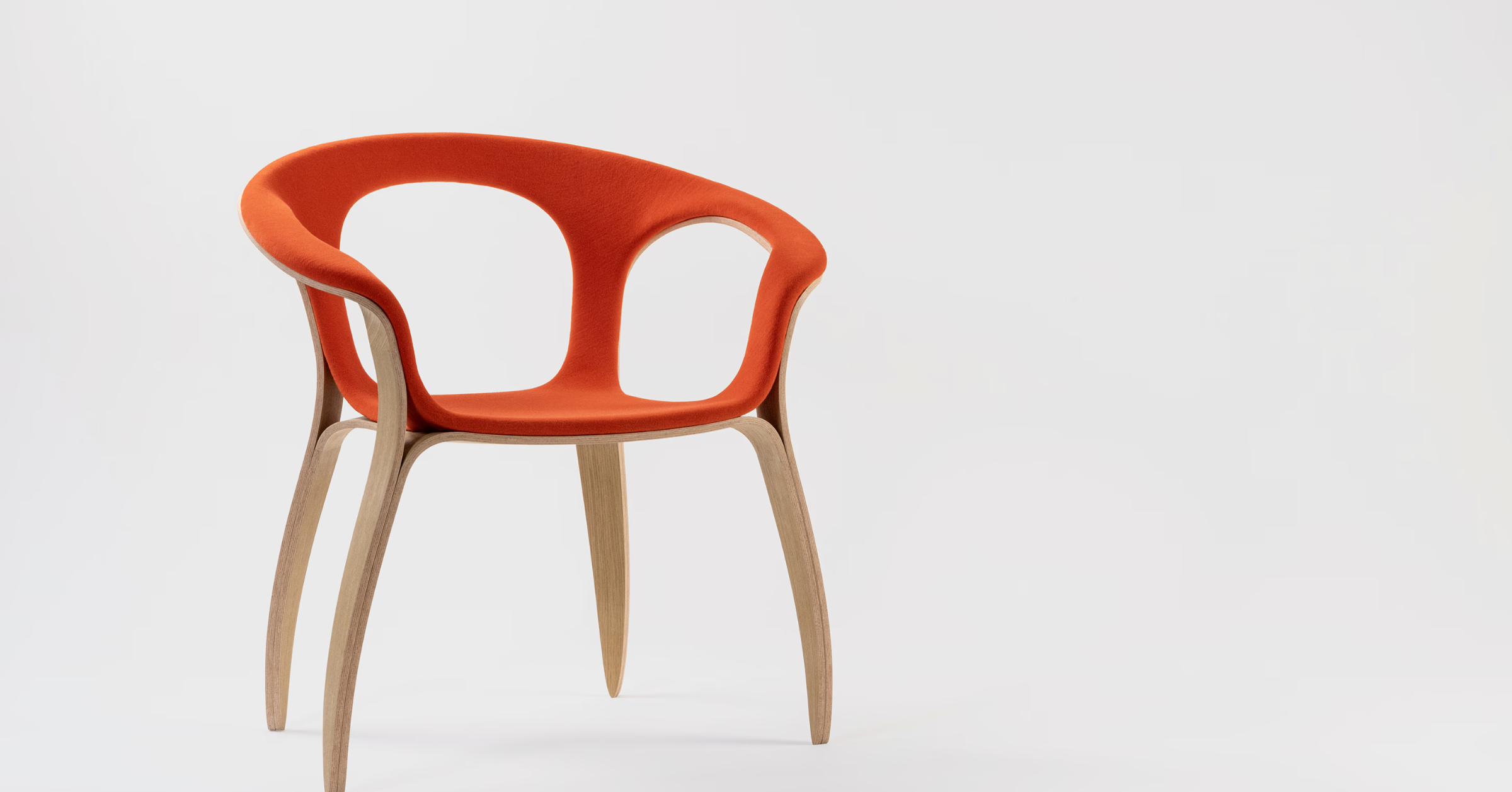
Four variations of the chair explore different aspects of the design. The original oak version highlights the natural grain and curvature of the timber, while a black lacquered edition introduces bold contrasts and textured surfaces, a variegated green finish emphasises the chair’s three distinct sections; and an upholstered version enhances comfort while subtly referencing furniture from the 1950s and ’60s.
“I’m in love with chairs because they’re incredibly unique objects that contain so much information and feel like an extension of architecture.”
He says, “they’re objects that people don’t just observe, but physically engage with.”
Looking ahead to design trends in 2026, he predicts a continued rise in curved, organic forms.
“Naturally, people are drawn to these shapes, but they’re also historically difficult to make. With advances in digital tools and technology, we now have far greater control, which is why we’re seeing more of this kind of design emerge.”
He says, “Our natural habitat is nature. A corporate space, a city built space, is an unnatural environment so the idea of biophilia is common sense.”
Alexander believes this theory of biophilia will grow year on year.
While interested in technological progress, Kneller is particularly drawn to increased computational intelligence and tools that allow designers to manage complexity across multiple aspects of a project simultaneously.
“In one part of your design you might be doing one thing, while in another you’re doing something else. It’s about understanding how those elements work together, or don’t.”
He says, “Being a leaf on a plant or tree is performing many functions at the same time. All of these functions are harmoniously and cohesively intertwined. This is the highest level of intelligent design and sets the standard of what we as humans and creators seek to emulate.”
“I think of my work almost architecturally. It’s about understanding systems, the envelope of the design, its parameters and functions. That’s where the real satisfaction lies, in balancing the complexity in the most graceful and efficient way.”
“I’m planning to use mature hardwoods that would otherwise be destroyed and I’m beginning to process them into new materials for my upcoming projects.”
For those entering the field, his advice is simple:
“Make, make, make. You can only reach a certain level by truly understanding materials and how they behave, how they’re formed.”
That practical knowledge, he believes, leads to a far deeper understanding of both the life of an object and its lasting impact.