Colour is never static. It evokes feelings, memory, and symbolism. Yet, the meanings behind colour often shift across cultures and contexts.
Justine Fox, the founder of Studio Justine Fox, is a colour design consultant working primarily with architects, designers and brands across commercial design. Her work centres on the belief that colour is never surface-level, it’s psychological, cultural and deeply human.
“Colour evokes feelings, thoughts and symbolism,” says Justine. “It’s fluid and the meaning behind each colour changes across the globe.”
Aged just 13, Justine knew she didn’t want to be a forensic pathologist, she wanted to be a fashion designer. She went on to study fashion and textiles at Brighton University, and her first professional role was with Hussein Chalayan, an innovator known for pushing boundaries beyond fashion.
“I think I learned the most there. I realised I was interested in things outside the constraints of the body,” she says. “From there, I started working in store development, I suddenly became fascinated by colour psychology.”
Today, Justine’s work extends into large-scale, socially-driven projects geared towards enhancing communities and bringing people together. Having recently been shortlisted for the Whitechapel Gateway Award alongside Layer Studio, exploring how to improve areas of London that have historically been divided.
“My proposal is about identifying themes that unite us and working with the local community to create something truly unique to Whitechapel.”
For Justine, colour is ancient and instinctive.
She says, “Colour dates back to the Cambrian explosion, when living organisms first used colour as information. In many ways, it’s algorithmic. It’s very difficult to get everyone to agree on a single colour, some people may not be able to verbalise why they like or dislike something, but they’ll feel it. When colour is done right, it can make you feel confident, relaxed and better able to focus.”
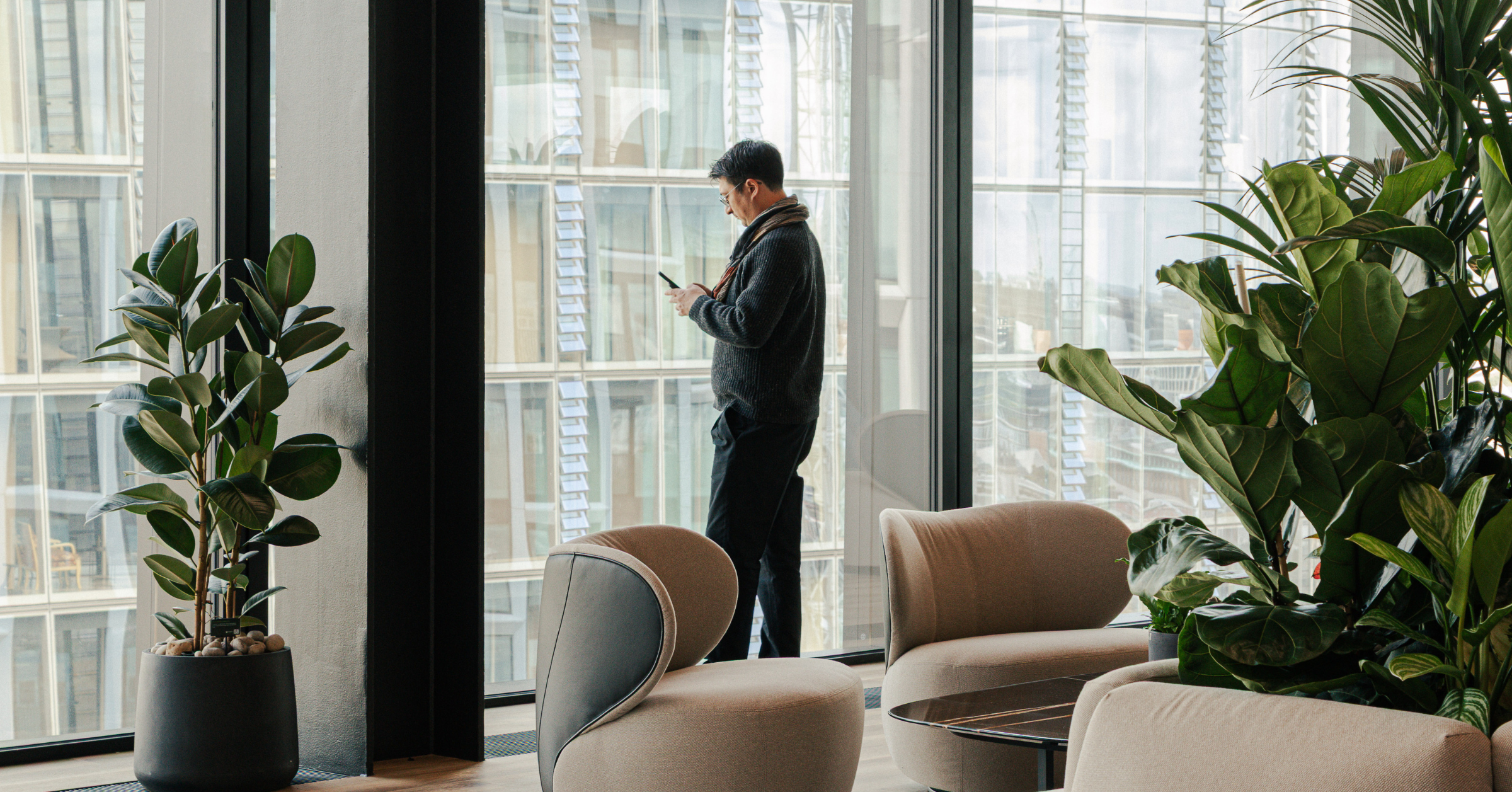
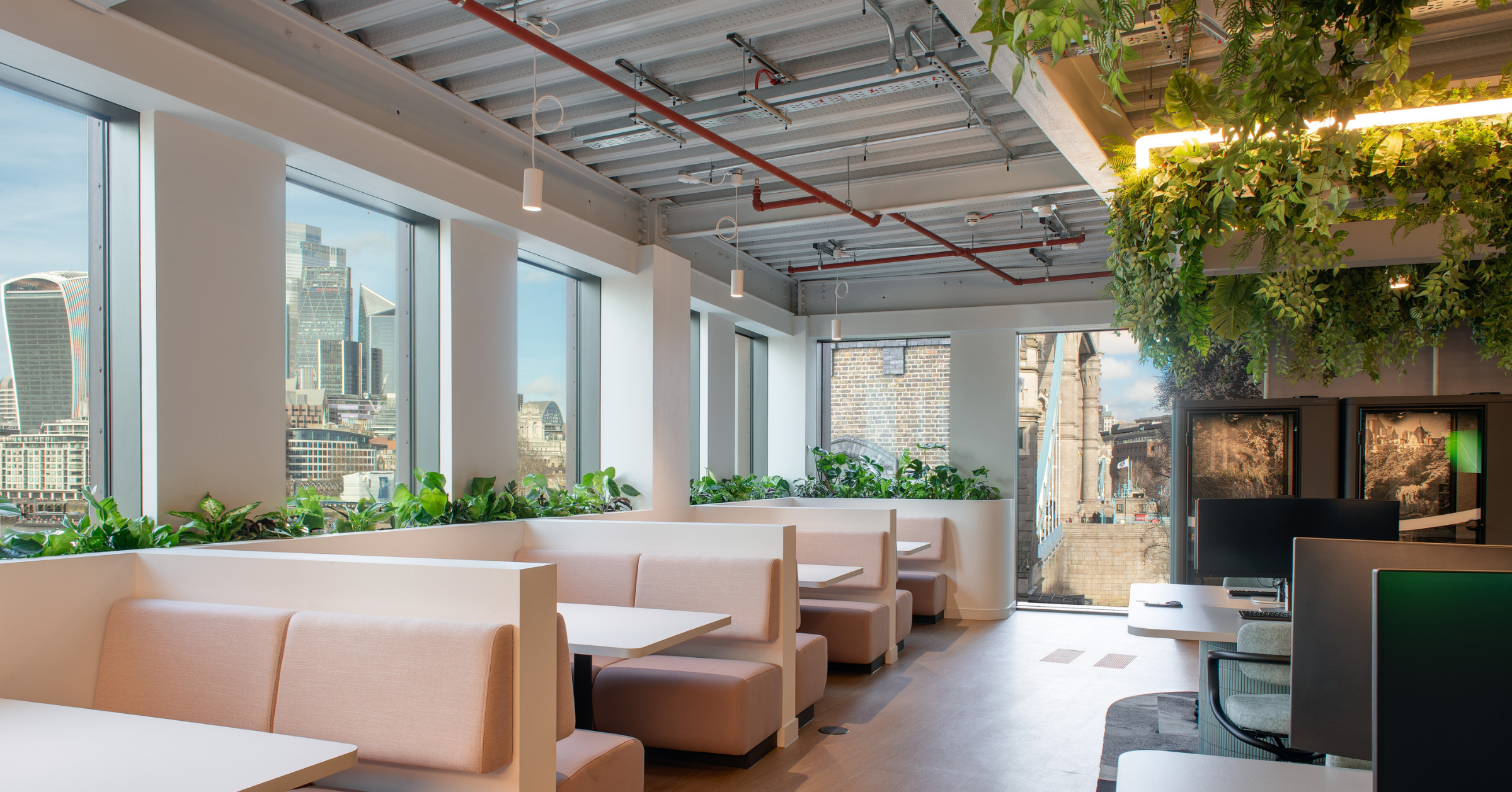
Justine’s perspective naturally aligns with biophilic design, the intentional integration of nature into the built environment to improve wellbeing.
“Biophilia helps to alleviate the end-user experience,” she explains. “Designs are so complex now, but there’s a reason for that. Over the years, nature has often been stripped out of our built environments. Now society recognises we need to bring it back.”
However, biophilic colour harmony isn’t simply about greens and browns.
“Nature is incredibly colourful. When I think about biophilic colour harmony, I’m thinking about the full spectrum: marsh clay tones, deep greens, mineral reds, soft florals. Plants change throughout the seasons too with some becoming vibrant red, some turning darker and yellow. I think designers need to consider this and how planting evolves across the year when developing a project.”
This seasonal intelligence is key as planting schemes are not static. They shift, soften and reshape a space over time which is why a cohesive planting scheme can also be used to mediate period architecture, soften hard edges and create visual breathing room within dense urban environments.
Planting is also a key tool for gently balancing and softening bright and bold colour schemes.
While personal preference can sometimes cloud judgement, Justine emphasises that colour decisions must always come back to function.
“It’s about understanding what you want a space to do. Instead of being put off by a certain colour, consider how it can be incorporated in a different way. Many tones are incredibly evocative, they just need to be handled thoughtfully.”
Clear colour rationale is essential when engaging clients. When designers can articulate why a palette works, psychologically, environmentally and contextually, Justine says it becomes easier to move beyond trend-led decisions.
“I think designers need to shift away from trends and ask: what can we already use that’s on the planet? There’s so much waste that could be reused. Nature offers us extraordinary colour references. We just need to pay attention.”
For Justine, plants are not an afterthought to architecture but an evolving colour story, and one that reminds us that the most powerful palettes are often already growing around us.