Skip to the content
There is a growing narrative around “low-maintenance” or even “self-sustaining” plants, with systems that promise greenery without the need for ongoing care.
From self-watering planters to integrated lighting and smart monitoring, these innovations are often positioned as a way to simplify plant care in busy environments.
They absolutely have their place, particularly in domestic settings. But there is a key misconception that needs to be addressed.
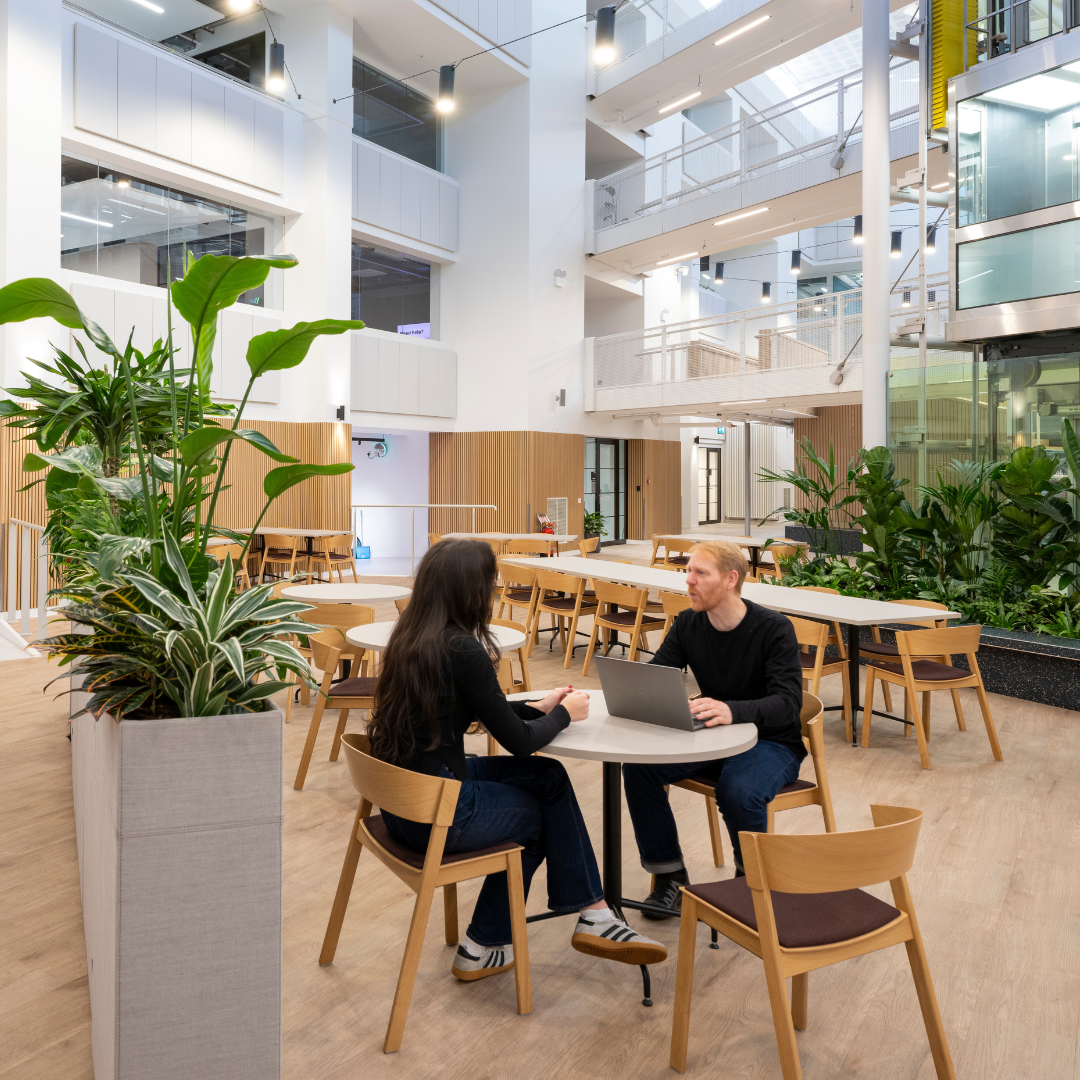
There is no such thing as a zero-maintenance plant, especially in commercial environments, where scale, footfall and environmental variables make professional ongoing care essential. There is also a higher expectation around appearance, as planting plays a visible role in how a space is experienced by clients, visitors and staff.
Technology can support plant care, but it does not replace the need for horticultural expertise.
Why This Idea Is So Appealing
The appeal is easy to understand.
Workplaces are busy. Facilities teams are stretched. Many organisations want the benefits of planting without the responsibility of maintaining it.
Messages like:
All sound like simple solutions.
And to a point, they can help. Approaches such as self-watering planters, integrated lighting and more resilient plant selections can support plant health and reduce the level of intervention required.
We use many of these same principles within our service, from selecting more tolerant plants to designing schemes that allow for efficient maintenance schedules. This helps ensure our approach is both smart and cost-effective for our clients.
But survival is not the same as performance.
Plants Do Not Fail Because of Watering Alone
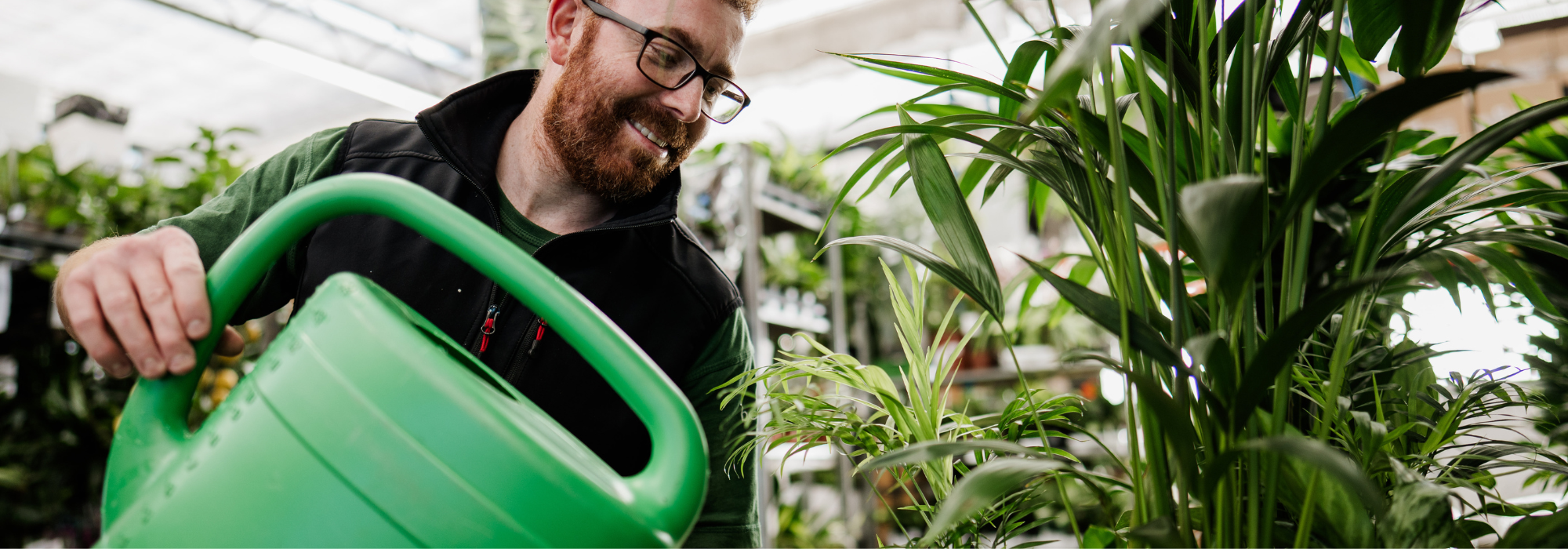
Watering is only one part of plant care.
In commercial environments, plant health is shaped by a range of factors, including light levels, temperature, airflow and how a space is used day to day.
These variables are rarely consistent, which is why experience plays such an important role. Knowing how to position plants correctly, select the right varieties for specific conditions and recognise when environmental factors are having an impact is key to maintaining plant health over time.
While systems such as self-watering planters can help manage moisture, they do not respond to the wider environment around the plant.
Surviving vs Thriving
Technology can help plants last longer without obvious failure.
But it does not guarantee that plants will remain lush, healthy and visually consistent.
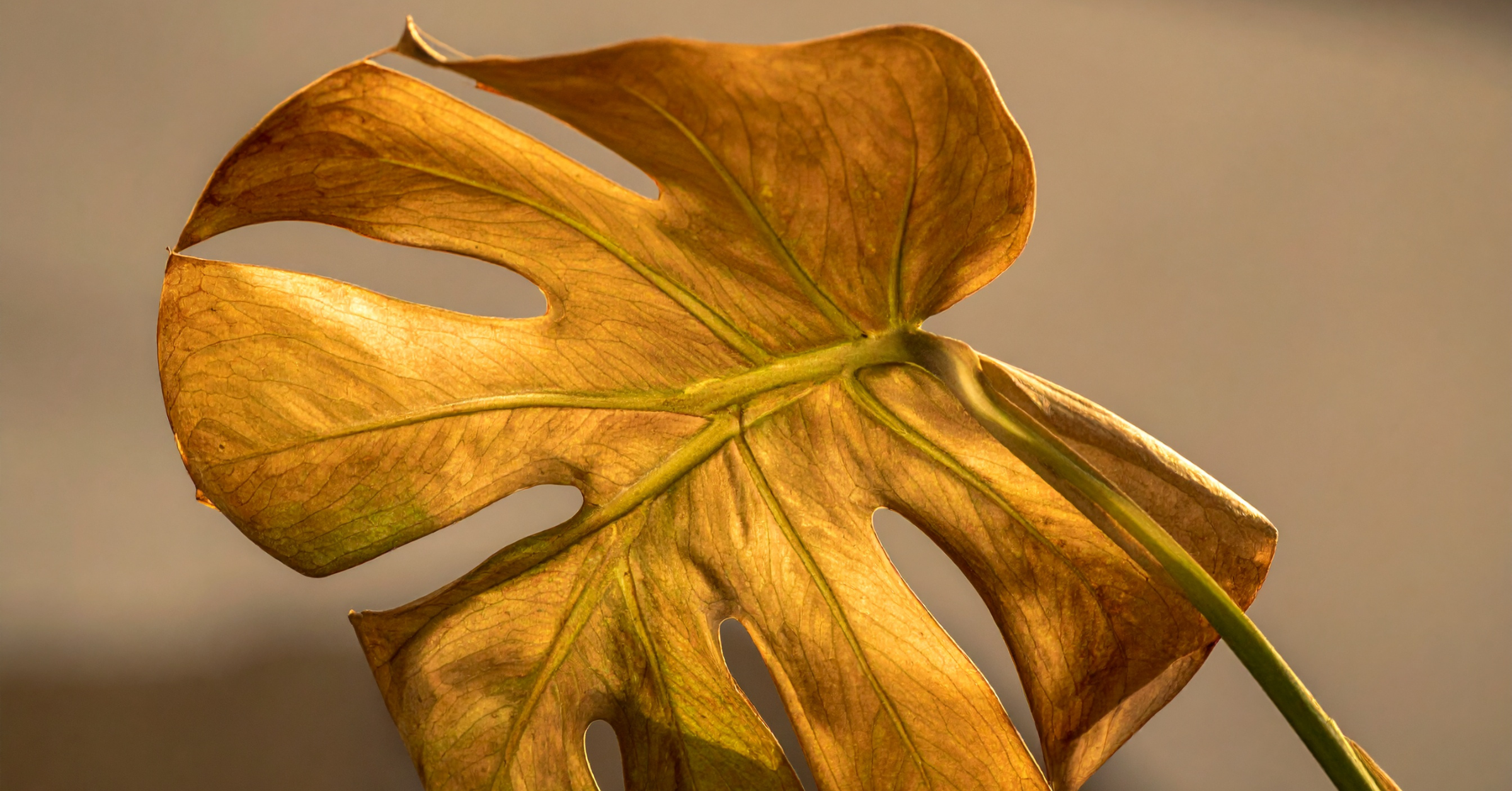
When planting starts to decline, the impact is noticeable. Leaves discolour. Growth slows. Overall appearance deteriorates.
At that point, planting no longer enhances a space. It has a negative impact on how the space is experienced.
Commercial Spaces Are a Different Challenge
Many low-maintenance solutions are designed with domestic settings in mind.
Workplaces present a different set of challenges. They are often larger and more complex, with less consistent access to natural light, higher levels of activity and limited in-house horticultural knowledge.
As a result, what works in a home setting does not always translate to a workplace.
In commercial environments, expectations are higher. Planting is not just decorative. It needs to look consistently healthy and well-presented, as it plays a visible role in how a space is experienced and how a business is perceived by clients, visitors and staff.

The Hidden Cost of “No Maintenance”
When plants are left to be managed in-house without expertise, the responsibility falls to people whose roles are not plant care.
This can create a number of challenges:
What appears to be a simple solution can quickly become inefficient and disruptive.
The Impact on Brand and Experience
Planting plays a visible role in how a space is perceived.
Healthy, well-maintained plants:
Poorly maintained plants have the opposite effect.
They can:
Technology Has a Role to Play
Innovation in this space is positive.
Self-watering systems, grow lighting and environmental monitoring can all support plant health. In some cases they can unlock spaces that would otherwise be difficult to plant.
But they are tools.
Plants are living systems. They still require:
Technology can support this. It cannot replace it.
A Focus on Longevity and Performance
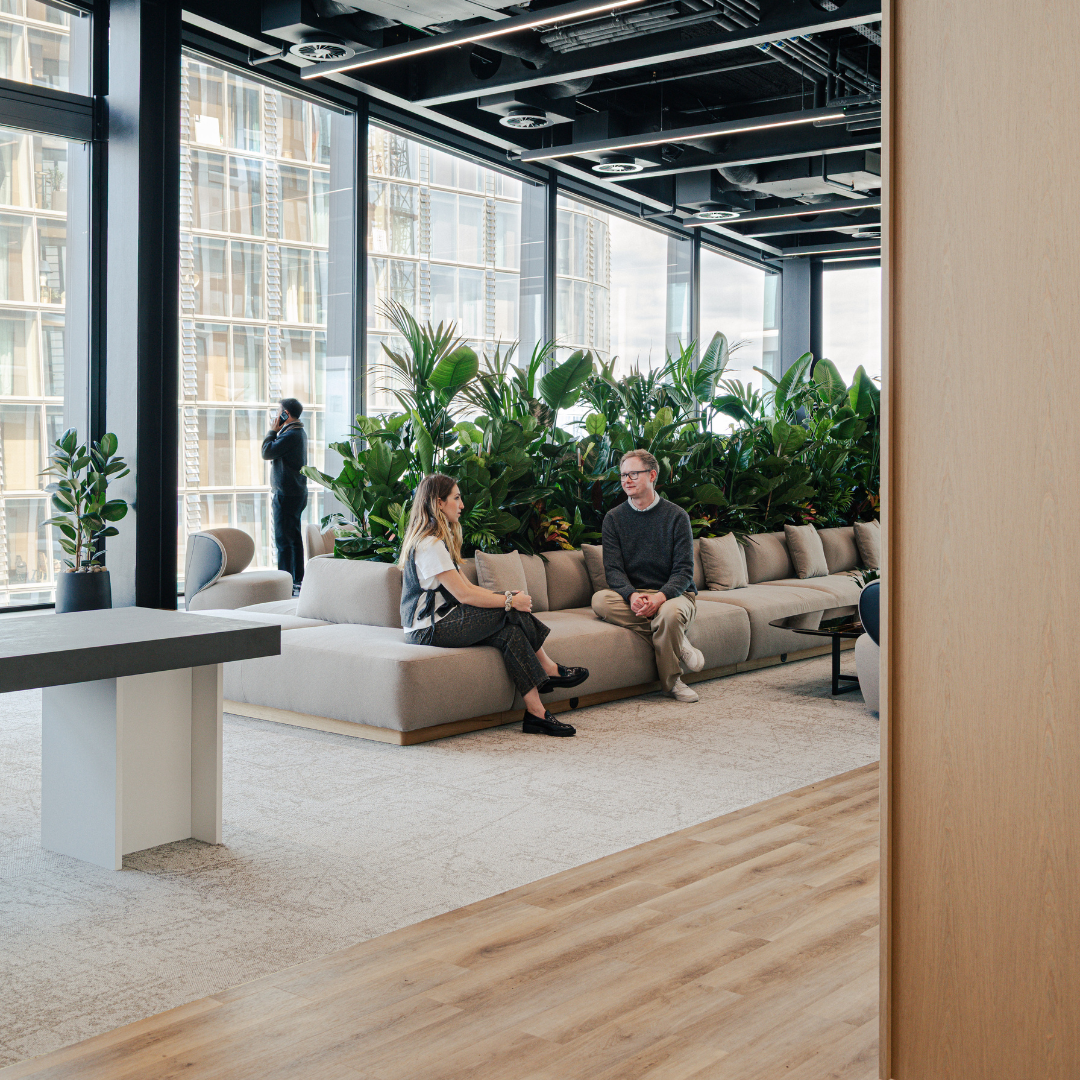
Our approach is built around long-term performance, ensuring planting not only survives but remains healthy, vibrant and visually consistent over time, while continuing to enhance the space it sits within.
We design planting schemes for their specific environment. We maintain them through regular, proactive care. We adapt them over time as spaces evolve.
This ensures:
It also provides clarity:
Where Low-Maintenance Solutions Fit
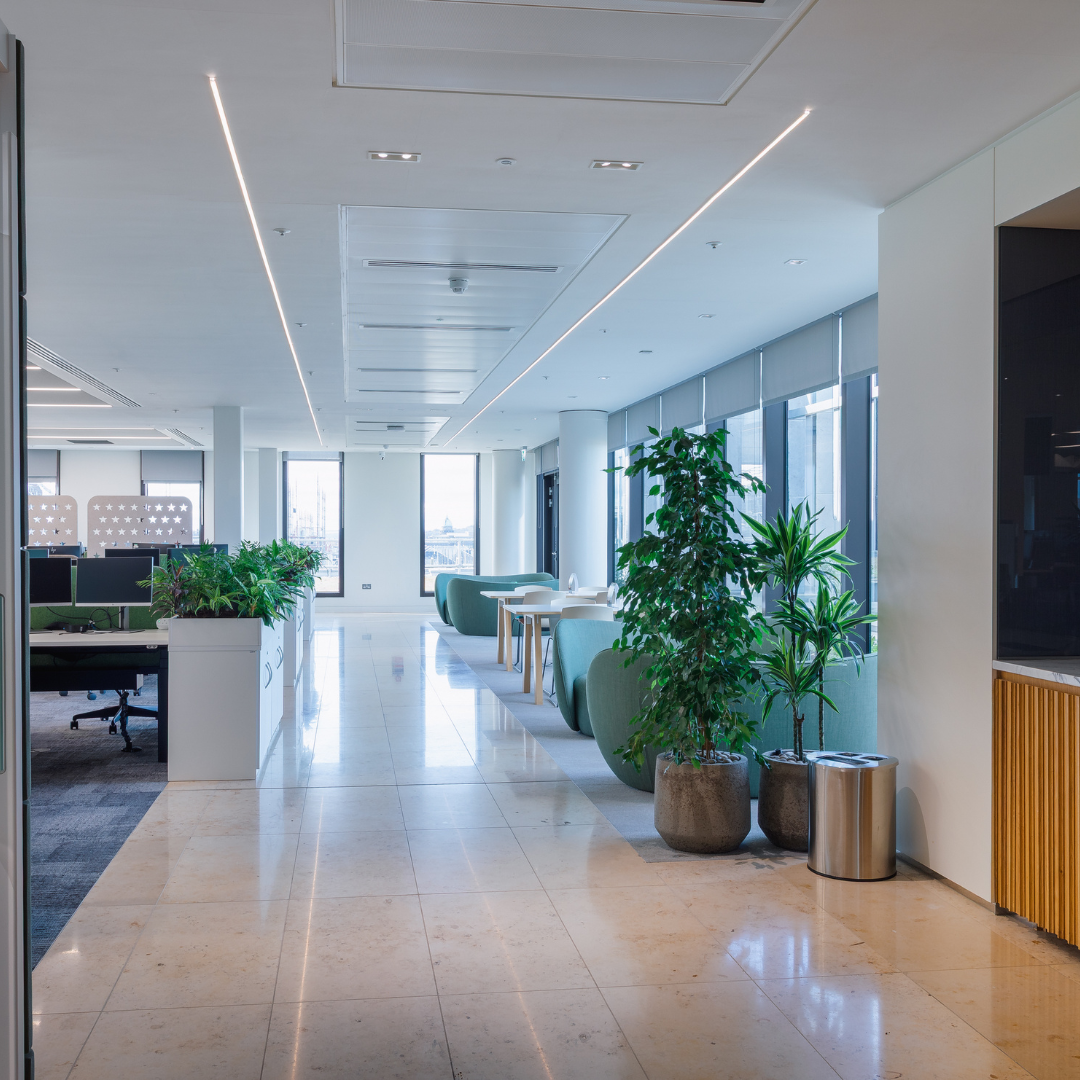
There is a place for these solutions, and we use many of them as part of our service to ensure planting schemes are delivered in a way that is both efficient and cost-effective.
They can work well:
In commercial spaces, planting is expected to perform consistently over time.
That requires care, expertise and accountability.
Final Thought
Biophilic design is not about removing responsibility from nature. It is about engaging with it properly.
The most successful planting schemes are not the ones that need the least attention. They are the ones that are cared for the best.
Plant maintenance is a skilled task. When managed professionally, it ensures planting remains consistently healthy, visually impactful and aligned with the standards expected across a commercial space.
In that sense, professional plant maintenance is not an added cost, but a way of protecting the investment in a high-quality environment.
If you are considering planting for your workspace, or reviewing an existing scheme, our team can help you create a solution that performs consistently over time.
We work with organisations across the UK. To discuss your requirements, call us on 01324 861300, email sales@benholm.com or submit an enquiry here.