Sustainable buildings are often associated with high-tech solar panels, triple-glazing, and complex HVAC systems. These are essential, but they are only part of the sustainability equation.
Modern frameworks like BREEAM (Building Research Establishment’s Environmental Assessment Method) are increasingly recognising that a truly sustainable building must support biodiversity and human health. This has led many architects and developers to ask a pivotal question: Can indoor and outdoor planting actually help secure BREEAM credits?
The answer is yes – but it requires more than just popping a few plants in the lobby. To maximise your score, planting needs to be a strategic part of the design from day one.
What is BREEAM?
BREEAM is one of the world’s leading sustainability assessment methods for buildings. It evaluates how a project is designed, constructed and operated to reduce environmental impact and improve building performance.
Projects earn credits across multiple sustainability categories, including:
- Management
- Health & Wellbeing
- Energy
- Water
- Materials
- Waste
- Land Use and Ecology
- Pollution
The total number of credits achieved determines the building’s final rating:
- Outstanding: above 85%
- Excellent: above 70%
- Very Good: above 55%
- Good: above 45%
- Pass: above 30%
BREEAM assessments take place in two stages:
Design Stage Assessment
An interim rating based on the building’s design and sustainability strategy.
Post-Construction Assessment
A final rating confirming the sustainability measures were actually implemented.
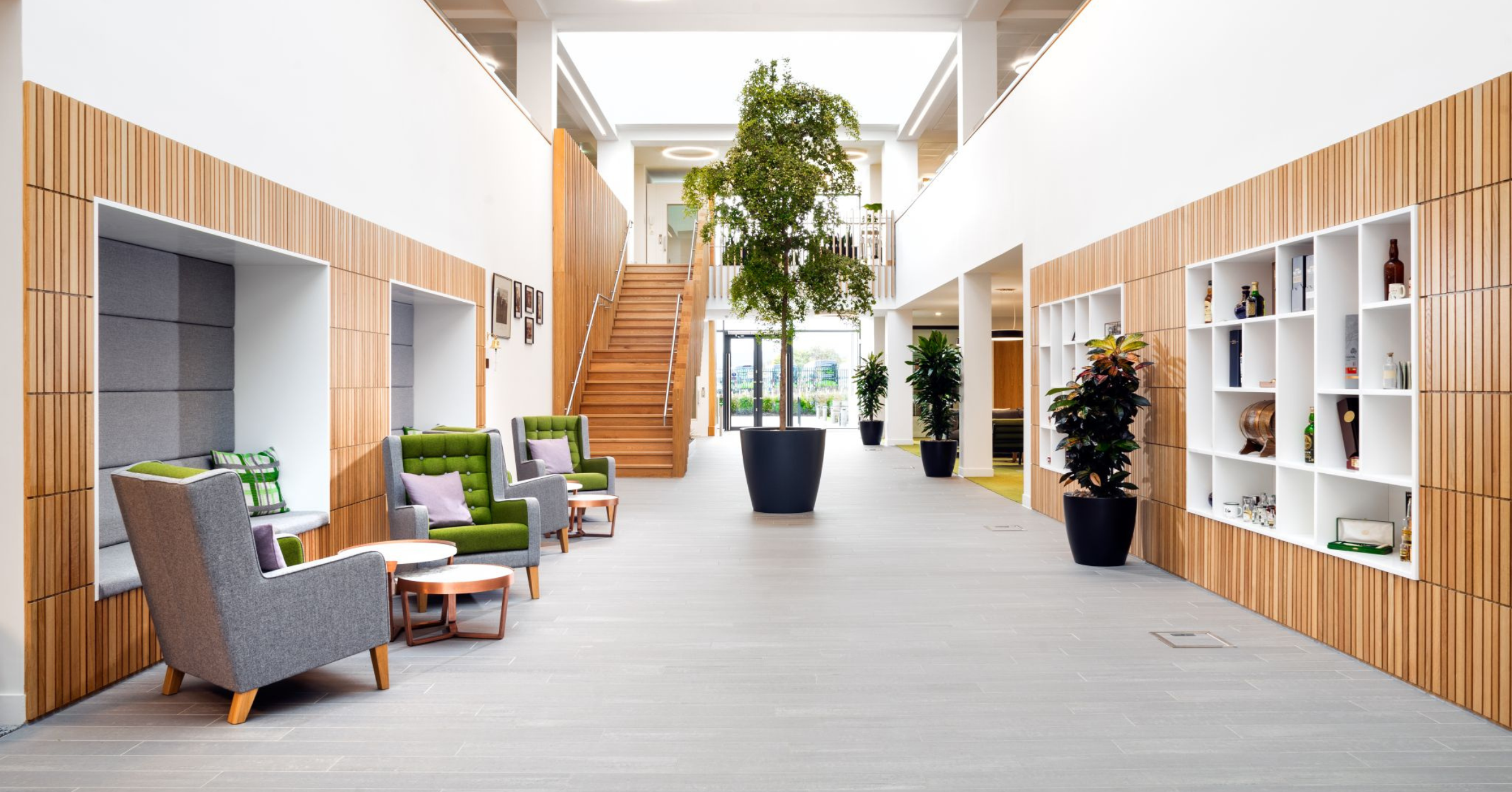
While many people focus on engineering systems when pursuing BREEAM certification, planting strategies can also contribute across several categories.
Key BREEAM Categories
Planting strategies can influence your rating across several technical modules.
Health and Wellbeing (Hea 01, Hea 04 & Hea 05)
BREEAM places a massive emphasis on the “Human Experience”.
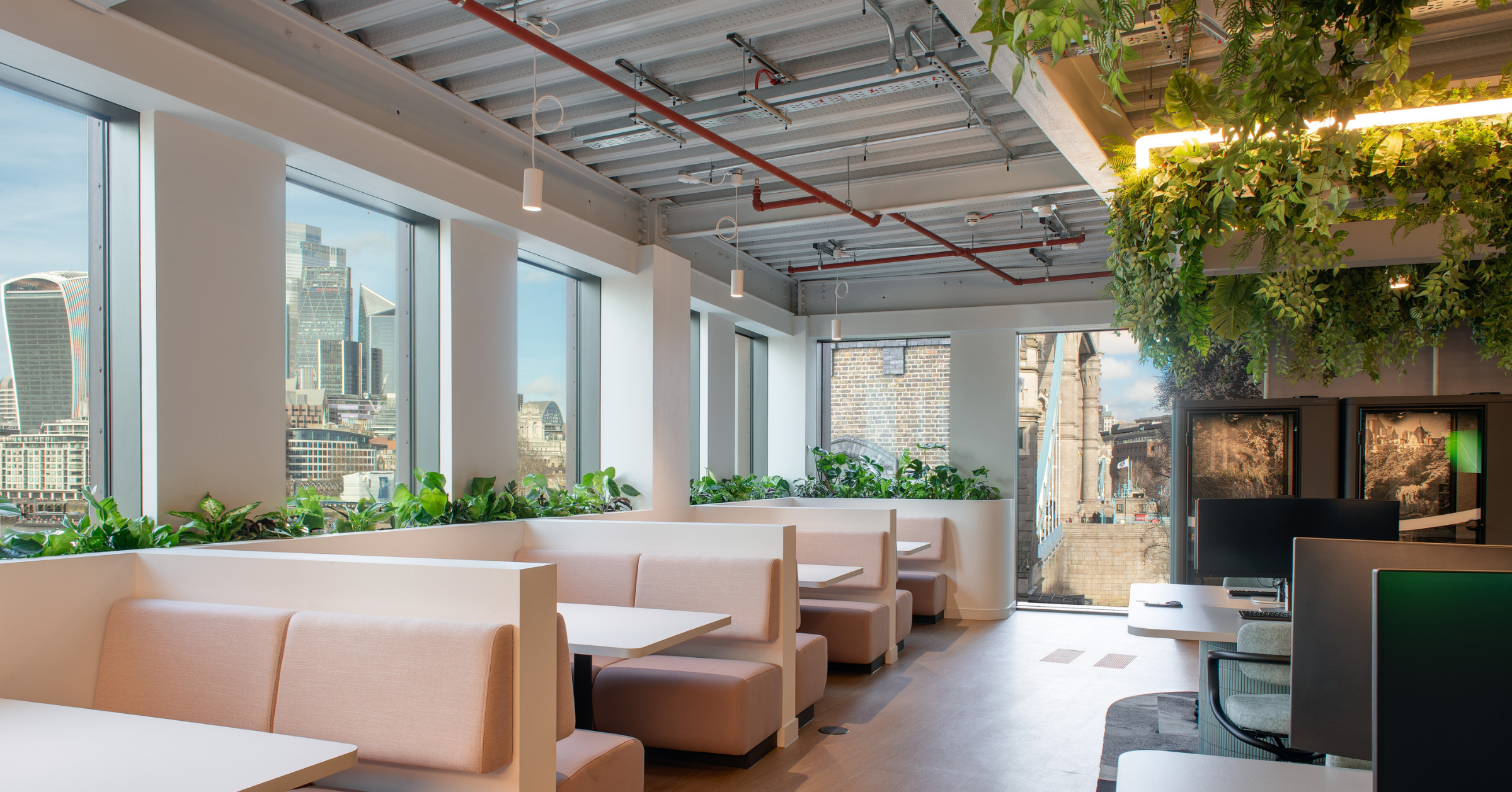
- Visual Comfort (Hea 01): To get the “View Out” credit, workstations typically need a view of a landscape or sky at a distance of 7-10 metres. While an internal living wall alone usually won’t satisfy this (as it lacks “focal rest” for the eyes), strategic landscaping visible through windows is a primary way to bank these points.
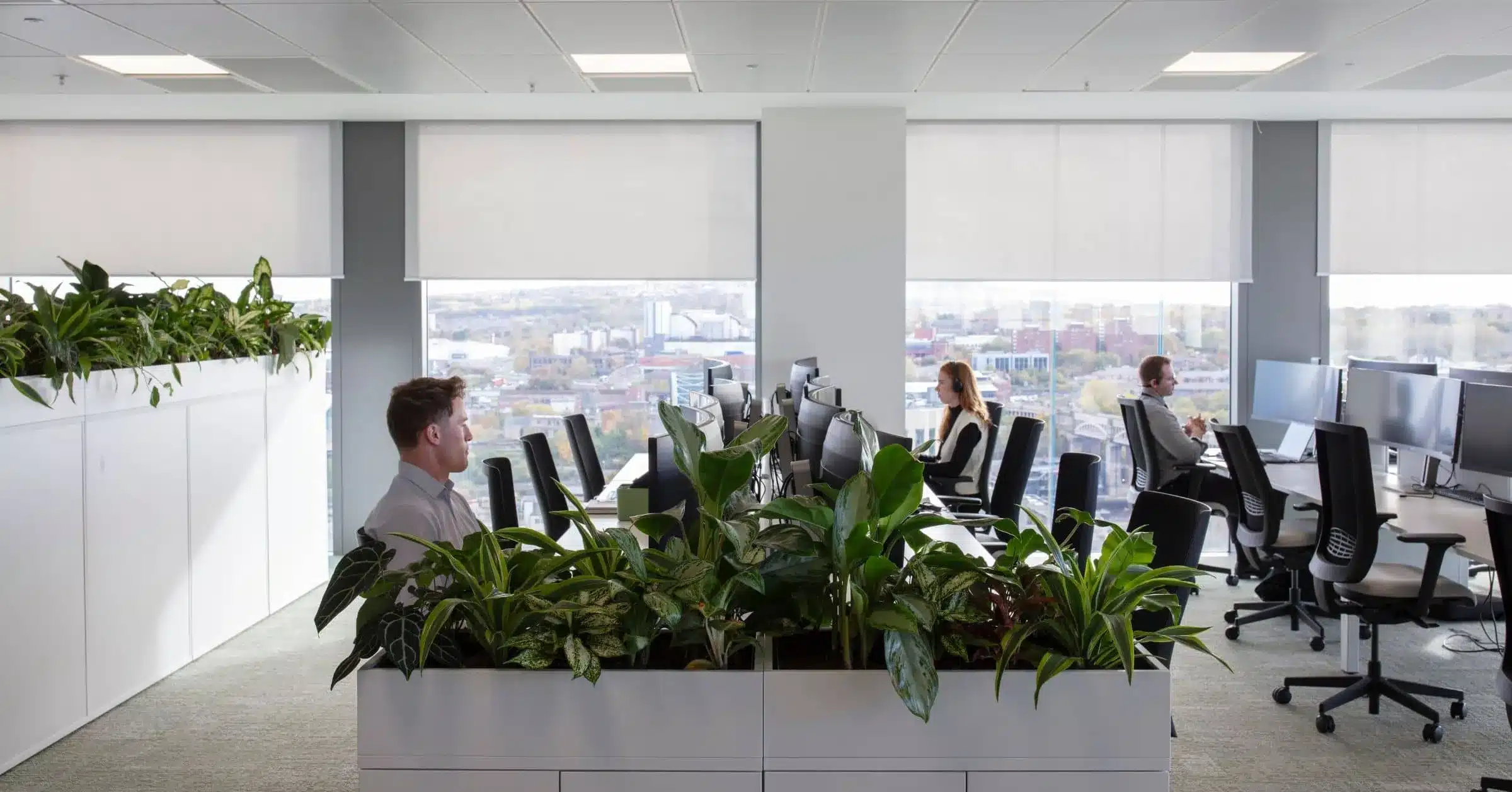
- Indoor Air Quality (Hea 04): While a few plants won’t win a credit on their own, including large-scale planting such as living walls or lots of internal planting in your Indoor Air Quality Plan (IAQP) shows a commitment to filtering VOCs and CO2 naturally.
- Acoustics (Hea 05): In open-plan offices, sound bounce is a major issue. Large-scale planting and moss walls are excellent at absorbing high-frequency sounds, helping you hit the decibel reduction targets required for acoustic credits.
Land Use and Ecology (LE 02-LE 05)
Under the latest BREEAM versions, the focus has shifted toward measurable biodiversity gain.
- Ecological Change (LE 04): You earn credits by proving the site has more plant species after construction than before.
- Living Walls & Roofs: Once sidelined, these are now heavy hitters. If a Suitably Qualified Ecologist (SQE) recommends them and a long-term maintenance plan (usually 5+ years) is in place, they contribute directly to your ecology score.
Pollution and Water (Pol 03 & Wat 04)
- Surface Water Run-off (Pol 03): Rain gardens and bio-retention planting strips can soak up water, preventing local flooding and filtering pollutants before they hit the drainage system.
- Water Efficiency (Wat 04): BREEAM awards credits for reducing irrigation demand. By using moisture-controlled drip systems or selecting drought-resistant native species, we can prove the greenery isn’t a drain on local water resources.
Why Timing Is Everything
The most common mistake is thinking about plants at the end of a project. To secure the maximum amount of BREEAM credits, you must engage with planting specialists and ecologists early – ideally at RIBA Stage 1.
By integrating planting into the design stage, you can align greenery with drainage, coordinate views from workstations, and ensure your sustainability targets are baked into the building’s DNA, rather than added on as an afterthought.
Our BREEAM Success Stories
At Benholm Group, we don’t just provide plants; we can also provide BREEAM-compliant solutions. We have partnered with designers across the UK to help push ratings through:
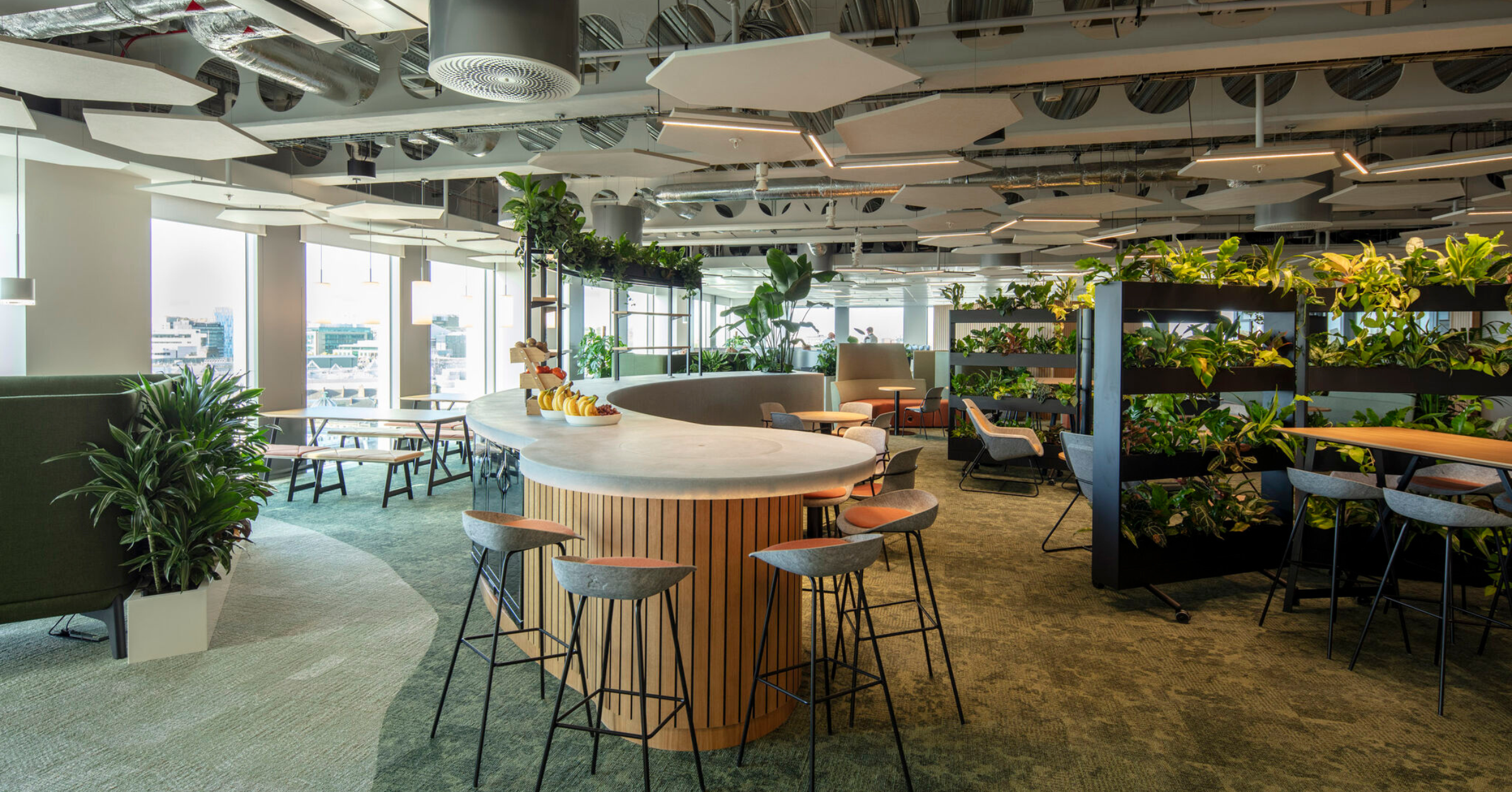
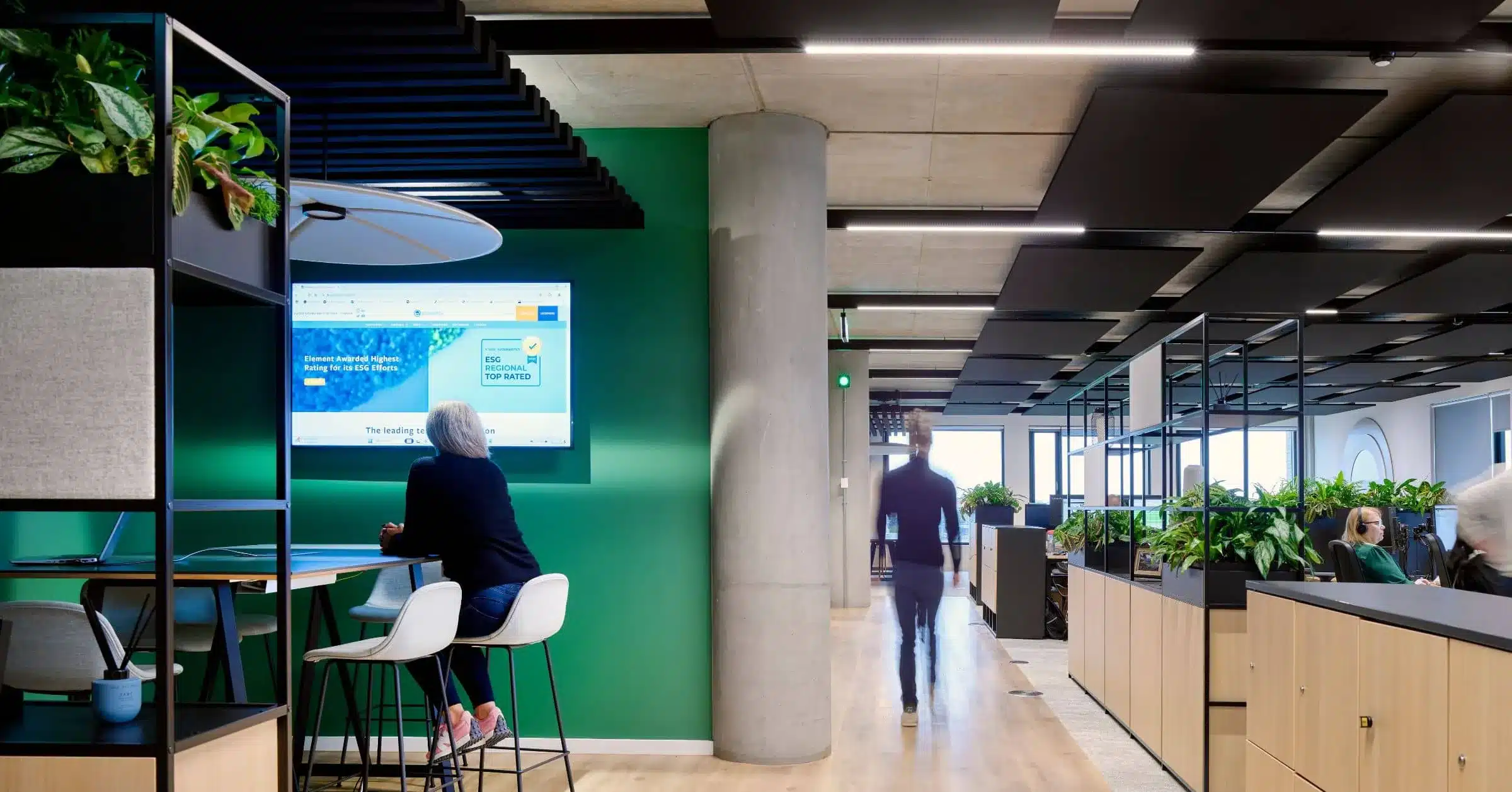
- Cundall, Newcastle: From the earliest conversations, sustainability and wellbeing were not vague ambitions. Cundall wanted a workplace that would set a standard for future global offices. Biophilic design became one of the core pillars of that ambition and Benholm was chosen to deliver the planting approach that would make these goals real, visible and effective for everyday use. Read more about the project here.
- Cadworks, Glasgow: Cadworks is Glasgow’s fist net zero carbon office building and the city’s most cycle friendly workspace. It’s aim is to be the most sustainable and socially impactful building in Scotland and the building was designed with health and wellbeing in mind. Cadworks is a ‘cycle-in’ office building project, following on from their previous one called Windmill Green in Manchester. The project needed also to include plenty of biophilia, but especially a feature living wall. Read more about the project here.
How Benholm Can Help You
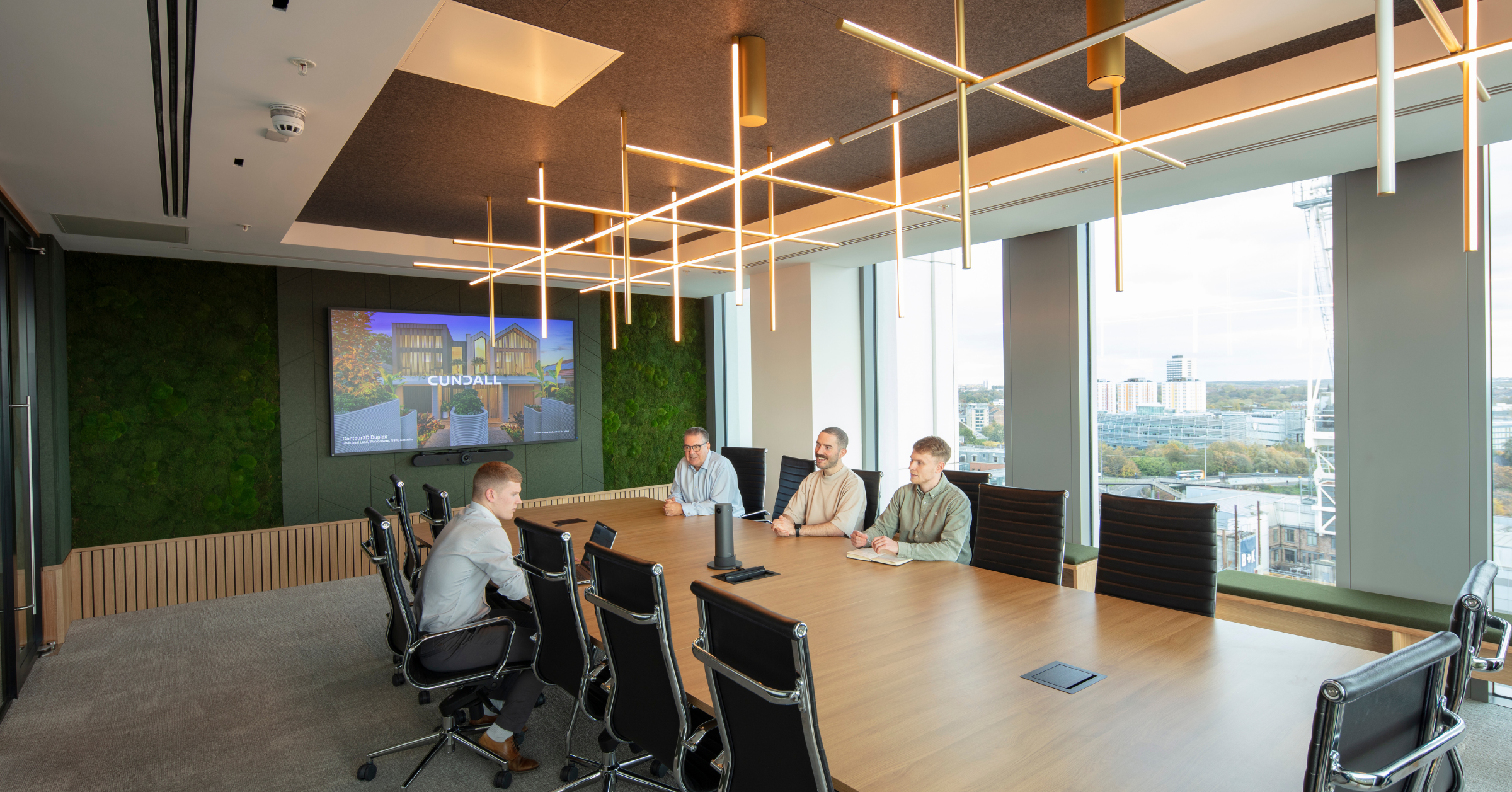
Navigating the BREEAM manual can be a headache. We simplify the process by working directly with your architects and designers.
- Design-Led Selection: We choose species that suit your building’s interior and exterior while matching your aesthetic.
- Long-Term Maintenance: We provide long-term maintenance to ensure your “Design Stage” credits are confirmed at the “Post-Construction” assessment.
- Compliance Knowledge: We understand the requirements for visual comfort and can advise on how to use planting to support your staff, clients and visitors.
Don’t leave your sustainability points to chance. If you’re looking to include planting in your project and want it to contribute meaningfully to the overall experience of your building, contact us today.
Stay ahead of the curve! Want more insights on how biophilic design is shaping the future of design? Sign up for our newsletter to receive our latest guides on sustainability, wellness, and commercial planting trends.
 Skip to the content