

In this exclusive interview we talk with James Martin, Head of A&D of global Commercial Workplace Consultants Tsunami Axis, with whom Benholm Group have collaborated with by providing bespoke planting solutions for multiple projects including their new Glasgow & Edinburgh showrooms. We find out what its like to work with Benholm on a new project, the importance of including plants in the workplace as part of biophilic design and how Tsunami Axis are choosing to lead the way with planting solutions in the workplace.
We initially brought Benholm in on a commercial project for Royal London’s Wilmslow office. We were really impressed with how forward thinking Benholm were, they took our ideas to the next level and pushed our vision, thriving on the challenges we posed.
Benholm are easy to work with. They listen and collaborate rather than telling you what you need and are flexible – no matter how blue-sky our ideas they have always found a viable solution. The thrive on a challenge rather than shy away from it, and produce high quality, versatile planting designs.
Benholm are also able to appreciate the different architectural features of each of our buildings and offer planting solutions to enhance them. For example, our previous Edinburgh showroom was on the ground floor so Benholm created a large, branded, Nordik Moss wall that can also be seen at street level – we often got passers-by commenting on it and stopping by out of intrigue.
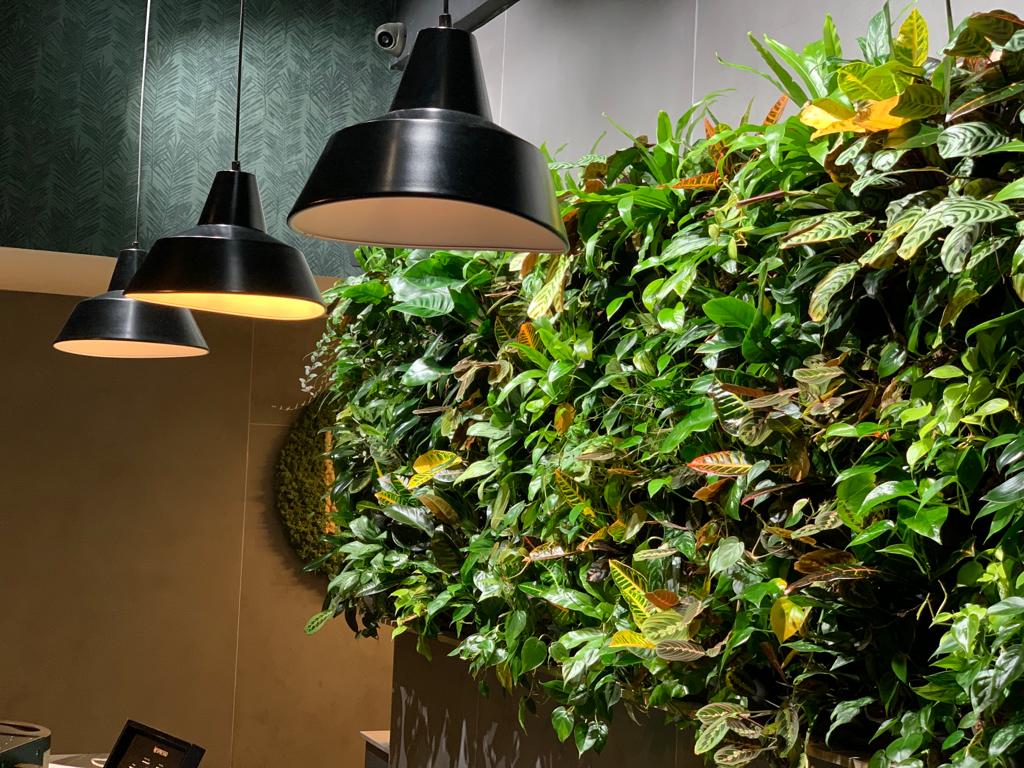
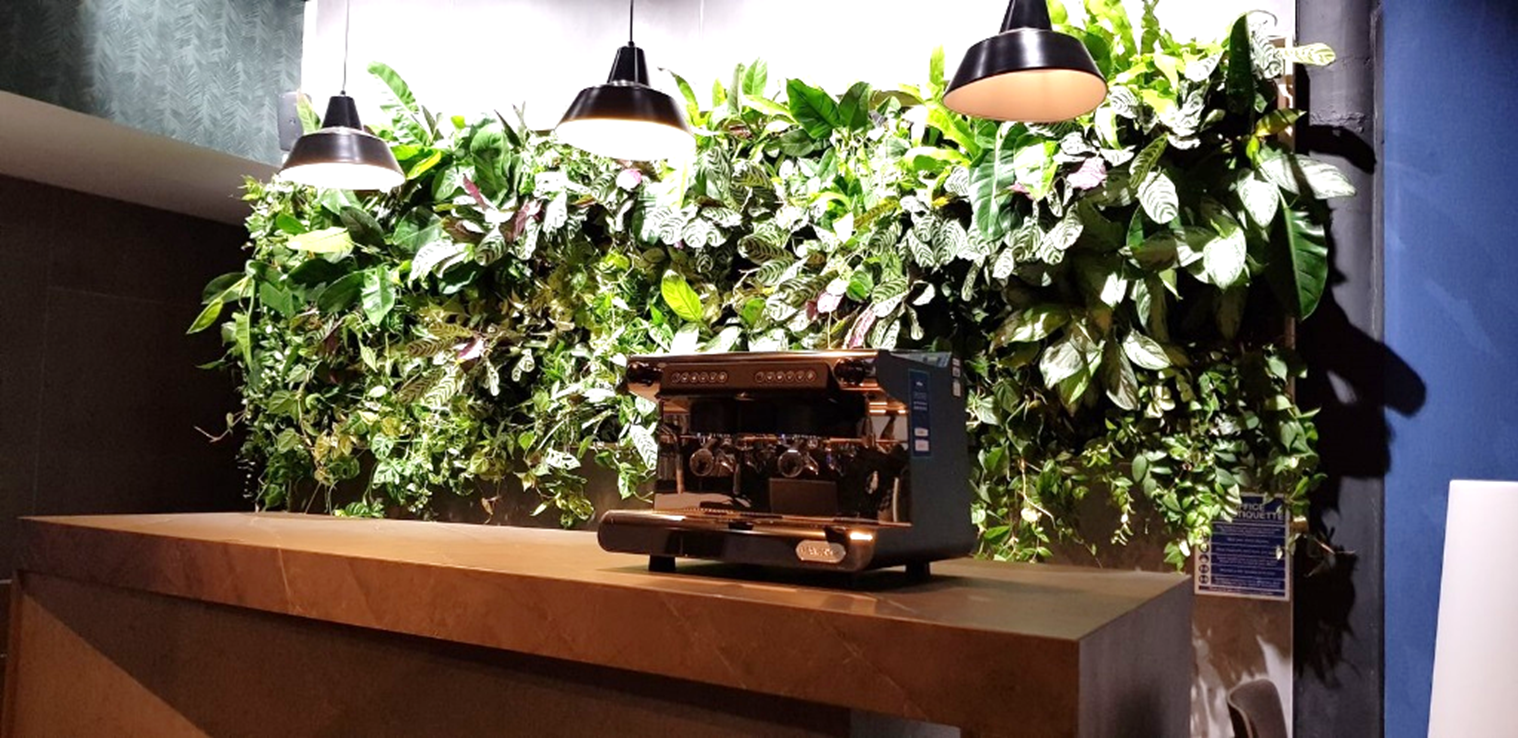
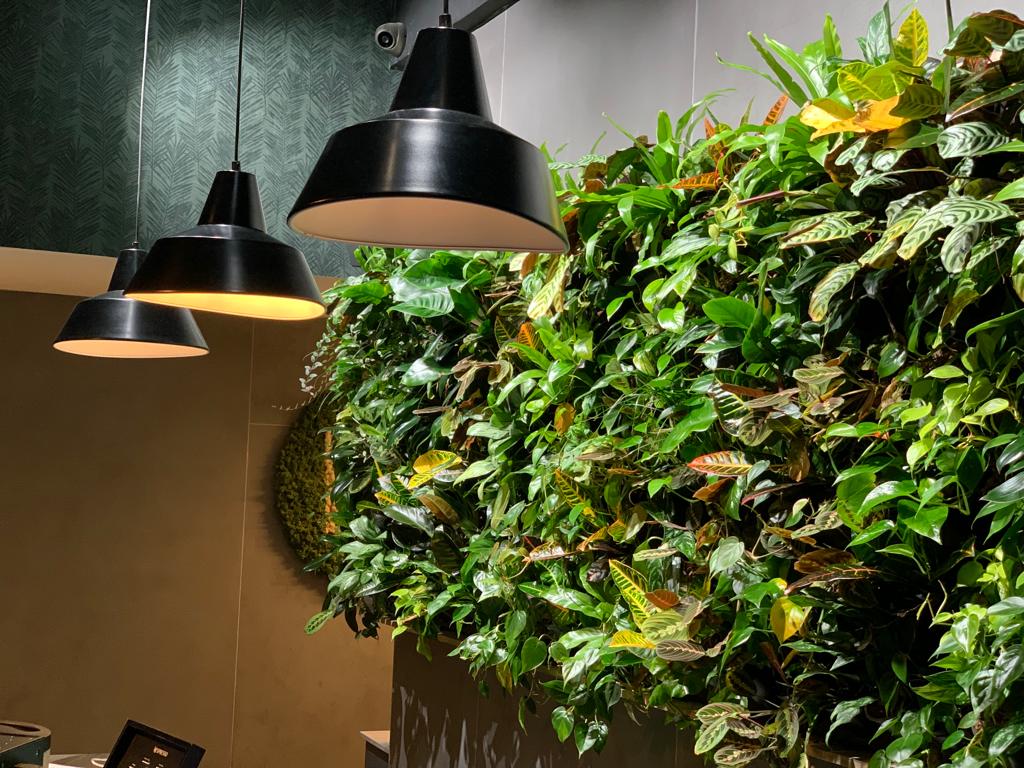
At our new Glasgow showroom, there are some light limitations and security shutters that need to be closed daily, and Benholm were able to rise to the challenge and install a variety of greenery including a statement living wall, planted using their own peat-free Enviroculture system, with special irrigation and integrated UV lighting to keep the plants vibrant and healthy in their environment. It really looks stunning, adds warmth, lifts the space and importantly, is a sustainable solution. We can’t wait until visitors can come inside, discuss new projects and be inspired by this fantastic space.
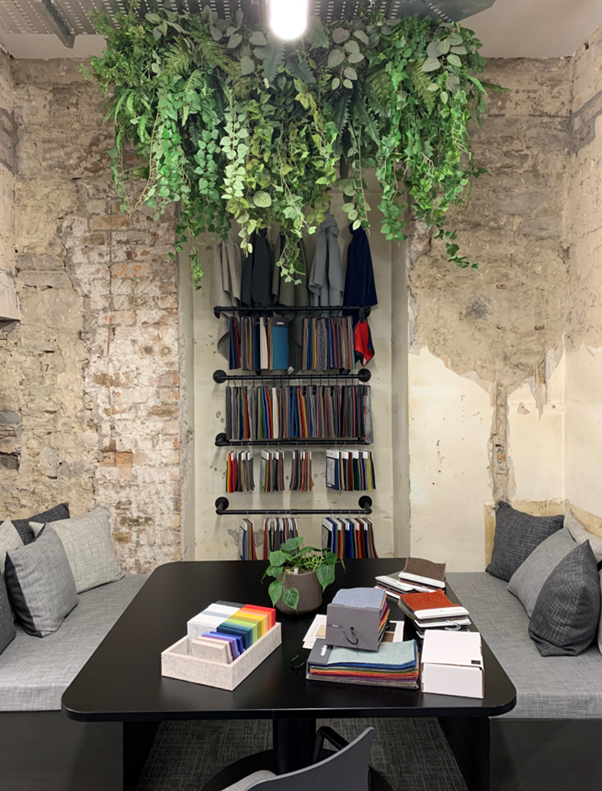
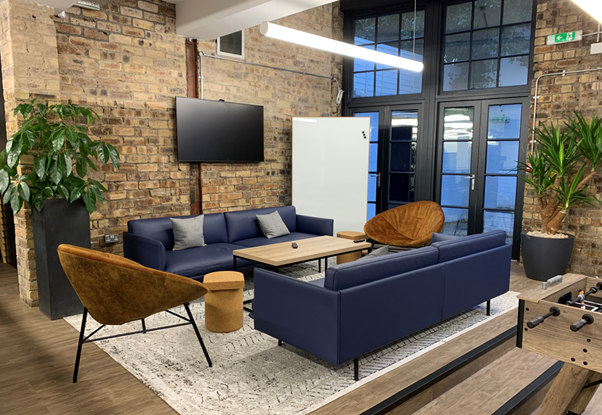
All our briefs are so different; our Glasgow showroom is quite contemporary, our Edinburgh showroom was more of a de-furbished theme, and Benholm have managed to create a statement piece in each building.
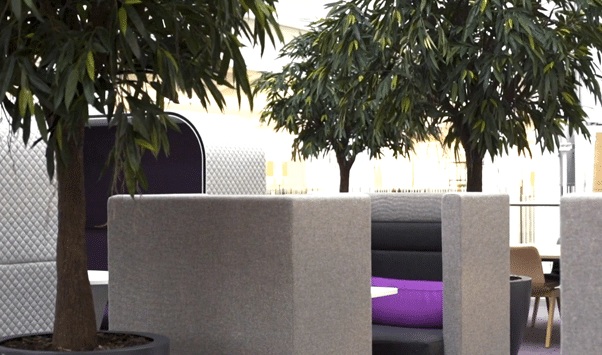
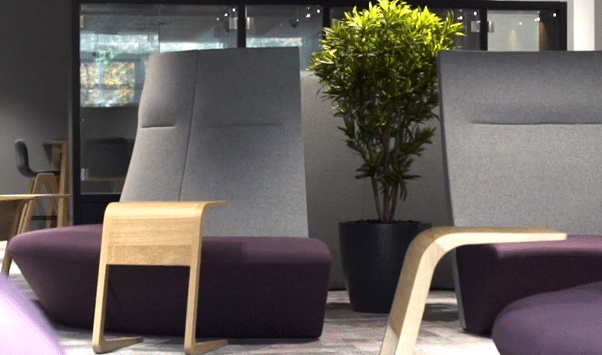
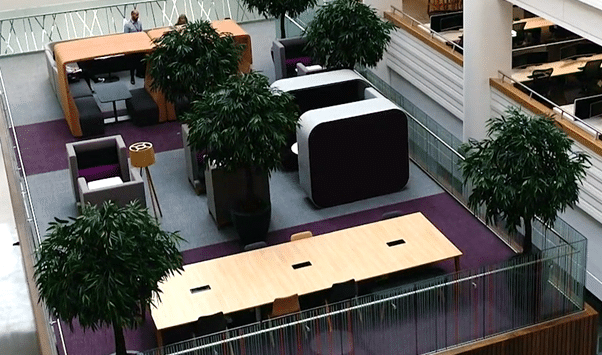
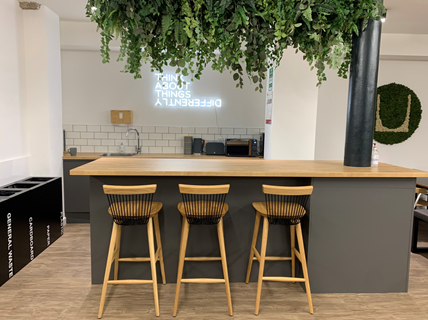
Each area that features planting has been noticeably elevated to promote the areas function and purpose. This was achieved with both real and artificial planting solutions based on the natural light available across the foot plate.
Planting has such a positive impact on a workplace. Many clients are now driving wellness in the office environment and want to include planting to improve air quality and humidity. Benholm are able to advise us and to specify plants that will thrive in any indoor space.
Excellent. Benholm came and presented to us in 2018, talking about the positivity of plants. As a direct result of this presentation, we actually stripped all existing planting out of our office and employed Benholm to totally replace the planting.
Benholm offer us fantastic support – especially during the pandemic when our showrooms were closed; their maintenance technicians accessed our offices to keep the plants alive and fresh. They are always on time, well presented, smiling and professional – just really nice people with a 5-star service.
It’s been very positive. Herman Miller in particular were really impressed with their logo made from Nordik Moss – they really enjoy seeing their brand represented in an innovative way and this was something totally new for them.
Learn more about Biophilic Design: benholm.com/biophilic-design
Learn more about Tsunami Axis: tsunami-axis.com
We are delighted to share with you details of our upcoming collaboration on a pioneering 8-week research study to understand the value of biophilic design.
Biophilic Design – the use of plants in providing cleaner air and connecting us with nature, coupled with natural light, certain colours, acoustics, and fragrances – has long been proven to have a positive effect on both mental and physical well-being. For over 25 years, we at Benholm Group have pioneered the use of plants for interiors, not only as an eye-catching focal point, but also to promote the natural health benefits that being surrounded by plants can bring.
This concept has now been brought to the forefront of a new research study led by Sustainability Lead + PhD Researcher, Joyce Chan-Schoof to question if we can apply a social and economic value to biophilic design; Can biophilic design add value to the workplace – not only through improving air quality and aesthetics, but can it have a tangible impact on employee productivity, retention, absenteeism, satisfaction, engagements and up-skilling?
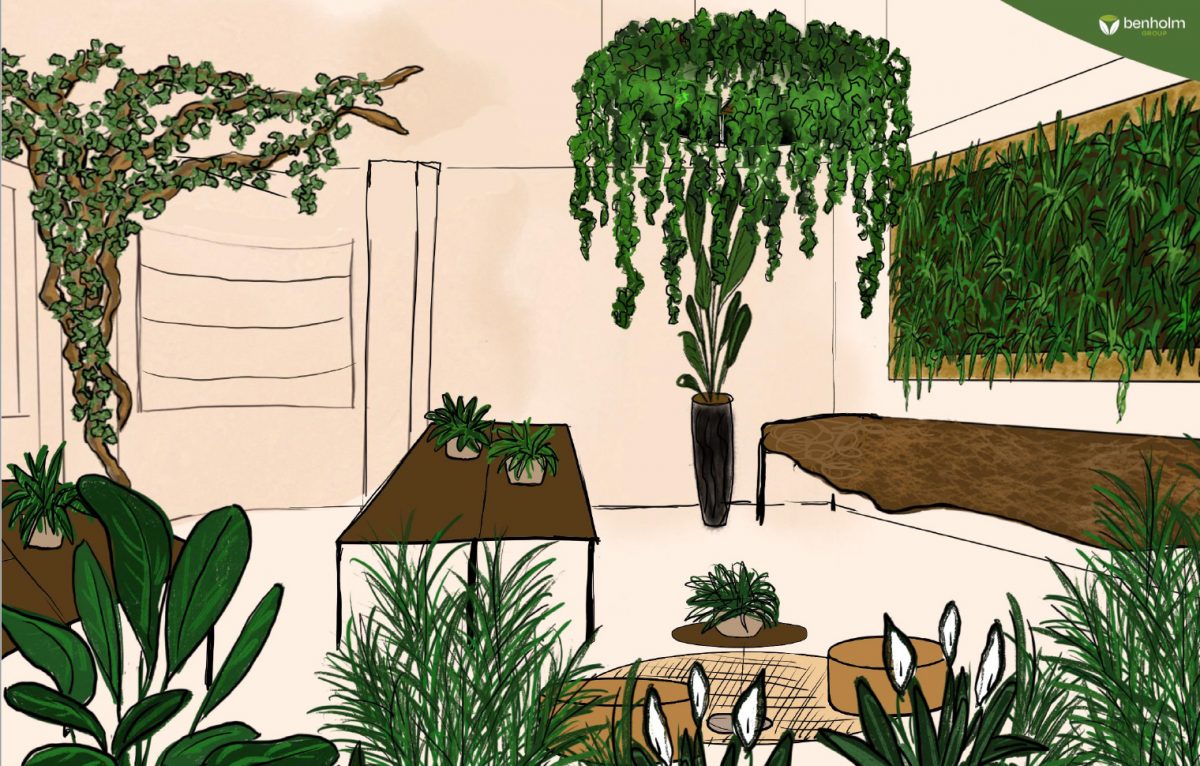
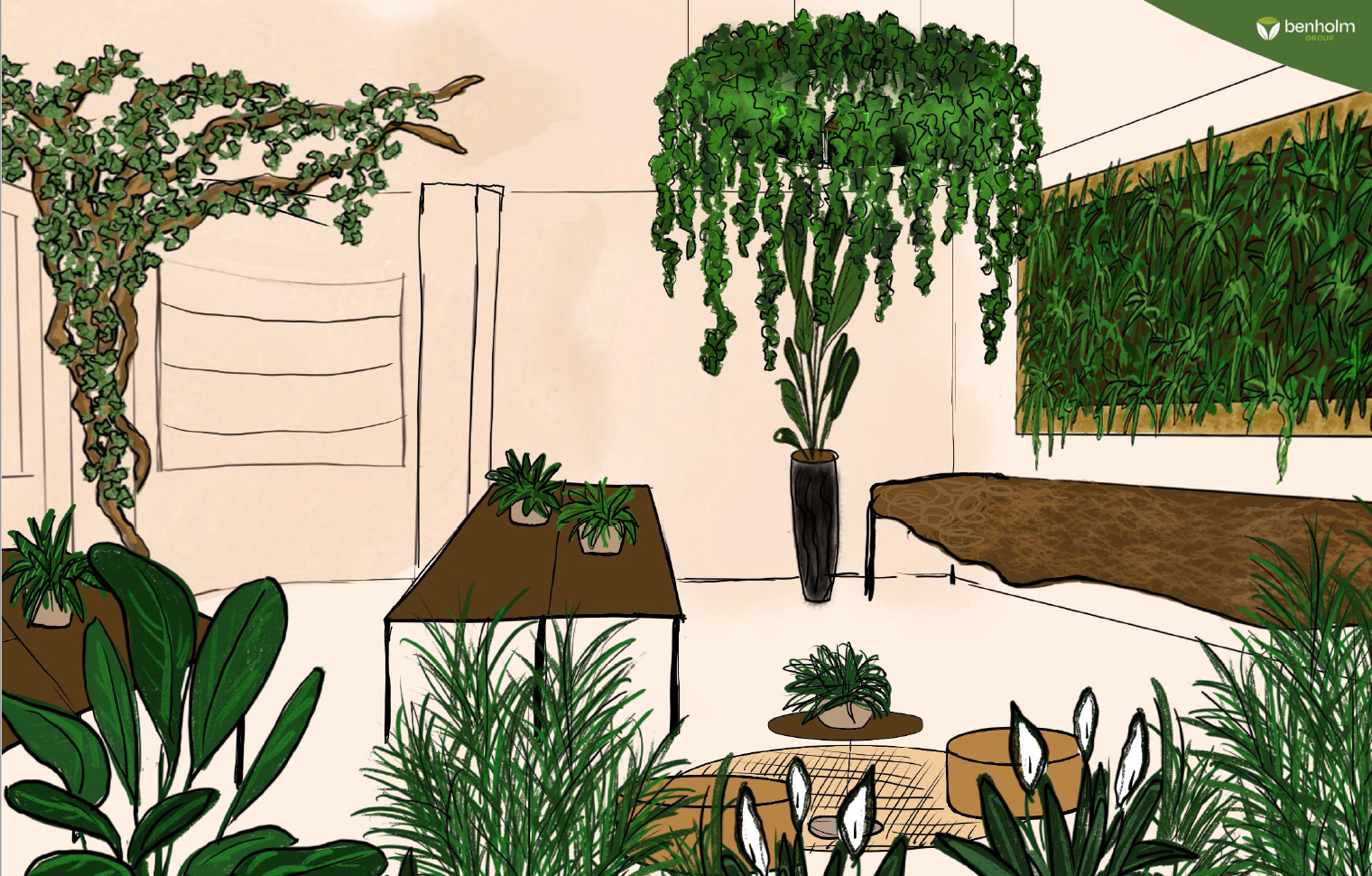
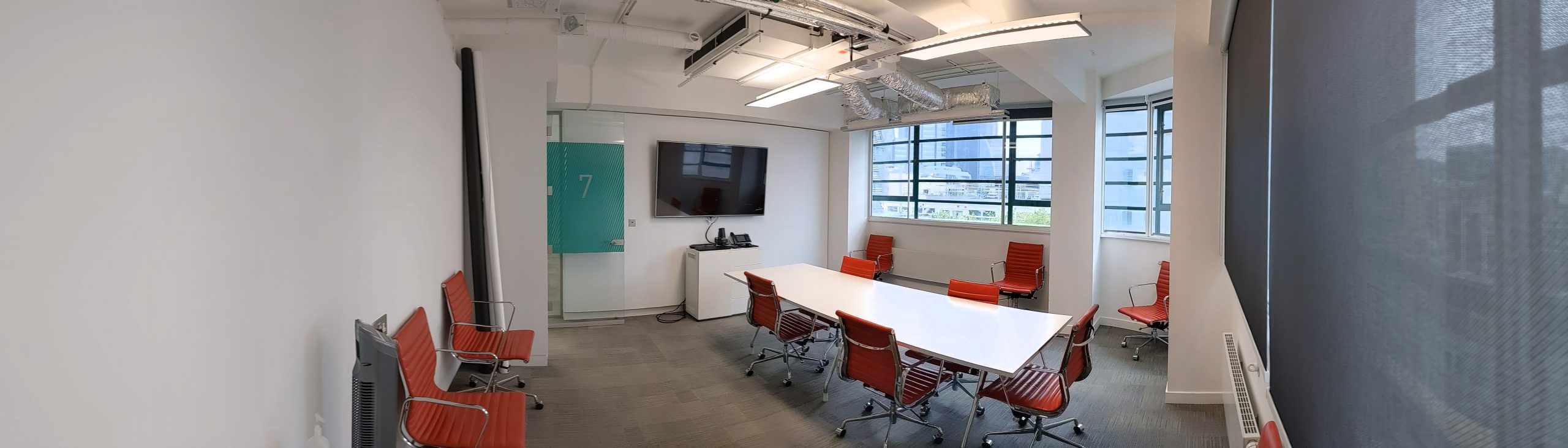
During an in-house pilot study, 6 participants will carry out their daily work at a designated workstation in a 30m2 office space at London based PLP Architecture. Over the course of 8-weeks the environment inside the office will be changed from an average office space into a multi-sensory experience by providing rich, natural stimuli to the participants such as lush, green, living planting (all provided and maintained) by Benholm Group, as well as access to natural light and outside views, new natural décor, patterns and colours, plus sounds from nature – a scenario that will be an immersive, biophilic ‘wow’ space.
Our experienced design consultants will bring the office space to life with lush greenery, ensure that all plant species thrive in the climactic conditions of the room, and contribute to creating a healthy and relaxing environment for the participants. We have carefully selected a variety of living plants for the study including trailing plants, floor standing and desk-top planters and a living wall. Plus, our specialist maintenance technicians will be maintaining all greenery throughout the study to ensure they remain vibrant and healthy.
Fellow collaborators are Sustainability Lead + PhD Researcher, Joyce Chan-Schoof, PLP Architecture and their in-house research and development team PLP Labs, Biophilic Design Consultant Alexander Bond, and lecturer, author and expert in multisensory design, Professor Derek Clements-Croome. Together we will measure indoor environmental quality objective data throughout the testing period, and participants will complete questionnaires after each scenario change.
Our very own Adrian Byne, who has had the pleasure of working closely on the upcoming study, says:
“At Benholm Group we have long understood the value that plants can bring to every space. To have the opportunity to collaborate on a research study which will prove the social, economic and environmental benefits of biophilia for the built environment is a fantastic opportunity, and we look forward to seeing the results in a few weeks’ time”.
The research study is set to begin in May and will conclude in July 2022, after which time the findings will be launched during a special event and publication that we can’t wait to share with you all.
Why not get in touch and find out how Benholm Group can incorporate our vibrant variety of plants into your interior space – from offices to restaurants to luxury hotel rooms, being surrounded by plants will delight and revitalise. Be sure to keep updated on our social channels and sign up to our monthly newsletter filled with inspiration, tips and upcoming trends. If you have an idea brewing, we’re ready to bring it to life.

As Benholm Group prepare to join forces with Sustainability Lead & PhD Researcher, Joyce Chan- Schoof on new research study the ‘value of biophilic design’, we speak with her about her passion for biophilic design and how she hopes to prove the social and economic benefits of biophilic design in the workplace.
I have been working in the architecture and design industry for about 20 years. Currently, I am the Sustainability Leader of the UK Parliamentary Estate, developing a (Social) Value framework for the built environment. My interest in biophilia began when I led a research team in commercial architectural practices; one of which was PLP Architecture – they then became my collaborators. I know the team there very well, and alongside my PhD supervisors (Dr. Vicky Lofthouse and Dr. Robert Schmidt-III from Loughborough University), and my mentor Professor Derek Clement-Croome, we initiated this collaboration – it explores the value of biophilic design and well-being. This has all come full circle.
“When we talk about biophilic design, people often just think about having indoor greenery, but actually it’s a much broader concept – it’s about creating a connection with nature” – Joyce Chan-Schoof
As an expert in sustainable design, I was keen to include Benholm Group in the study. I have been really enjoying Benholm Group’s input – they’re not just an indoor plant supplier, they have become part of the design team.
Benholm Group are super proactive and I like the way they initiate design solutions and help out with graphics; visualising the space is an important step to understand how biophilic experience can be produced. They’re working really closely with our design team from PLP Architecture on getting the right type of experience, they are open-minded with our suggestions, and they understand the dynamic of space as a formal workplace.
Benholm wants to highlight that the planting needs to be integrated into the whole experience (not a flower show), and some of those decisions are very fundamental. If you miss the opportunity in the early stage of the design, it’s very difficult to create an immersive experience in the later stage of the development.
As experts in designing with plants for biophilic benefit with sustainable design, I was keen to include Benholm Group in the study. I have been really enjoying Benholm Group’s input – they’re not just an indoor plant supplier, they have become part of the design team.
Benholm Group are super proactive and I like the way they initiate design solutions and help out with graphics; visualising the space is a really important step to understand how biophilic experience can be produced. They’re working really closely with our design team from PLP Architecture on getting the right type of experience, they are open-minded with our suggestions, and they understand the dynamic of space as a formal workplace.
Benholm wants to highlight that the planting needs to be integrated into the whole experience (not a flower show), and some of those decisions are very fundamental. If you miss the opportunity in the early stage of the space’s design, it’s very difficult to create an immersive experience in the later stage of the design.
“As experts in designing with plants for biophilic benefit, I was keen to include Benholm Group in the study. I have been really enjoying Benholm Group’s input – they’re not just a supplier, they have become part of the design team” – Joyce Chan-Schoof
For this research study, it’s the value of good design and the value of sustainability. In terms of value, we are trying to quantify quality which is something that hasn’t been done before in such a manner – smart technologies come into play. We want it to be a robust process and, a the same time, it should be easy to understand.
For example, we are trying to translate the value of well-being by design – if you have a view from your office to the outside – a view nature – that could be the equivalent of say, £500 per person per year. If we can introduce a creditable valuation process in the background to be able to link with financial proxies, we may be able to monetise the quality of good spaces in a way that encourages clients or project teams to start thinking about biophilic design from the very start of their projects. In the real estate industry, we are very good at putting things in numbers, but because design and well-being of people is a very qualitative area, sometimes biophilia is missed out.
We are hoping to make a more direct link to the upfront, budget planning stage and in the design brief. It will win half of the battle for designers because you don’t have to negotiate this after the design is done – it should be an integral part of the process. I’m not saying that this is necessarily the only way to do that, but it helps to create a plan that finance teams can comprehend quite easily. We often cut the budget we need to allow for good design through value-engineering exercises, which does not give us any value in the end if we do not understand the value of well-being.
I think it depends on how you use the plants. If you just put a potted plant in front of your desk, it may not make a difference, but if you plan it in a way where plants are integrated with the space and specific to the group of people, then the multi-sensory design may benefit them.
For example, it may be good for the retail industry to have a more ‘out-there’ design with plants and flowers that are quite celebratory in the space, whereas for a workplace you may want to keep a very clean, calm and maintainable environment. You may also create an immersive experience for a destinated social space, and that’s why I think it’s really important to have this conversation upfront because design strategy should be very specific to the type of well-being effect.
If people say that plants don’t help to improve well-being, it’s not because they’re not good or impactful, it is because they aren’t being designed for the specific context and culture.
The expected outcome will be from a mixture of sources. We are using some smart technologies to creating a ‘value spatial map’. We will be assessing physiological changes, and more conventional Indoor Environmental Quality data to capture the indoor temperature and humidity. Then we will be questioning the participants.
The participants’ experience, i.e., how they feel about the space or what behaviour has changed in different biophilic settings and the other way round. It is quite a complex project, because it’s not easy to triangulate various types of data to a single monetised value. I hope the study will be useful for both designers and commercial decision-makers.
Learn more about Biophilic Design: www.benholm.com/biophilic-design
Connect with Joyce Chan-Schoof: www.linkedin.com/joyce-chan-schoof
Connect with PLP Architecture: plparchitecture.com